


UAE's Hope Mars mission was launched on 20 July: Objectives, instruments, what to expect after the launch
One of Hope's unofficial objectives is to aide the science community in studying how Mars evolved into the Red desert we know.

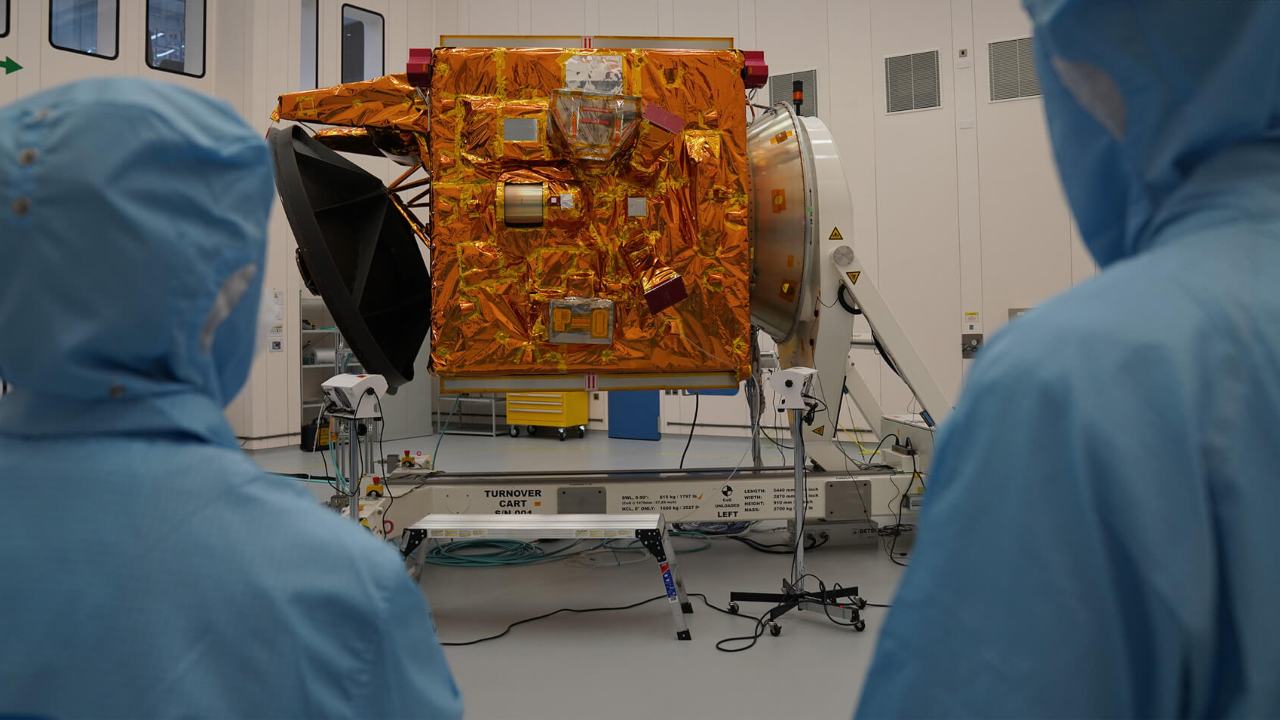
The UAE's Hope Probe is the Arab nations' first interplanetary mission. Image credit: Mohammed bin Rashid space Centre[/caption]The Hope probe was developed through a partnership between Mohamed bin Rashid Space Centre (MBRSC), Laboratory for Atmospheric and Space Physics at the University of Colorado-Boulder, and Arizona State University (ASU).The Hope mission is a Mars orbiter spacecraft, which will study the thin atmosphere of Mars and help explain how the planet loses hydrogen and oxygen from its atmosphere into space. The mission is officially named the Emirates Mars Mission (EMM) and the orbiter has been named Hope or 'Al Amal'.If successful, the Hope orbiter will join six others in studying Mars, from the US, Europe and India.Also read: UAE's Mars orbiter mission seeks to bring Hope to more places than just the red planet
The Hope orbiter
- to understand the climate dynamics and global weather map of Mars by studying the lower atmosphere of Mars.
- to explain how the weather of Mars affects the escape of hydrogen and oxygen, by correlating conditions in the lower and upper atmosphere
- to understand the presence and variability of hydrogen and oxygen in the upper atmosphere, and why Mars is losing these gases to space
Instruments on the Hope probe
The Hope Probe has three scientific instruments aboard to collect data for its mission.[caption id="attachment_8594901" align="alignnone" width="1280"]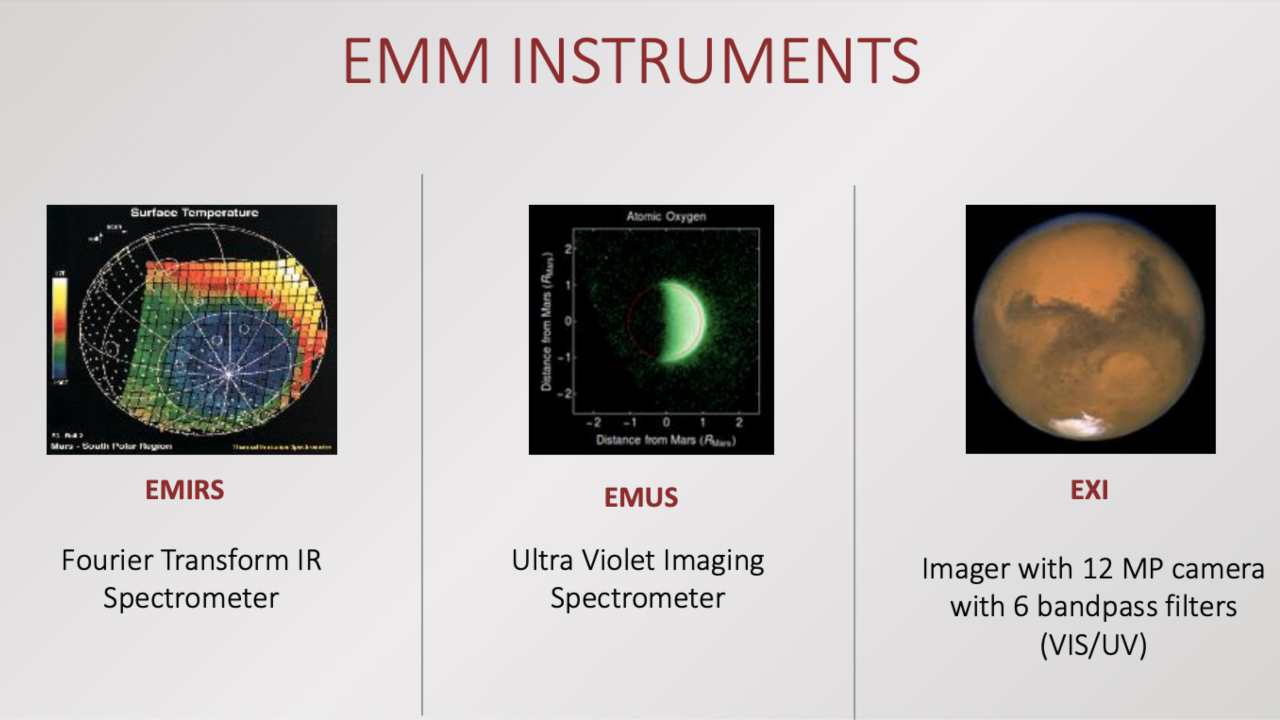
Instruments on the Hope Mars Orbiter Emirates Mars Mission. Image: EMM Science Overview[/caption]1. The Emirates eXploration Imager (EXI): a multi-wavelength imager capable of capturing 12-megapixel visible-light and ultraviolet imagery of the Martian atmosphere. With EXI, mission scientists are hoping to measure the distribution of water-ice and ozone in the lower atmosphere in 3 different ultraviolet wavelengths of light. EXI can also capture images in 3 visible light wavelengths (RGB).2. The Emirates Mars Infrared Spectrometer (EMIRS): designed to study the lower Mars atmosphere in infrared light, to analyse dust, ice clouds and water vapor. EMIRS also measures the temperature of the surface and the lower atmosphere of Mars. The instrument is designed to study the distribution of dust, ice clouds, water vapour, along with its temperature profile of the Red Planet's lower atmosphere.3. The Emirates Mars Ultraviolet Spectrometer (EMUS): designed to study the upper atmosphere of Mars in far-ultraviolet wavelengths. This, scientists are hoping, can determine the distribution and fluctuation of carbon monoxide and oxygen in the upper layers of the Mars atmosphere. EMUS can also reportedly measure the distribution of oxygen and hydrogen in the Martian exosphere – the outermost region of the planet's atmosphere. This is also the region where the escape of gases into space is thought to begin.
Launch of UAE's Hope Mission
The United Arab Emirates' orbiter is scheduled to launch on 15 July 12.51 am UAE time (2.21 am IST).The launch window begins on 14 July and stays open till 12 August 2020. The launch is planned from the Tanegashima Space Centre in Japan, aboard the H2A202 rocket – part of the H-IIA launch vehicle family developed by Mitsubishi Heavy Industries.[caption id="attachment_8594941" align="alignnone" width="1280"]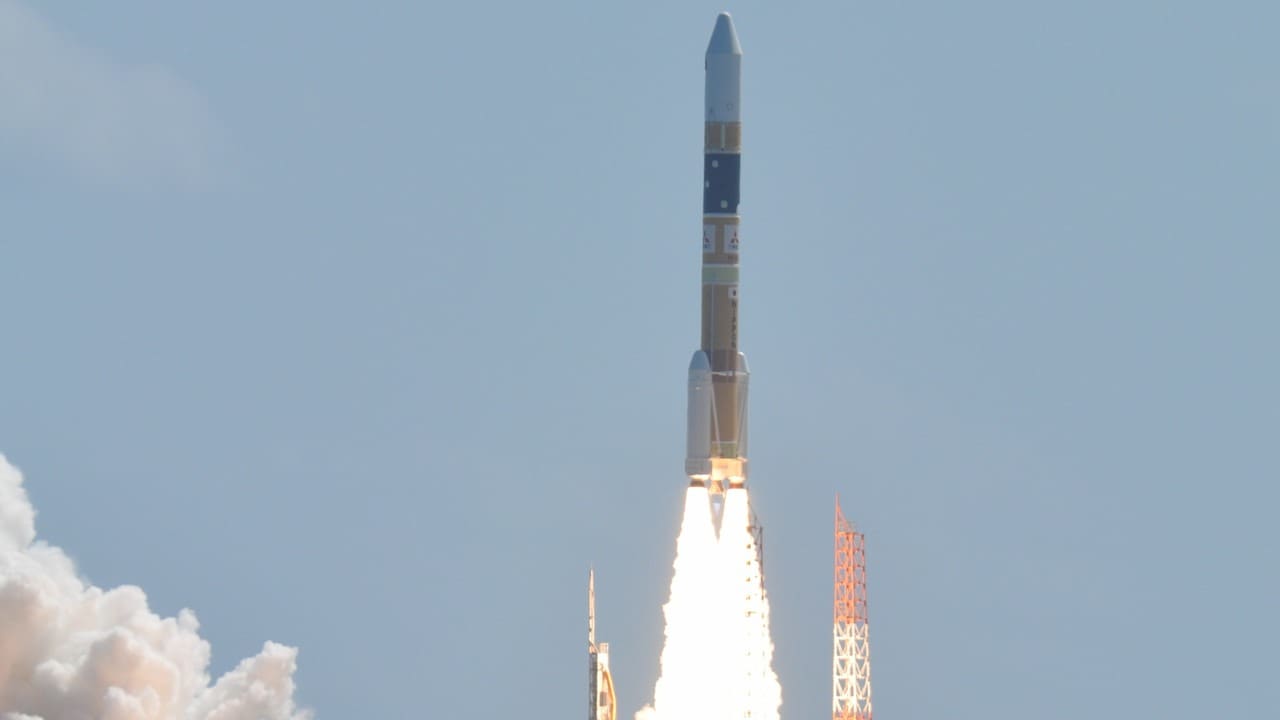
The H-IIA (H-2A) is an active expendable launch rocket operated by Mitsubishi Heavy Industries (MHI) for the Japan Aerospace Exploration Agency (JAXA). The liquid-fueled H-IIA rockets have been used to launch satellites into geostationary orbit, to launch a lunar orbiting spacecraft, and to launch Akatsuki, which studied the planet Venus. Image: Wikimedia Commons[/caption]It will take around 200 days to cover the 49,35,00,000-km-distance to reach Mars, with a landing expected in 2021. According to NASA Space Science Data Coordinated Archive, the Hope probe will enter an elliptical orbit around Mars that is roughly 22,000 x 44,000 km (nearest x farthest) in altitude, taking approximately 55 hours to complete a single orbit after it has breached the gravity of Mars.For an interplanetary mission, the idea for the mission came not from scientists but from the UAE government, as per a report in Nature, chasing a non-negotiable deadline of 2 December 2021 – the country’s 50th anniversary. As per plans, Hope is designed to carry out two years of science operations starting May 2021, with a possibility of a two-year extension to do more science till 2025.
During and after launch: What to expect

Careless Whispers: Scientists discover that plants can 'talk' to each other using smells
Life on Mars? European Space Agency’s Orbiter discovers ice water deposits at equator
Microsoft briefly overtakes Apple as the most valuable company, Apple back on top again
Even NASA is facing a tough time, starts layoffs following major budget cuts
ISRO, NASA's NISAR satellite to get ready by Jan-end, will monitor Earth's snow-covered regions