


Two-third of the world, much of India to face water scarcity, stress by 2025: Expert
Organisations are working to improve sanitation, provide treated surface water at Re 1/L in response.

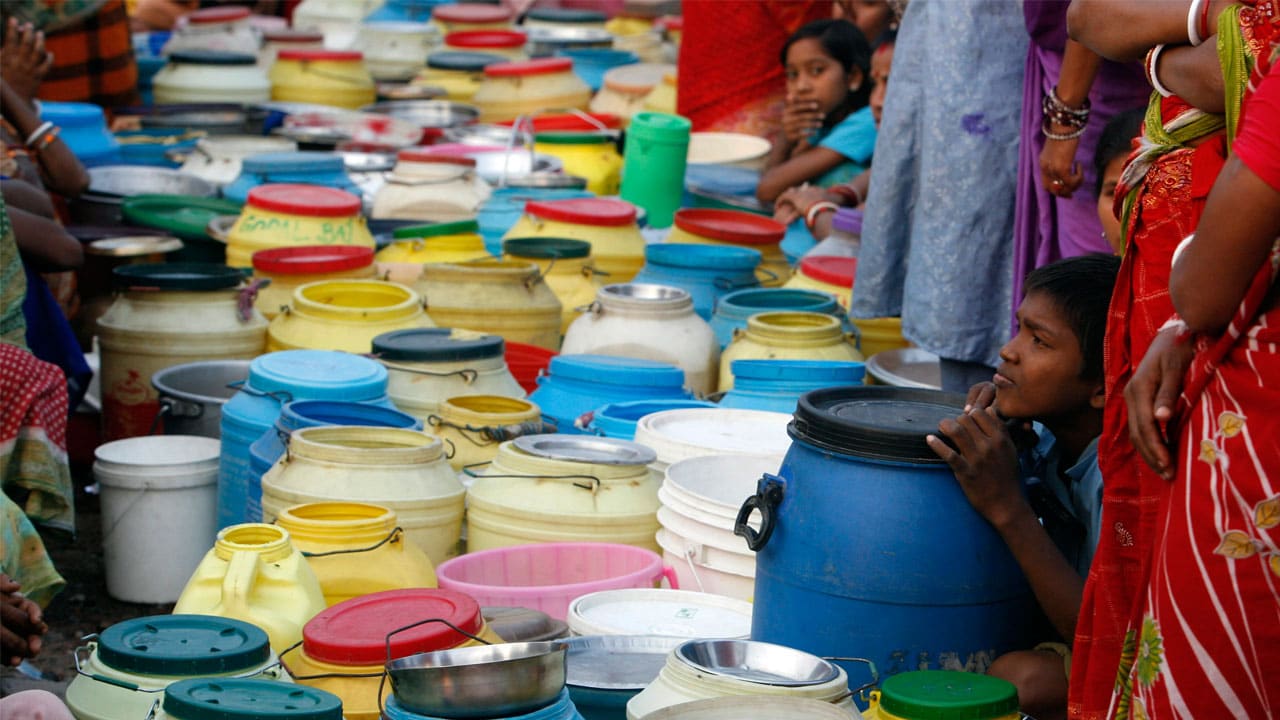
"By 2025, 1800 million people will be living in countries or regions with absolute water scarcity and two-thirds of the world population could be under stress condition," he said.SISSO, working to improve sanitation in the country, has taken up pilot projects in five places of West Bengal for providing treated surface water at a nominal price."Through our pilot projects in Madhusudankati (North 24 Parganas), Paschim Midnapur, Harisdaspur (Bongaon), we have been able to assist local NGOs and self-help groups to provide safe water by treating surface water," SISSO Founder Bindeshwar Pathak said.The plant in Madhusudankati provides almost 8,000 litres of water per day at Rs 1 per litre.Pathak mentioned that there are similar projects where the plant is run by community people in Bihar and Delhi."We are also planning to set up a new plant in Madhusudankati and another one in Bengal that will treat groundwater and make it arsenic free. With a new technology from Denmark, there will be no problem of dealing with the disposal of the collected arsenic," Pathak said.State Panchayat and Rural Development, and Public Health Engineering Minister Subrata Mukherjee called for spreading more awareness."Around 83 blocks in West Bengal and some places in Kolkata have high arsenic level in groundwater. We are working hard to provide safe water but the main issue is awareness. It is not just about arsenic but also about saving our depleting water resources," Mukherjee said.

Careless Whispers: Scientists discover that plants can 'talk' to each other using smells
Life on Mars? European Space Agency’s Orbiter discovers ice water deposits at equator
Microsoft briefly overtakes Apple as the most valuable company, Apple back on top again
Even NASA is facing a tough time, starts layoffs following major budget cuts
ISRO, NASA's NISAR satellite to get ready by Jan-end, will monitor Earth's snow-covered regions