


Thirteen years in the dating: Archaeologists narrow age gap for homo erectus fossil
The scientists have concluded that the remains are between 108,000 and 117,000 years old.

Scientists say they have finally calculated the age of the youngest known remains of Homo erectus, which is generally considered an ancestor of our species.
The fossilized skull fragments and other bones were uncovered on the Indonesian island of Java in the 1930s. Determining their age has been a scientific challenge, and a wide range has been proposed by numerous studies.

Professor Russell Ciochon holds a cast of a Homo erectus skull at his lab. Image credit: AP[/caption]“I don’t see any way to date this site more thoroughly,” said paleoanthropologist Russell Ciochon of the University of Iowa, author of the study.
H. Erectus arose in Africa about 2 million years ago and spread widely there and in Asia, and possibly into Europe. It reached Java more than 1.5 million years ago, and the new dates suggest it died out at least 35,000 years before the arrival there of our own species, Homo sapiens.
 More from Science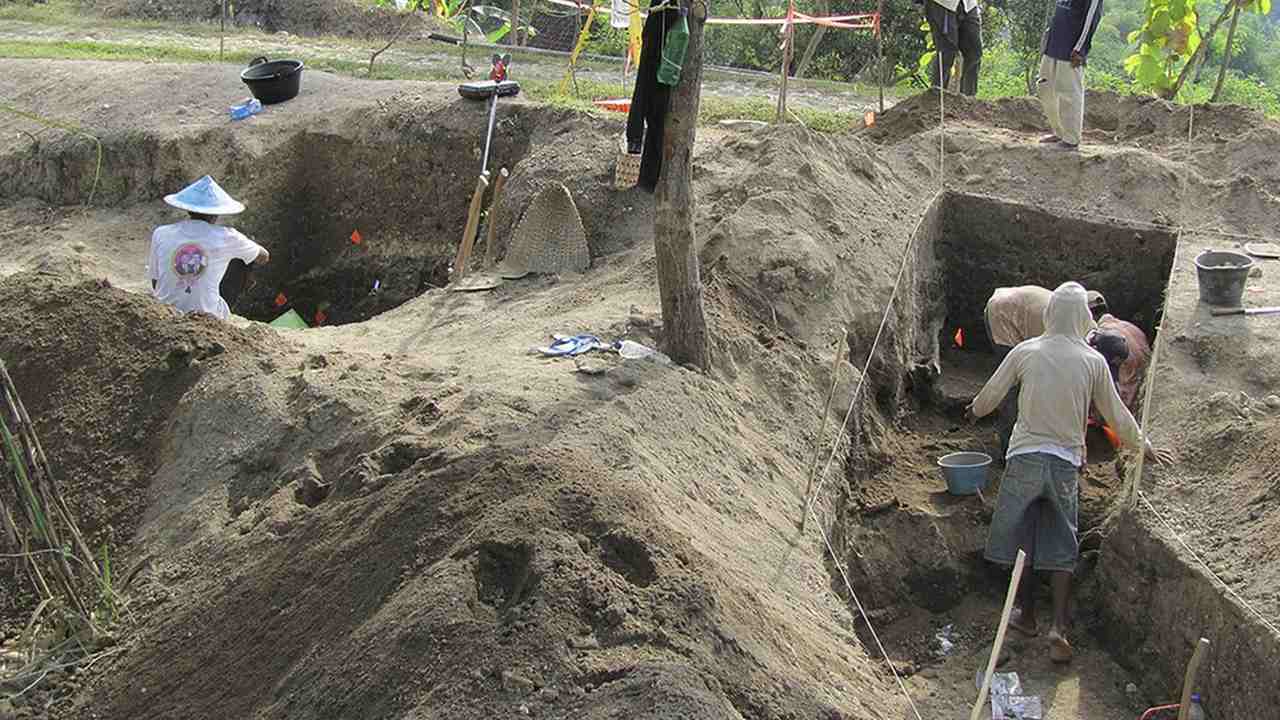
The excavations for Homo erectus fossils at Ngandong, Java, Indonesia. Image credit: AP[/caption]Susan Anton, a New York University anthropologist who did not participate in the work, called the dating effort “heroic.” But she said she considered the reported age range to be too narrow. She said she preferred a span of less than 550,000 years old to more than 100,000 years old.
That’s roughly what she and co-authors proposed in a paper published in 2011. The younger end of the range in that paper was as recent as 120,000 years, which she said is virtually the same as the new result.

Careless Whispers: Scientists discover that plants can 'talk' to each other using smells
Life on Mars? European Space Agency’s Orbiter discovers ice water deposits at equator
Microsoft briefly overtakes Apple as the most valuable company, Apple back on top again
Even NASA is facing a tough time, starts layoffs following major budget cuts
ISRO, NASA's NISAR satellite to get ready by Jan-end, will monitor Earth's snow-covered regions