
Advertisement


Sections
Supreme Court ban on polluting fireworks could be boon for Diwali 'green crackers'
The green crackers are not eco-friendly, but 25-30 percent less polluting than regular fireworks.

The song and dance between civil society, torch-bearers of Indian culture and rituals and the law plays out like clockwork every year before Diwali.We complain about the inhuman quality of air pollution around Diwali, worsened by burning of extremely toxic and polluting firecrackers and governments, forced to take a back seat on this culturally sensitive issue stay mum.The Supreme Court almost always intervenes and tries to bring some respite. Following the SC's verdict on banning the sale and use of polluting firecrackers and urging citizens to resort to green firecrackers, the Union Minister for Science and Technology, Dr Harsh Vardhan, announced that a set of less-polluting ‘green’ firecrackers have been developed by scientists.The idea of 'green fireworks' has largely been welcome in light of pollutions woes, and even brought on a joke or five in the days after the Supreme Court verdict restrictions about fireworks.Jokes aside, the concept of a 'green firecracker' remains elusive to the majority.What about regular firecrackers makes them so polluting? How are 'green fire crackers' any better for people and the environment? [caption id="attachment_5473151" align="alignnone" width="1280"]![Sivakasi Fireworks.]() Sivakasi Fireworks.[/caption]They will not compromise on the light or sound of regular firecrackers, but are made from chemicals that would leave lower traces of particular matter once used, a press release said.What goes into a 'regular' firecracker?It takes a lot of different chemicals to create the right colour, brightness and duration of burn in firecrackers. Traditionally, they are made out of a combination of three or more of the following:
Sivakasi Fireworks.[/caption]They will not compromise on the light or sound of regular firecrackers, but are made from chemicals that would leave lower traces of particular matter once used, a press release said.What goes into a 'regular' firecracker?It takes a lot of different chemicals to create the right colour, brightness and duration of burn in firecrackers. Traditionally, they are made out of a combination of three or more of the following:![Firecrackers_1 (1)]() A week ago, the Supreme court verdict on bursting of firecrackers in Tamil Nadu restricted the bursting of firecrackers to between 8pm and 10pm.The verdict also mandated that only green firecrackers be used in any celebrations, which will be sold through licensed vendors.The Supreme Court clarified that the ban on any other firecrackers was restricted only to the Delhi-NCR region in a statement on Tuesday.But nationwide, efforts to monitor the levels of pollution during Diwali will be underway."All state pollution boards and the Central Pollution Control Board will regulate and measure the particulate matter (PM) 2.5 and PM 10 in the air, seven days ahead and after Diwali," Vijay Panjwani, Central Pollution Control Board advocate told press.Green Firecrackers: An oxymoron or really a solution?Researchers from two national labs — the Central Electrochemical Research Institute (CECRI), Tamil Nadu and the National Environmental Engineering Research Institute (NEERI) in Nagpur — have developed these controversial 'green firecrackers'.They are still far from eco-friendly, but are nevertheless given the tag of 'green' for being 25-30 percent less polluting than regular fireworks.Three prototypes were developed by these national labs and named SWAS (safe water releaser), SAFAL (safe minimum aluminum) and STAR (safe thermite cracker).Researchers tweaked the composition of regular firecrackers in ‘flower pots’, ‘jil jils’ and ‘atom bombs’ by replacing the more-polluting aluminum oxides with magnesium oxides. This reduced the particulate matter released from exploding these crackers, the press release said.NEERI researchers have created green crackers in which harmful chemicals like barium and potassium nitrate were replaced with zeolites (metals readily soluble in water) and magnesium, respectively.[caption id="attachment_5473191" align="alignnone" width="1280"]
A week ago, the Supreme court verdict on bursting of firecrackers in Tamil Nadu restricted the bursting of firecrackers to between 8pm and 10pm.The verdict also mandated that only green firecrackers be used in any celebrations, which will be sold through licensed vendors.The Supreme Court clarified that the ban on any other firecrackers was restricted only to the Delhi-NCR region in a statement on Tuesday.But nationwide, efforts to monitor the levels of pollution during Diwali will be underway."All state pollution boards and the Central Pollution Control Board will regulate and measure the particulate matter (PM) 2.5 and PM 10 in the air, seven days ahead and after Diwali," Vijay Panjwani, Central Pollution Control Board advocate told press.Green Firecrackers: An oxymoron or really a solution?Researchers from two national labs — the Central Electrochemical Research Institute (CECRI), Tamil Nadu and the National Environmental Engineering Research Institute (NEERI) in Nagpur — have developed these controversial 'green firecrackers'.They are still far from eco-friendly, but are nevertheless given the tag of 'green' for being 25-30 percent less polluting than regular fireworks.Three prototypes were developed by these national labs and named SWAS (safe water releaser), SAFAL (safe minimum aluminum) and STAR (safe thermite cracker).Researchers tweaked the composition of regular firecrackers in ‘flower pots’, ‘jil jils’ and ‘atom bombs’ by replacing the more-polluting aluminum oxides with magnesium oxides. This reduced the particulate matter released from exploding these crackers, the press release said.NEERI researchers have created green crackers in which harmful chemicals like barium and potassium nitrate were replaced with zeolites (metals readily soluble in water) and magnesium, respectively.[caption id="attachment_5473191" align="alignnone" width="1280"]![Diwali fun and games in a Northeastern residence. Image courtesy: OhMyIndia]() Diwali fun and games in a Northeastern residence. Image courtesy: OhMyIndia[/caption]Some of them, like the 'bijli' crackers, have also been modified to replace the use of ash as a desiccant (to dehydrate and give a longer lasting burn), and lower particulate matter emissions by 25-30 percent.These eco-friendly firecrackers release water vapour as a 'dust suppressant', which would help bring suspended pollutants in the air down using humidity.How soon will the green firecrackers be sold?Greener crackers have been demonstrated to the manufacturers and their reaction has been positive, Dr Harsh Vardhan told press. These crackers match the performance of conventional crackers in terms of sound.The green crackers were developed in multiple laboratories across the country, and sent for approval by manufacturers to the Petroleum and Explosives Safety Organisation (PESO).The chances of them being rolled out in time for Diwali celebrations this year, though, looks highly unlikely.“We are working on them," said Dr Vardhan when asked about when the crackers would reach markets."We will let you know when they are ready for the market.”Until these green fireworks materialise in markets, it falls to the hands of the public to choose less polluting fireworks — within permitted emission and decibel levels. The alternative? Abstain from them altogether, or live with breaking the new law.
Diwali fun and games in a Northeastern residence. Image courtesy: OhMyIndia[/caption]Some of them, like the 'bijli' crackers, have also been modified to replace the use of ash as a desiccant (to dehydrate and give a longer lasting burn), and lower particulate matter emissions by 25-30 percent.These eco-friendly firecrackers release water vapour as a 'dust suppressant', which would help bring suspended pollutants in the air down using humidity.How soon will the green firecrackers be sold?Greener crackers have been demonstrated to the manufacturers and their reaction has been positive, Dr Harsh Vardhan told press. These crackers match the performance of conventional crackers in terms of sound.The green crackers were developed in multiple laboratories across the country, and sent for approval by manufacturers to the Petroleum and Explosives Safety Organisation (PESO).The chances of them being rolled out in time for Diwali celebrations this year, though, looks highly unlikely.“We are working on them," said Dr Vardhan when asked about when the crackers would reach markets."We will let you know when they are ready for the market.”Until these green fireworks materialise in markets, it falls to the hands of the public to choose less polluting fireworks — within permitted emission and decibel levels. The alternative? Abstain from them altogether, or live with breaking the new law.
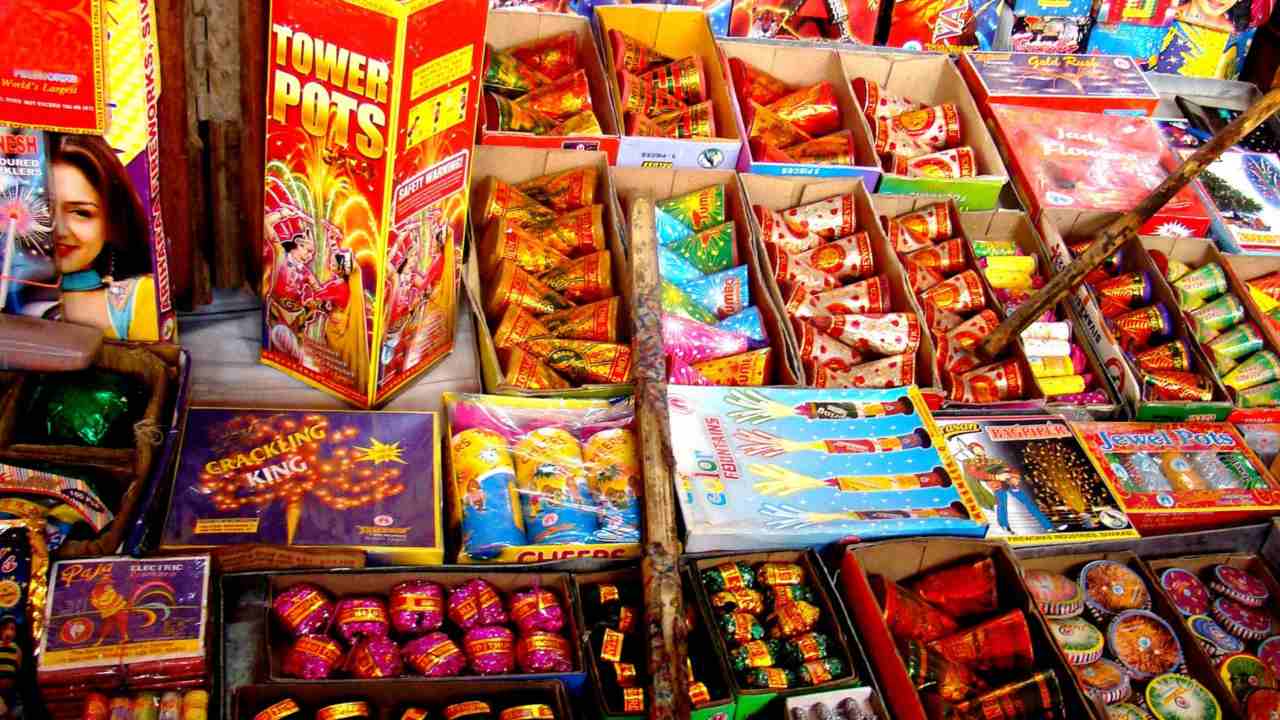 Sivakasi Fireworks.[/caption]They will not compromise on the light or sound of regular firecrackers, but are made from chemicals that would leave lower traces of particular matter once used, a press release said.What goes into a 'regular' firecracker?It takes a lot of different chemicals to create the right colour, brightness and duration of burn in firecrackers. Traditionally, they are made out of a combination of three or more of the following:
- A Fuel: sustains the heat for as long as the firecracker burns — the most widely used fuel is charcoal.
- An oxidising agent: produces the oxygen required to keep the mixture inside the cracker burning — like nitrates, chlorates or perchlorates.
- A reducing agent: burns oxygen to produce the massive energy required by the explosion — often sulphur or charcoal.
- Regulating agents: metals compounds that are added to control how fast the cracker burns — coloured metals like cobalt, copper and magnesium are used in sparklers and glittery variants.
- Binders: organic glue or resin used to hold the firecracker together.
- Colouring agents: different chemicals and metals used to produce variety of colours — like strontium, lithium, barium, chlorine or copper.
 A week ago, the Supreme court verdict on bursting of firecrackers in Tamil Nadu restricted the bursting of firecrackers to between 8pm and 10pm.The verdict also mandated that only green firecrackers be used in any celebrations, which will be sold through licensed vendors.The Supreme Court clarified that the ban on any other firecrackers was restricted only to the Delhi-NCR region in a statement on Tuesday.But nationwide, efforts to monitor the levels of pollution during Diwali will be underway."All state pollution boards and the Central Pollution Control Board will regulate and measure the particulate matter (PM) 2.5 and PM 10 in the air, seven days ahead and after Diwali," Vijay Panjwani, Central Pollution Control Board advocate told press.Green Firecrackers: An oxymoron or really a solution?Researchers from two national labs — the Central Electrochemical Research Institute (CECRI), Tamil Nadu and the National Environmental Engineering Research Institute (NEERI) in Nagpur — have developed these controversial 'green firecrackers'.They are still far from eco-friendly, but are nevertheless given the tag of 'green' for being 25-30 percent less polluting than regular fireworks.Three prototypes were developed by these national labs and named SWAS (safe water releaser), SAFAL (safe minimum aluminum) and STAR (safe thermite cracker).Researchers tweaked the composition of regular firecrackers in ‘flower pots’, ‘jil jils’ and ‘atom bombs’ by replacing the more-polluting aluminum oxides with magnesium oxides. This reduced the particulate matter released from exploding these crackers, the press release said.NEERI researchers have created green crackers in which harmful chemicals like barium and potassium nitrate were replaced with zeolites (metals readily soluble in water) and magnesium, respectively.[caption id="attachment_5473191" align="alignnone" width="1280"]
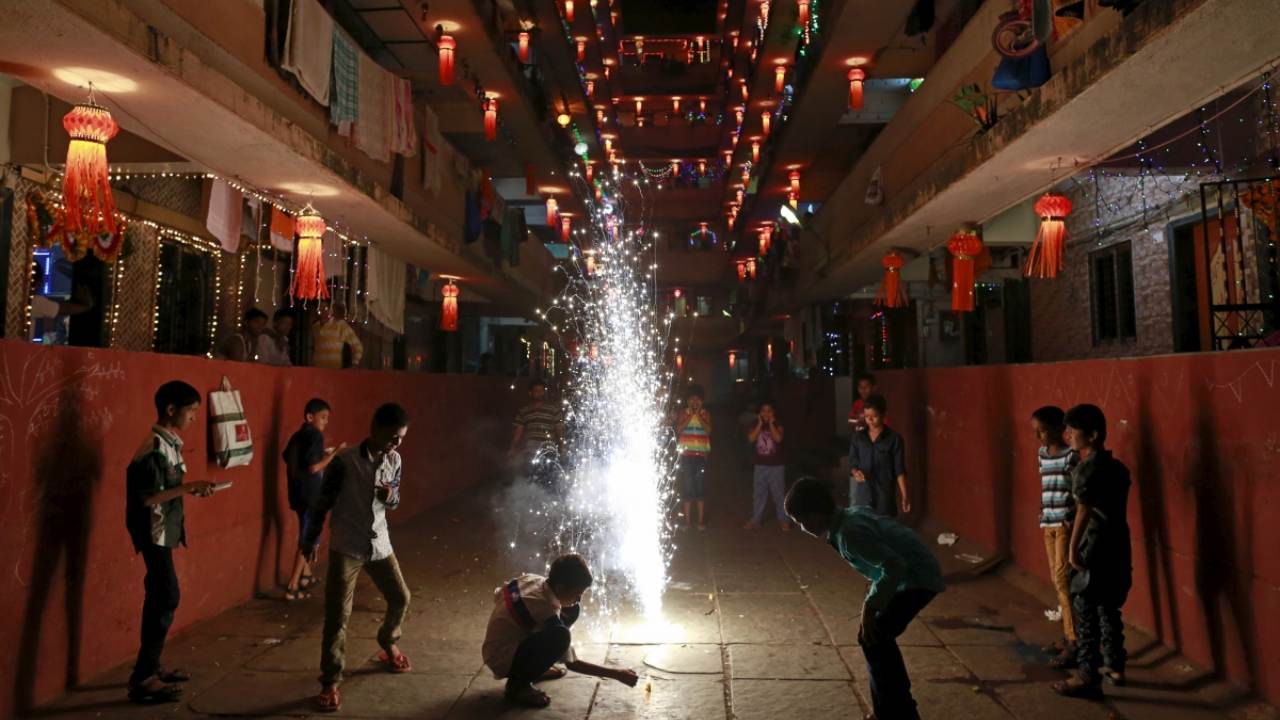 Diwali fun and games in a Northeastern residence. Image courtesy: OhMyIndia[/caption]Some of them, like the 'bijli' crackers, have also been modified to replace the use of ash as a desiccant (to dehydrate and give a longer lasting burn), and lower particulate matter emissions by 25-30 percent.These eco-friendly firecrackers release water vapour as a 'dust suppressant', which would help bring suspended pollutants in the air down using humidity.How soon will the green firecrackers be sold?Greener crackers have been demonstrated to the manufacturers and their reaction has been positive, Dr Harsh Vardhan told press. These crackers match the performance of conventional crackers in terms of sound.The green crackers were developed in multiple laboratories across the country, and sent for approval by manufacturers to the Petroleum and Explosives Safety Organisation (PESO).The chances of them being rolled out in time for Diwali celebrations this year, though, looks highly unlikely.“We are working on them," said Dr Vardhan when asked about when the crackers would reach markets."We will let you know when they are ready for the market.”Until these green fireworks materialise in markets, it falls to the hands of the public to choose less polluting fireworks — within permitted emission and decibel levels. The alternative? Abstain from them altogether, or live with breaking the new law.
First Published:Oct 31, 2018, 12:39:32 IST
Advertisement
Advertisement

Careless Whispers: Scientists discover that plants can 'talk' to each other using smells
Japanese scientists have recorded a video that shows plants, in certain conditions, communicate with each other using mists that carry smells. The discovery, reveals that plants release a fine mist of airborne compounds, to warn nearby plants of potential dangers
Life on Mars? European Space Agency’s Orbiter discovers ice water deposits at equator
European Space Agency's Mars Express Orbiter has identified massive ice and ice water deposits beneath the surface of Mars. The Mars Express orbiter was also the first to confirmed the presence of ice on Mars in 2004
Microsoft briefly overtakes Apple as the most valuable company, Apple back on top again
At its peak during the session, Microsoft's value reached $2.903 trillion, with a 2% surge. As of writing this article, Apple closed at $2.89 trillion, whereas Microsoft closed at $2.86 trillion
Even NASA is facing a tough time, starts layoffs following major budget cuts
NASA is facing some massive budget cuts, because of which, it has been forced to postpone some upcoming missions. NASA's Jet Propulsion Laboratory has been hit hard by recent federal budget cuts, resulting in the layoff of 100 contractors last week
ISRO, NASA's NISAR satellite to get ready by Jan-end, will monitor Earth's snow-covered regions
The NISAR satellite which has been developed jointly ISRO and NASA, should be ready for launch by the end of January 2024. The collaboration between NASA and ISRO on NISAR is the first time the two agencies have cooperated on hardware development for an Earth-observing mission
Advertisement
Advertisement