
Advertisement


Sections
Super Worm Moon is 2019's third, final supermoon on 21 March: When, where to watch
After 19 years, a supermoon & spring equinox has coincided — the next one expected in 2030.

Prepare yourselves, skygazers!The final supermoon of 2019 is soon arriving and shares a date with the spring equinox, which marks the technical beginning of spring. This is the first time in 19 years that both these celestial events have shared a date.The 21 March spectacle is the third back-to-back supermoon this year, with the first on 21 January and the biggest and brightest of the three taking place on 19 February.[caption id="attachment_6293501" align="alignnone" width="1280"]![Supermoon (1)]()
![Phases of the moon orbiting the Earth. Image: NASA]()
![How the supermoon, full moon and micromoon differ in size.]()
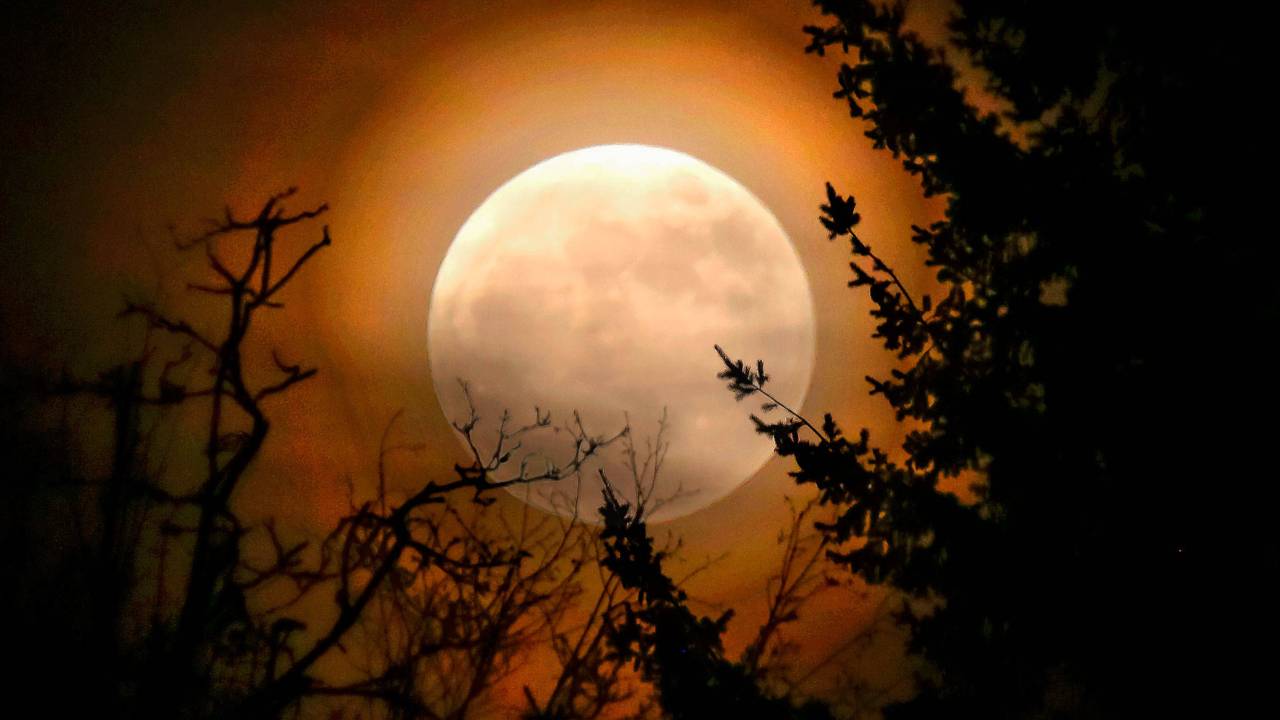
The supermoon is not as rare as you might think. Image: Flickr[/caption]
What's a supermoon?
Supermoons are a rarer event than this year's record might suggest but they're not "rare" per se.As the moon makes its monthly trip around the Earth, it takes an elliptical, and not a circular, path. All the objects in the solar system orbit this way, including the Earth around the Sun.Sometimes, a full moon reaches its closest distance from the Earth in its elliptical, monthly orbit around the planet. When it does, we see a supermoon — slightly larger and brighter in the night sky than other full moons, but subtly so.[caption id="attachment_6293531" align="alignnone" width="1280"]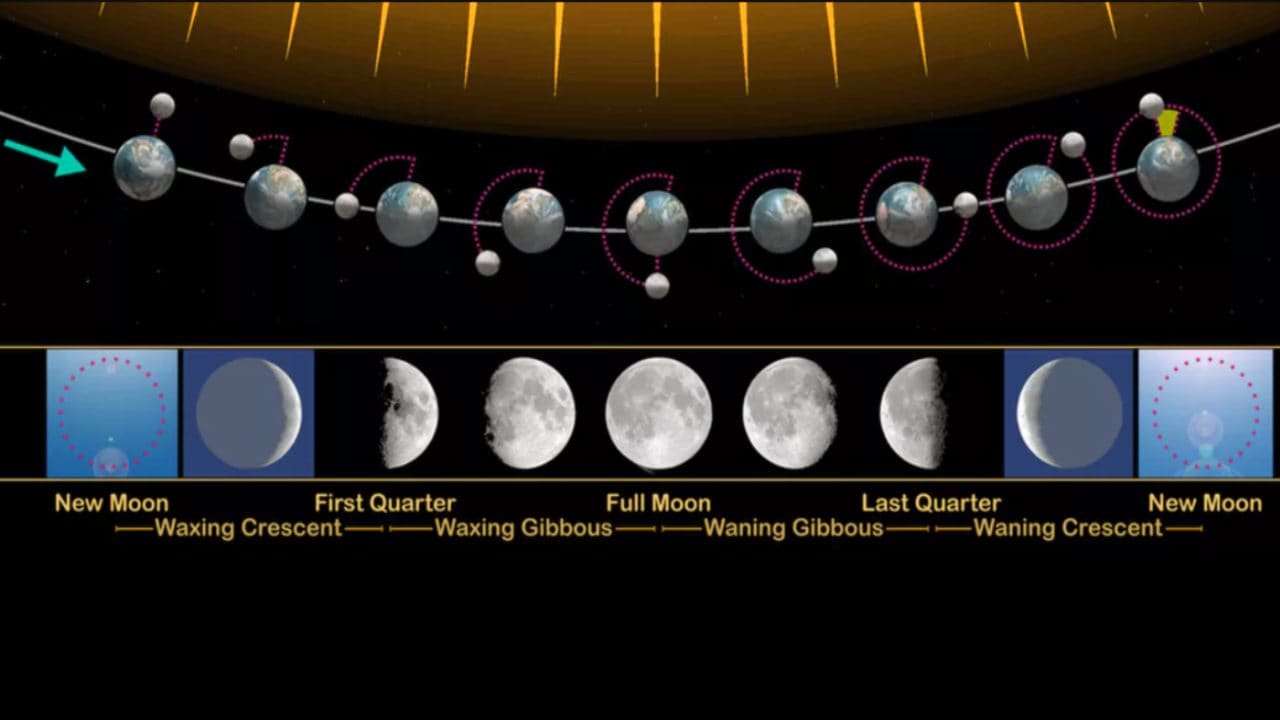
Phases of the moon orbiting the Earth. Image: NASA[/caption]
The spring equinox
A full moon has not landed this close to the first day of spring since 2000, and these celestial events won’t clash like they will on 21 March until 2030, according to astronomy website EarthSky.org. The March equinox, also called the Spring Equinox or vernal equinox, marks one of the four milestones in Earth’s seasonal cycles. The four equinoxes are marked every year because the planet is tilted on its axis — so, for the majority of the year, one of the hemispheres is significantly closer to the sun and experiencing longer days than the other. But on the day of an equinox, this tilt vanishes. Both halves of the planet experience equal amounts of day and night.For the Northern Hemisphere, the equinox in March marks the beginning of spring. In the Southern Hemisphere, it's the official start of autumn.[caption id="attachment_6114181" align="alignnone" width="1280"]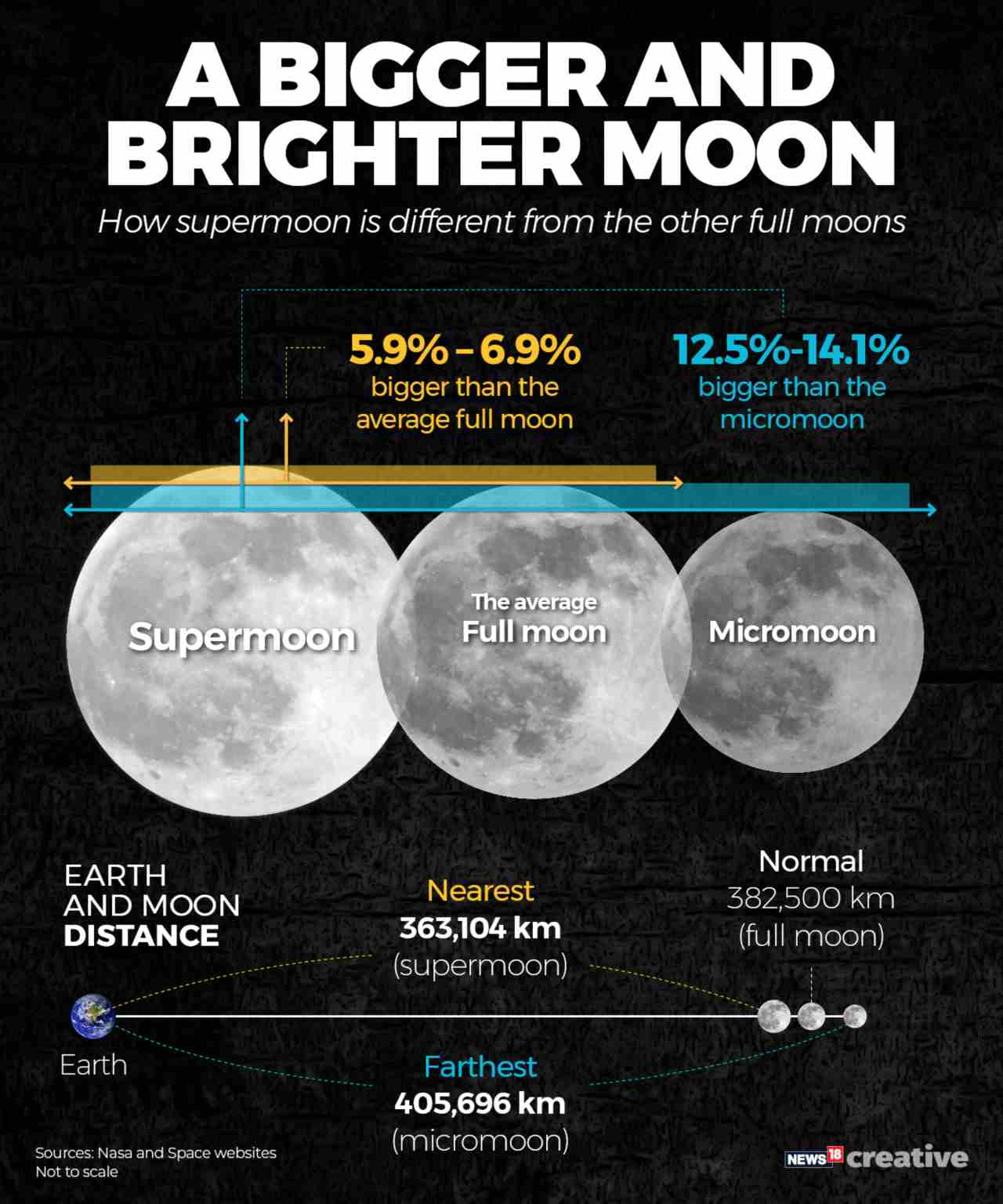
How the supermoon, full moon and micromoon differ in size.[/caption]
The super worm moon
In the north, the full moon in March is referred to as the "worm moon" since it clashes with the time in the year when earthworms start to come up from thawing winter soils. The equinox supermoon on 21 March is also going by the odd name "super worm moon" for this reason.
Advertisement
When & where to watch the lunacy
The best time to catch the lunacy in action from anywhere in India is after sunset on Wednesday, 20 March, just as the moon begins to rise and appear big and bright above the horizon.While this might be most picturesque and compliant with Holi party plans during the day, the closest and biggest form (lunar perigee) of this supermoon won't be visible till the following morning, which would be Thursday, 21 March at 7.13 am IST.You won't need any protective gear to gaze a full moon in the face — and a super worm equinox moon is no exception. You can watch it with your naked eyes as lost as you want and not worry about losing vision.Since bad weather doesn't go by a calendar, skywatchers thwarted by smog, clouds or pollution can catch a live stream of the event online courtesy of the Virtual Telescope Project, which remotely operates several telescopes in Italy.The live broadcast of the supermoon rising over Rome will start at 10.15 pm IST on Wednesday.
First Published:Mar 20, 2019, 10:04:45 IST
Advertisement
Advertisement

Careless Whispers: Scientists discover that plants can 'talk' to each other using smells
Japanese scientists have recorded a video that shows plants, in certain conditions, communicate with each other using mists that carry smells. The discovery, reveals that plants release a fine mist of airborne compounds, to warn nearby plants of potential dangers
Life on Mars? European Space Agency’s Orbiter discovers ice water deposits at equator
European Space Agency's Mars Express Orbiter has identified massive ice and ice water deposits beneath the surface of Mars. The Mars Express orbiter was also the first to confirmed the presence of ice on Mars in 2004
Microsoft briefly overtakes Apple as the most valuable company, Apple back on top again
At its peak during the session, Microsoft's value reached $2.903 trillion, with a 2% surge. As of writing this article, Apple closed at $2.89 trillion, whereas Microsoft closed at $2.86 trillion
Even NASA is facing a tough time, starts layoffs following major budget cuts
NASA is facing some massive budget cuts, because of which, it has been forced to postpone some upcoming missions. NASA's Jet Propulsion Laboratory has been hit hard by recent federal budget cuts, resulting in the layoff of 100 contractors last week
ISRO, NASA's NISAR satellite to get ready by Jan-end, will monitor Earth's snow-covered regions
The NISAR satellite which has been developed jointly ISRO and NASA, should be ready for launch by the end of January 2024. The collaboration between NASA and ISRO on NISAR is the first time the two agencies have cooperated on hardware development for an Earth-observing mission
Advertisement
Advertisement