


Study reveals details about the 'strange asymmetry' of the far side of the moon
The study revealed regions on the Moon's near side that have concentrations of radioactive elements unlike anywhere else on its surface that could explain its early stages.

Although humans have set foot on the moon, there are still multiple things about Earth’s natural satellite that is yet to be known. We only see the near side of the moon, while there is much to be explored about the far side. However, an international team of scientists has come up with new details about the far side of the celestial body.
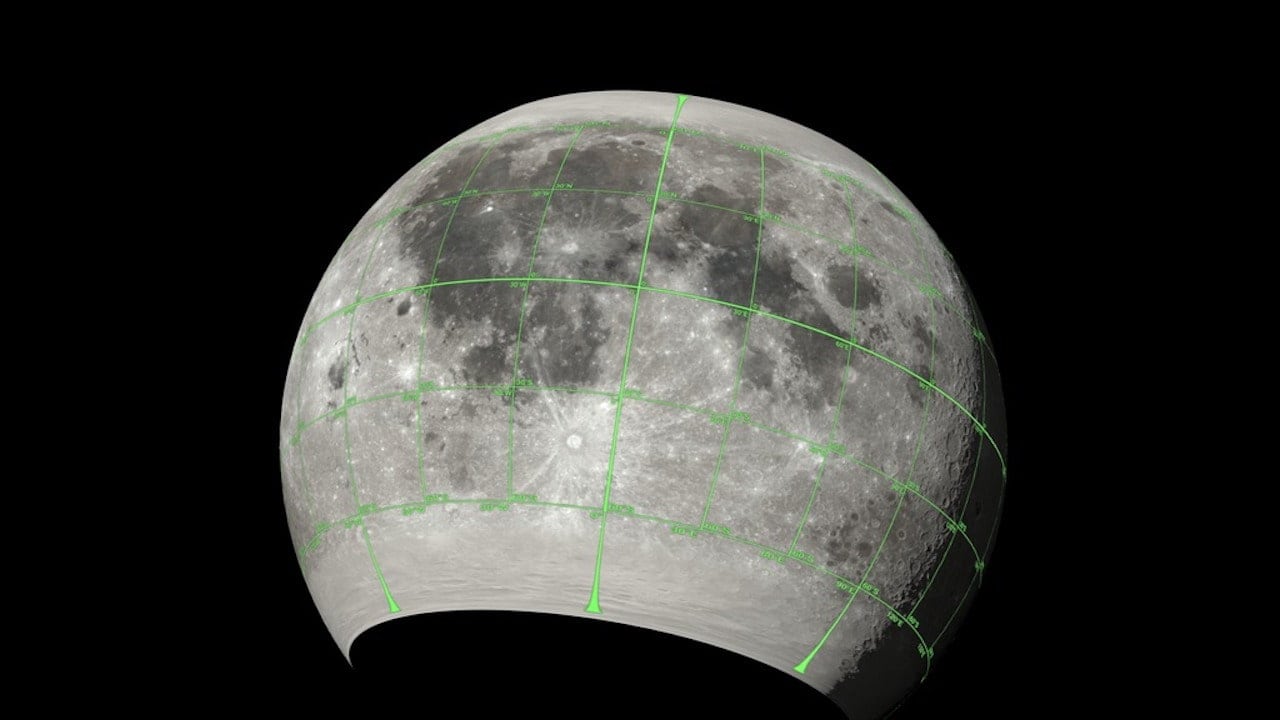
The study revealed regions on the Moon's near side that have concentrations of radioactive elements unlike anywhere else on its surface that could explain its early stages of the moon's formation.[/caption]The team included experts from the Earth-Life Science Institute (ELSI) at Tokyo Institute of Technology, the University of Florida, the Carnegie Institution for Science, Towson University, NASA Johnson Space Center and the University of New Mexico.
Scientists believed that the far side had no “maria,” or dark regions when first images of the region emerged decades ago. At that time, it was found that only one percent of that side was covered with maria compared to about 31 percent of the near side. The study attributes it to the unique distribution of radioactive elements after the collision that formed the moon.
 More from Science
On the other hand, when NASA’s Apollo missions brought moon rocks, it was revealed that the relative darkness of these patches was due to their geological composition. These patches were linked to volcanism.
Scientists also identified a new rock associated with ‘maria’, called KREEP – K for potassium, REE for rare-earth elements and P for phosphorus.
“Because of the relative lack of erosion processes, the Moon's surface records geological events from the Solar System's early history,” ELSI co‐author Matthieu Laneuville said in the statement.
The study also revealed regions on the Moon's near side have concentrations of radioactive elements like U (Uranium) and Th (Thorium) unlike anywhere else on the Moon.
The team said that understanding the origin of these radioactive elements can help explain the early stages of the moon's formation.

Careless Whispers: Scientists discover that plants can 'talk' to each other using smells
Life on Mars? European Space Agency’s Orbiter discovers ice water deposits at equator
Microsoft briefly overtakes Apple as the most valuable company, Apple back on top again
Even NASA is facing a tough time, starts layoffs following major budget cuts
ISRO, NASA's NISAR satellite to get ready by Jan-end, will monitor Earth's snow-covered regions