
Advertisement


Sections
SpaceX Starship a tougher project than any of our Mars missions: NASA engineer
Musk has only shared Starship's design & features in bits & pieces, still to unveil the rocket in full detail.

SpaceX's Mars rocket Starship is the company's most complex project so far, but is also a tougher one than any of NASA's past or current missions on Mars, according to NASA's chief engineer.The fully-reusable shuttle to Mars is the newest homegrown marvel in SpaceX and CEO Elon Musk's drawing board – a 180-foot tall stainless steel mammoth. The rocket has been designed with two radical features that has Musk super excited and NASA's chief engineer "very worried", according to a Business Insider report.The first of those is Starships's stainless steel body. This is a big shift away from Space's usual choice of carbon-fiber for the body.But its the second change that has aerospace industry experts sweating bullets: Starships' one-of-a-kind cooling system that will keep it from incinerating in Earth's and Mars' atmosphere.[caption id="attachment_5890441" align="alignnone" width="683"]![Elon Musk tweeted this image of the]() Elon Musk tweeted this image of the "real" spacecraft, and not a rendition, to his and SpaceX's followers on 11 January. Image: Twitter/ElonMusk[/caption]NASA uses hundreds and thousands of ceramic tiles to shield its spacecrafts from heat as they zip through the atmosphere. Musk described to Popular Mechanics how Starship will "bleed" rocket fuel from tiny pores on its surface to cool down – a "radical and delightfully-counterintuitive" concept for heat shields in rocketry.While Musk is certain of Starship's build and design, a NASA aerospace engineer and director of the NASA's Space Technology and Exploration Directorate at Langley, Walt Engelund is not as confident.The SpaceX rocket for Mars is built to ferry 100 passengers along with 100 tons in cargo when at its best. This is something NASA has been studying for decades – entering, descending and landing a huge spacecraft with special cargo – with gradual, incremental success."We've spent a lot of time and given a lot of thought to how we might do it at Mars," Engelund told Business Insider. "We've landed the metric-ton Curiosity rover — the biggest thing we've ever put down on the surface of Mars."[caption id="attachment_5797111" align="alignnone" width="1280"]
Elon Musk tweeted this image of the "real" spacecraft, and not a rendition, to his and SpaceX's followers on 11 January. Image: Twitter/ElonMusk[/caption]NASA uses hundreds and thousands of ceramic tiles to shield its spacecrafts from heat as they zip through the atmosphere. Musk described to Popular Mechanics how Starship will "bleed" rocket fuel from tiny pores on its surface to cool down – a "radical and delightfully-counterintuitive" concept for heat shields in rocketry.While Musk is certain of Starship's build and design, a NASA aerospace engineer and director of the NASA's Space Technology and Exploration Directorate at Langley, Walt Engelund is not as confident.The SpaceX rocket for Mars is built to ferry 100 passengers along with 100 tons in cargo when at its best. This is something NASA has been studying for decades – entering, descending and landing a huge spacecraft with special cargo – with gradual, incremental success."We've spent a lot of time and given a lot of thought to how we might do it at Mars," Engelund told Business Insider. "We've landed the metric-ton Curiosity rover — the biggest thing we've ever put down on the surface of Mars."[caption id="attachment_5797111" align="alignnone" width="1280"]![The SpaceX 'Starship' prototype made from stainless steel. Image: Twitter/Elon Musk]() The SpaceX 'Starship' prototype made from stainless steel. Image: Twitter/Elon Musk[/caption]The leap that Starship is aiming for – a hundred times more ambitious – is to successfully land and return a spacecraft the size of a building (a building with 100 people in it)."It won't be easy for us or SpaceX," Engelund said. His specific concern was not the design of the heat shield itself, which has been attempted by NASA before (using astronaut urine instead of rocket fuel). His doubts (echoed by many engineers in response to Musk's descriptions of the technology) is how the tiny holes that will "bleed" rocket fuel on the surface might avoid getting clogged.It wouldn't take much to clog something like that if they were microscopic pores, Engelund told Business Insider."What if a bird poops on your rocket and it plugs up a few holes? And then when the thing is returning, no coolant comes out of those holes and that section of the vehicle overheats?" Dwayne Day, a NASA engineer who helped investigate the Columbia space shuttle accident, added.[caption id="attachment_5983101" align="alignnone" width="1280"]
The SpaceX 'Starship' prototype made from stainless steel. Image: Twitter/Elon Musk[/caption]The leap that Starship is aiming for – a hundred times more ambitious – is to successfully land and return a spacecraft the size of a building (a building with 100 people in it)."It won't be easy for us or SpaceX," Engelund said. His specific concern was not the design of the heat shield itself, which has been attempted by NASA before (using astronaut urine instead of rocket fuel). His doubts (echoed by many engineers in response to Musk's descriptions of the technology) is how the tiny holes that will "bleed" rocket fuel on the surface might avoid getting clogged.It wouldn't take much to clog something like that if they were microscopic pores, Engelund told Business Insider."What if a bird poops on your rocket and it plugs up a few holes? And then when the thing is returning, no coolant comes out of those holes and that section of the vehicle overheats?" Dwayne Day, a NASA engineer who helped investigate the Columbia space shuttle accident, added.[caption id="attachment_5983101" align="alignnone" width="1280"]![A selfie taken by NASA's Curiosity rover on Mars Sol 2291 (15 January) at the]() A selfie taken by NASA's Curiosity rover on Mars Sol 2291 (15 January) at the "Rock Hall" drill site on Vera Rubin Ridge. Image Credit: NASA/JPL-Caltech[/caption]And once those challenges on Earth have been considered, there's more to worry about at the other end: fine dust that blows through the year on Mars.Musk has only shared Starship's build and features in bits and pieces, still to unveil the rocket in full detail.Yet, the NASA engineer's aren't dismissing the possibility that SpaceX's newest rocket in the pipeline won't succeed."(SpaceX has) surprised a lot of people, and have a lot of smart people working for them, and Elon seems to be really committed and dedicated to this," Engelund said."Perhaps there are some things (NASA) could do with them. I suspect there will be."
A selfie taken by NASA's Curiosity rover on Mars Sol 2291 (15 January) at the "Rock Hall" drill site on Vera Rubin Ridge. Image Credit: NASA/JPL-Caltech[/caption]And once those challenges on Earth have been considered, there's more to worry about at the other end: fine dust that blows through the year on Mars.Musk has only shared Starship's build and features in bits and pieces, still to unveil the rocket in full detail.Yet, the NASA engineer's aren't dismissing the possibility that SpaceX's newest rocket in the pipeline won't succeed."(SpaceX has) surprised a lot of people, and have a lot of smart people working for them, and Elon seems to be really committed and dedicated to this," Engelund said."Perhaps there are some things (NASA) could do with them. I suspect there will be."
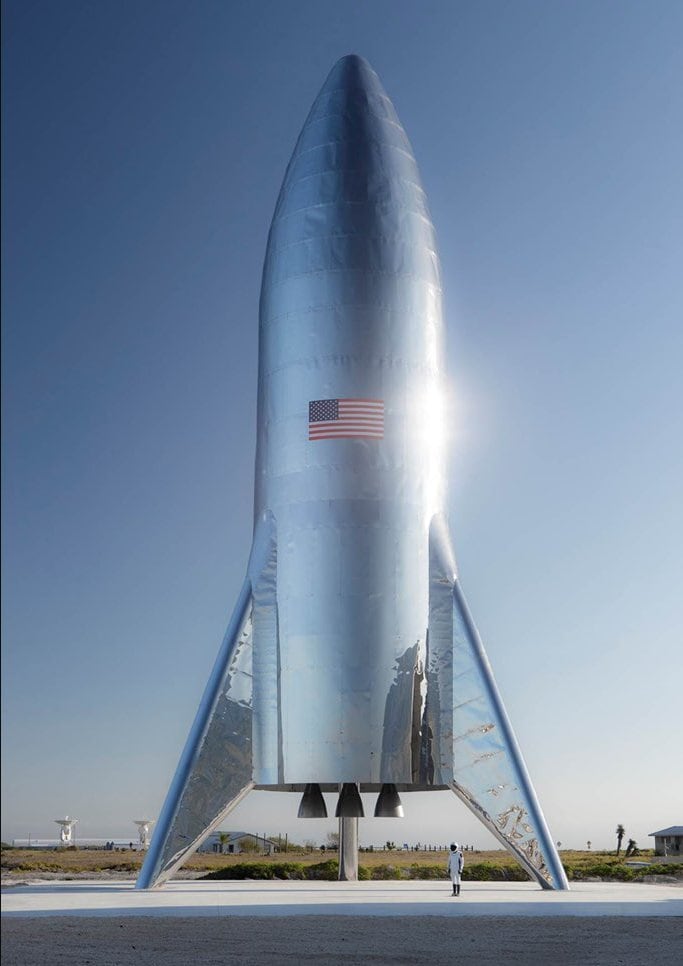 Elon Musk tweeted this image of the "real" spacecraft, and not a rendition, to his and SpaceX's followers on 11 January. Image: Twitter/ElonMusk[/caption]NASA uses hundreds and thousands of ceramic tiles to shield its spacecrafts from heat as they zip through the atmosphere. Musk described to Popular Mechanics how Starship will "bleed" rocket fuel from tiny pores on its surface to cool down – a "radical and delightfully-counterintuitive" concept for heat shields in rocketry.While Musk is certain of Starship's build and design, a NASA aerospace engineer and director of the NASA's Space Technology and Exploration Directorate at Langley, Walt Engelund is not as confident.The SpaceX rocket for Mars is built to ferry 100 passengers along with 100 tons in cargo when at its best. This is something NASA has been studying for decades – entering, descending and landing a huge spacecraft with special cargo – with gradual, incremental success."We've spent a lot of time and given a lot of thought to how we might do it at Mars," Engelund told Business Insider. "We've landed the metric-ton Curiosity rover — the biggest thing we've ever put down on the surface of Mars."[caption id="attachment_5797111" align="alignnone" width="1280"]
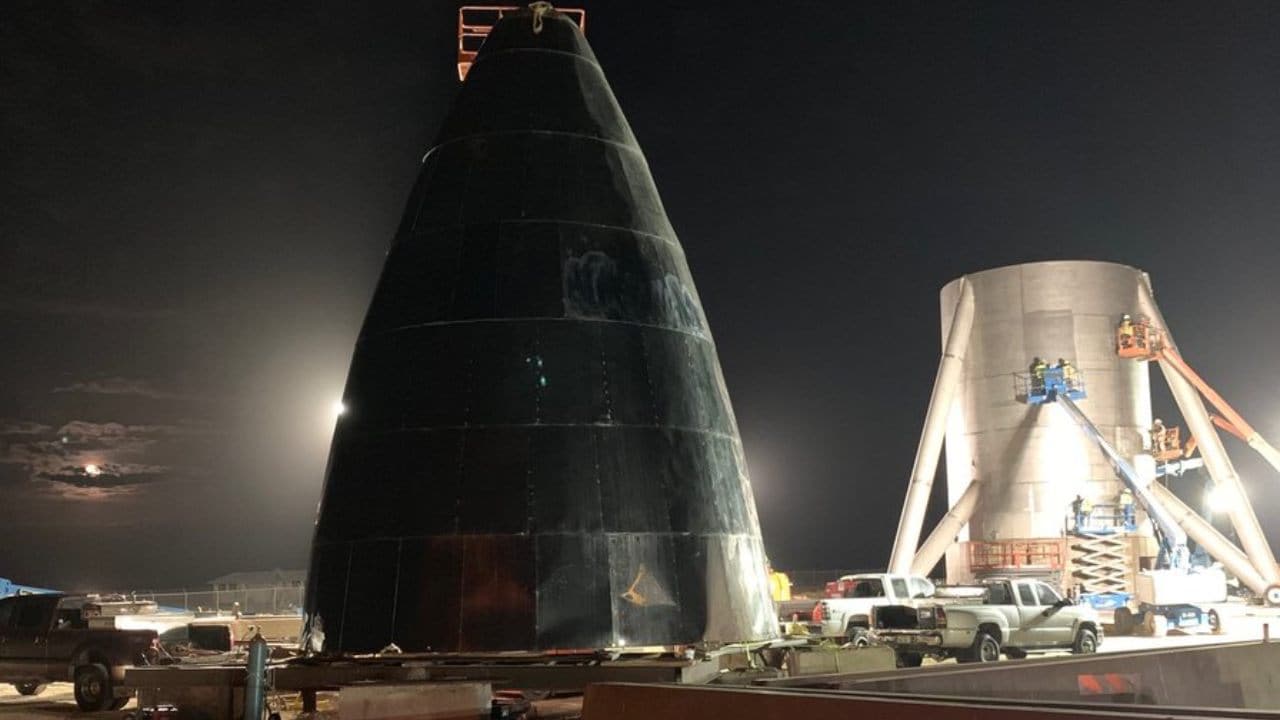 The SpaceX 'Starship' prototype made from stainless steel. Image: Twitter/Elon Musk[/caption]The leap that Starship is aiming for – a hundred times more ambitious – is to successfully land and return a spacecraft the size of a building (a building with 100 people in it)."It won't be easy for us or SpaceX," Engelund said. His specific concern was not the design of the heat shield itself, which has been attempted by NASA before (using astronaut urine instead of rocket fuel). His doubts (echoed by many engineers in response to Musk's descriptions of the technology) is how the tiny holes that will "bleed" rocket fuel on the surface might avoid getting clogged.It wouldn't take much to clog something like that if they were microscopic pores, Engelund told Business Insider."What if a bird poops on your rocket and it plugs up a few holes? And then when the thing is returning, no coolant comes out of those holes and that section of the vehicle overheats?" Dwayne Day, a NASA engineer who helped investigate the Columbia space shuttle accident, added.[caption id="attachment_5983101" align="alignnone" width="1280"]
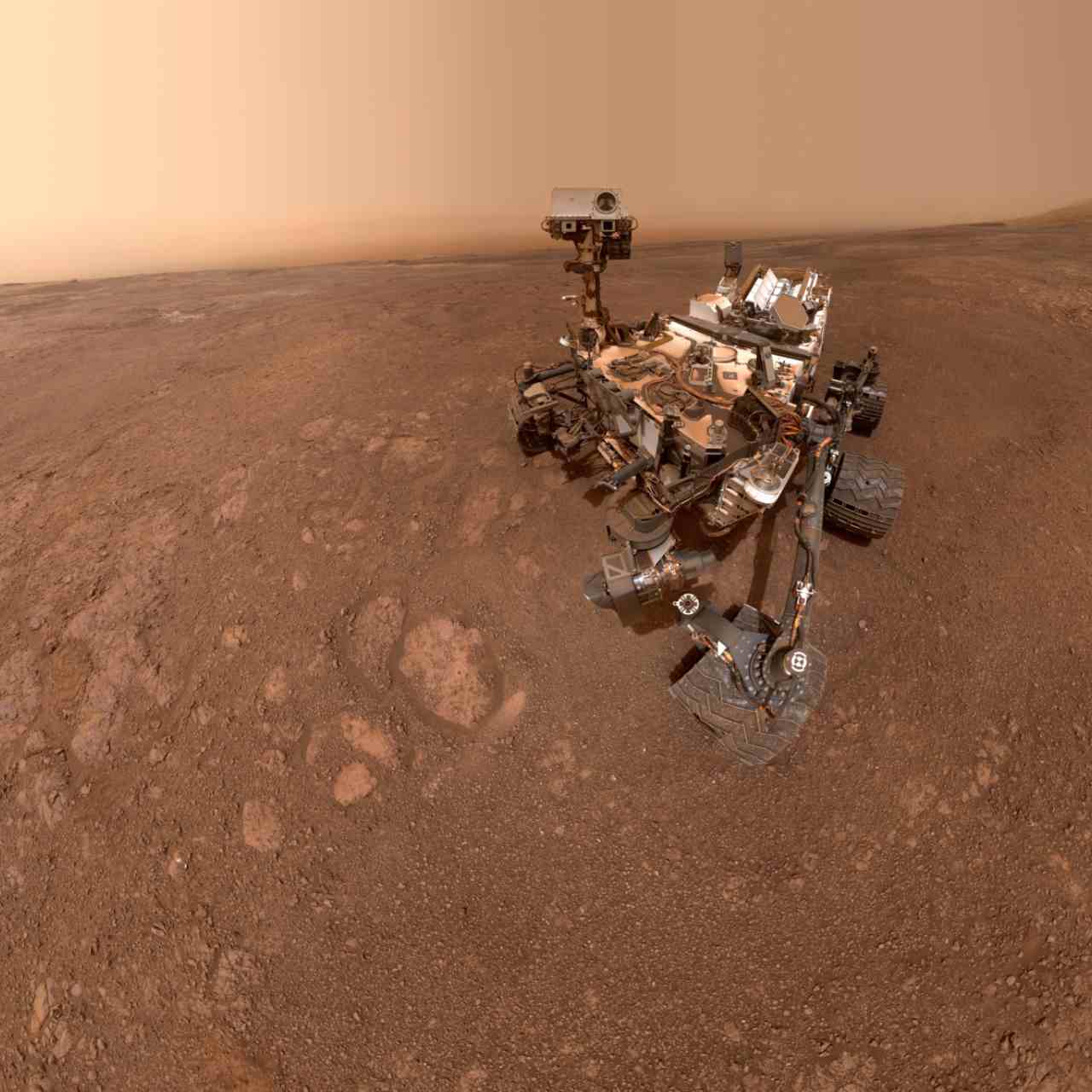 A selfie taken by NASA's Curiosity rover on Mars Sol 2291 (15 January) at the "Rock Hall" drill site on Vera Rubin Ridge. Image Credit: NASA/JPL-Caltech[/caption]And once those challenges on Earth have been considered, there's more to worry about at the other end: fine dust that blows through the year on Mars.Musk has only shared Starship's build and features in bits and pieces, still to unveil the rocket in full detail.Yet, the NASA engineer's aren't dismissing the possibility that SpaceX's newest rocket in the pipeline won't succeed."(SpaceX has) surprised a lot of people, and have a lot of smart people working for them, and Elon seems to be really committed and dedicated to this," Engelund said."Perhaps there are some things (NASA) could do with them. I suspect there will be."
First Published:Feb 18, 2019, 10:55:04 IST
Advertisement
Advertisement

Careless Whispers: Scientists discover that plants can 'talk' to each other using smells
Japanese scientists have recorded a video that shows plants, in certain conditions, communicate with each other using mists that carry smells. The discovery, reveals that plants release a fine mist of airborne compounds, to warn nearby plants of potential dangers
Life on Mars? European Space Agency’s Orbiter discovers ice water deposits at equator
European Space Agency's Mars Express Orbiter has identified massive ice and ice water deposits beneath the surface of Mars. The Mars Express orbiter was also the first to confirmed the presence of ice on Mars in 2004
Microsoft briefly overtakes Apple as the most valuable company, Apple back on top again
At its peak during the session, Microsoft's value reached $2.903 trillion, with a 2% surge. As of writing this article, Apple closed at $2.89 trillion, whereas Microsoft closed at $2.86 trillion
Even NASA is facing a tough time, starts layoffs following major budget cuts
NASA is facing some massive budget cuts, because of which, it has been forced to postpone some upcoming missions. NASA's Jet Propulsion Laboratory has been hit hard by recent federal budget cuts, resulting in the layoff of 100 contractors last week
ISRO, NASA's NISAR satellite to get ready by Jan-end, will monitor Earth's snow-covered regions
The NISAR satellite which has been developed jointly ISRO and NASA, should be ready for launch by the end of January 2024. The collaboration between NASA and ISRO on NISAR is the first time the two agencies have cooperated on hardware development for an Earth-observing mission
Advertisement
Advertisement