
Advertisement


Sections
SpaceX ‘Starhopper’ completes its historic first 'hop' tied down to the launchpad
The Starhopper moved one hop closer to its futuristic, intergalactic potential by passing this test.

SpaceX's has its hands quite full. Apart from regular commercial satellite rideshares, the company is developing and tweaking its Crew Dragon spacecraft to ferry astronauts to the International Space Station and back and testing its enormous, long-awaited Falcon Heavy — the most powerful rocket ever built — for its first ever commercial launch on 10 April.And right there in the middle of this hustling is SpaceX's Starhopper test rocket (the smaller, scaled version of the actual spacecraft that could fly the first humans to "Mars and beyond", possibly even neighbouring star systems), which crossed a significant milestone this week. SpaceX fired up its engines for the first time and the spacecraft moved one small hop closer to its futuristic, intergalactic potential.[caption id="attachment_6415571" align="alignnone" width="1280"]![The Starhopper at SpaceX's Boca Chica facility. Image credit: BocaChicaGirl/Twitter]() The Starhopper at SpaceX's Boca Chica facility. Image credit: BocaChicaGirl/Twitter[/caption]The spacecraft passed its first official "hop test," where the rocket was fire up and propelled from the launch pad while sturdy tethers kept it from taking off skywards. The 'Starhopper' "hit tether limits" as Musk said in a Tweet, indicating that it did just as SpaceX hoped it would.The hop test is nothing like a normal rocket launch, since the spacecraft isn’t nearly ready to go into space. But for SpaceX, Starhopper passing the hop test means the rocket's engines and other vital systems are responding well to stresses in the real world. It's no trip to Mars, but this success is still a pretty big deal for the Starhopper.[caption id="attachment_5946201" align="alignnone" width="1280"]
The Starhopper at SpaceX's Boca Chica facility. Image credit: BocaChicaGirl/Twitter[/caption]The spacecraft passed its first official "hop test," where the rocket was fire up and propelled from the launch pad while sturdy tethers kept it from taking off skywards. The 'Starhopper' "hit tether limits" as Musk said in a Tweet, indicating that it did just as SpaceX hoped it would.The hop test is nothing like a normal rocket launch, since the spacecraft isn’t nearly ready to go into space. But for SpaceX, Starhopper passing the hop test means the rocket's engines and other vital systems are responding well to stresses in the real world. It's no trip to Mars, but this success is still a pretty big deal for the Starhopper.[caption id="attachment_5946201" align="alignnone" width="1280"]![An artistic rendition of the SpaceX Starship rocket in Low-Earth Orbit. Image: SpaceX]() An artistic rendition of the SpaceX Starship rocket in Low-Earth Orbit. Image: SpaceX[/caption]The Starhopper was built with one Raptor engine for the hop test, which came roaring to life at the base of the rocket at SpaceX's Boca Chica launch facility. Now, imagine seven times the engines producing seven times the thrust — because that's exactly what SpaceX has in mind for the final Starhopper test model.Here's a look at what a single Raptor can do, from SpaceX's engine static-fire test last month (that's 60 percent of the rocket's full might, as Musk kindly points out in a tweet.)Work on the Starhopper will continue as it is built, tweaked and groomed further for its test flight, which could carry Japanese entrepreneur and billionaire Yusaku Maezawa and his troupe of artists around the moon as early as 2023.
An artistic rendition of the SpaceX Starship rocket in Low-Earth Orbit. Image: SpaceX[/caption]The Starhopper was built with one Raptor engine for the hop test, which came roaring to life at the base of the rocket at SpaceX's Boca Chica launch facility. Now, imagine seven times the engines producing seven times the thrust — because that's exactly what SpaceX has in mind for the final Starhopper test model.Here's a look at what a single Raptor can do, from SpaceX's engine static-fire test last month (that's 60 percent of the rocket's full might, as Musk kindly points out in a tweet.)Work on the Starhopper will continue as it is built, tweaked and groomed further for its test flight, which could carry Japanese entrepreneur and billionaire Yusaku Maezawa and his troupe of artists around the moon as early as 2023.
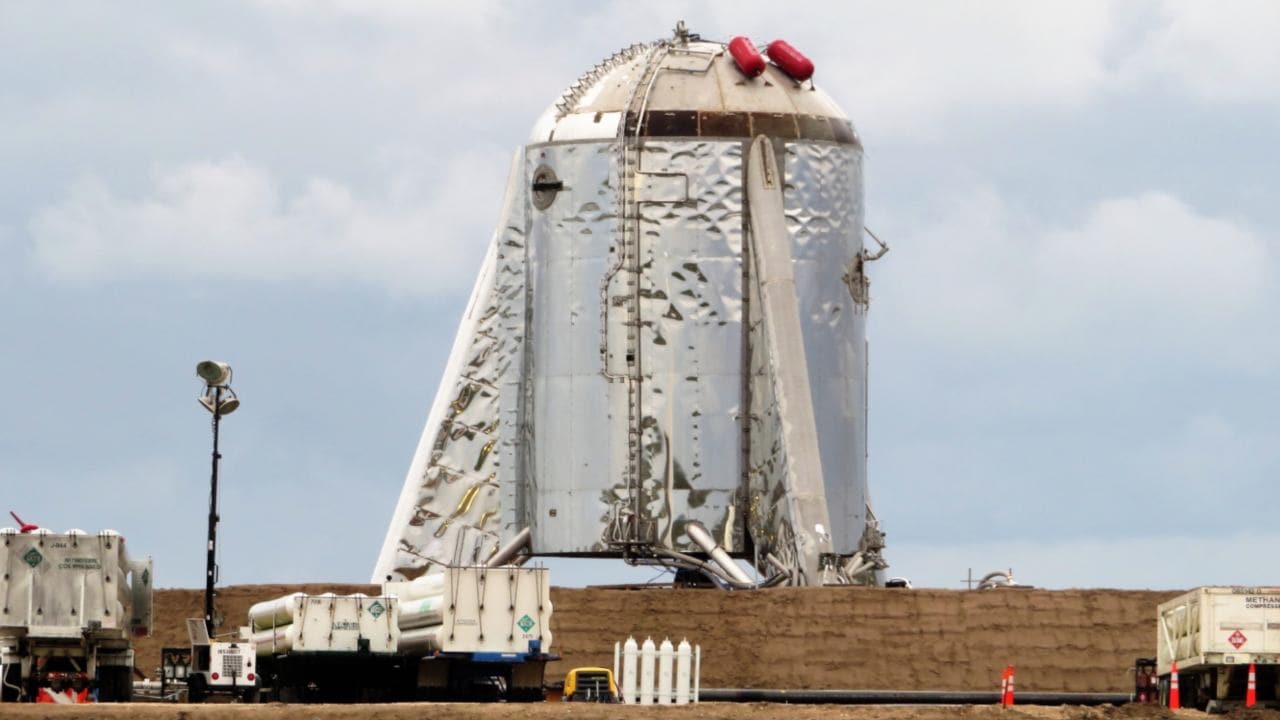 The Starhopper at SpaceX's Boca Chica facility. Image credit: BocaChicaGirl/Twitter[/caption]The spacecraft passed its first official "hop test," where the rocket was fire up and propelled from the launch pad while sturdy tethers kept it from taking off skywards. The 'Starhopper' "hit tether limits" as Musk said in a Tweet, indicating that it did just as SpaceX hoped it would.The hop test is nothing like a normal rocket launch, since the spacecraft isn’t nearly ready to go into space. But for SpaceX, Starhopper passing the hop test means the rocket's engines and other vital systems are responding well to stresses in the real world. It's no trip to Mars, but this success is still a pretty big deal for the Starhopper.[caption id="attachment_5946201" align="alignnone" width="1280"]
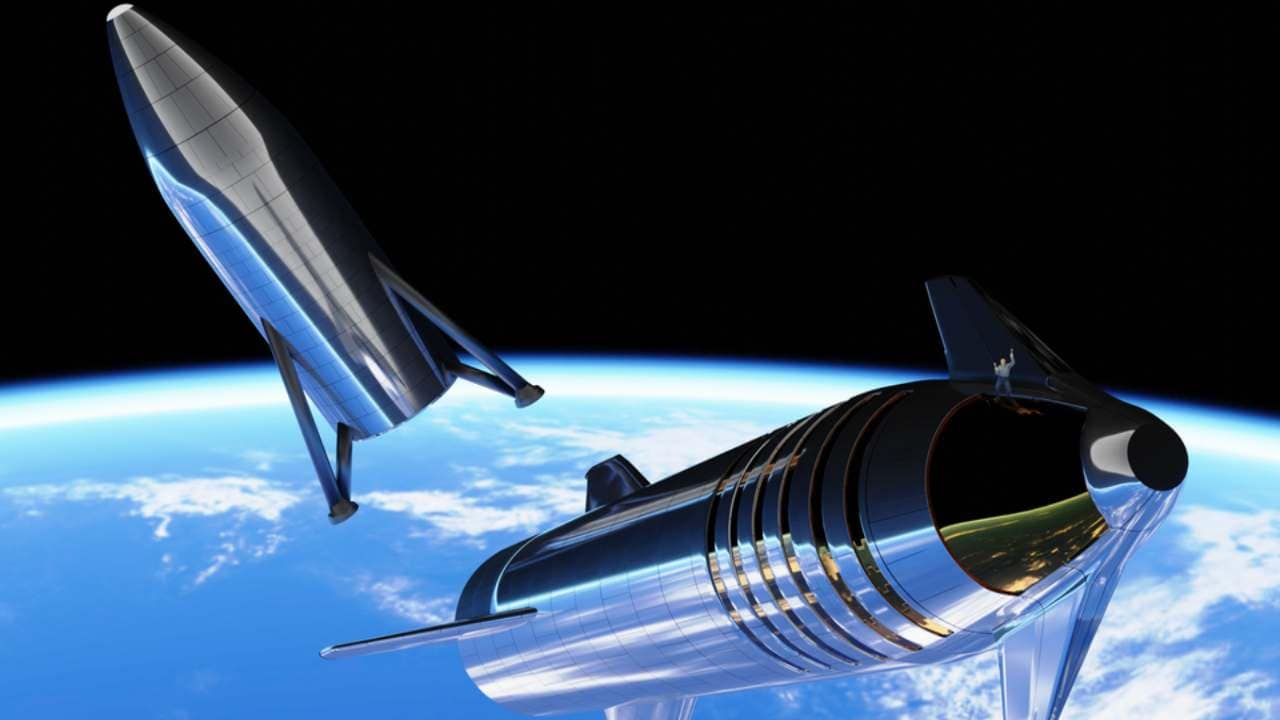 An artistic rendition of the SpaceX Starship rocket in Low-Earth Orbit. Image: SpaceX[/caption]The Starhopper was built with one Raptor engine for the hop test, which came roaring to life at the base of the rocket at SpaceX's Boca Chica launch facility. Now, imagine seven times the engines producing seven times the thrust — because that's exactly what SpaceX has in mind for the final Starhopper test model.Here's a look at what a single Raptor can do, from SpaceX's engine static-fire test last month (that's 60 percent of the rocket's full might, as Musk kindly points out in a tweet.)Work on the Starhopper will continue as it is built, tweaked and groomed further for its test flight, which could carry Japanese entrepreneur and billionaire Yusaku Maezawa and his troupe of artists around the moon as early as 2023.
First Published:Apr 09, 2019, 14:05:09 IST
Advertisement
Advertisement

Careless Whispers: Scientists discover that plants can 'talk' to each other using smells
Japanese scientists have recorded a video that shows plants, in certain conditions, communicate with each other using mists that carry smells. The discovery, reveals that plants release a fine mist of airborne compounds, to warn nearby plants of potential dangers
Life on Mars? European Space Agency’s Orbiter discovers ice water deposits at equator
European Space Agency's Mars Express Orbiter has identified massive ice and ice water deposits beneath the surface of Mars. The Mars Express orbiter was also the first to confirmed the presence of ice on Mars in 2004
Microsoft briefly overtakes Apple as the most valuable company, Apple back on top again
At its peak during the session, Microsoft's value reached $2.903 trillion, with a 2% surge. As of writing this article, Apple closed at $2.89 trillion, whereas Microsoft closed at $2.86 trillion
Even NASA is facing a tough time, starts layoffs following major budget cuts
NASA is facing some massive budget cuts, because of which, it has been forced to postpone some upcoming missions. NASA's Jet Propulsion Laboratory has been hit hard by recent federal budget cuts, resulting in the layoff of 100 contractors last week
ISRO, NASA's NISAR satellite to get ready by Jan-end, will monitor Earth's snow-covered regions
The NISAR satellite which has been developed jointly ISRO and NASA, should be ready for launch by the end of January 2024. The collaboration between NASA and ISRO on NISAR is the first time the two agencies have cooperated on hardware development for an Earth-observing mission
Advertisement
Advertisement