


SpaceX reaches for milestone in human spaceflight – a private company will launch NASA astronauts into orbit
Compared to an average space shuttle mission that cost US$1.6 billion, NASA is paying only $55 million per seat for SpaceX’s upcoming ISS flights.

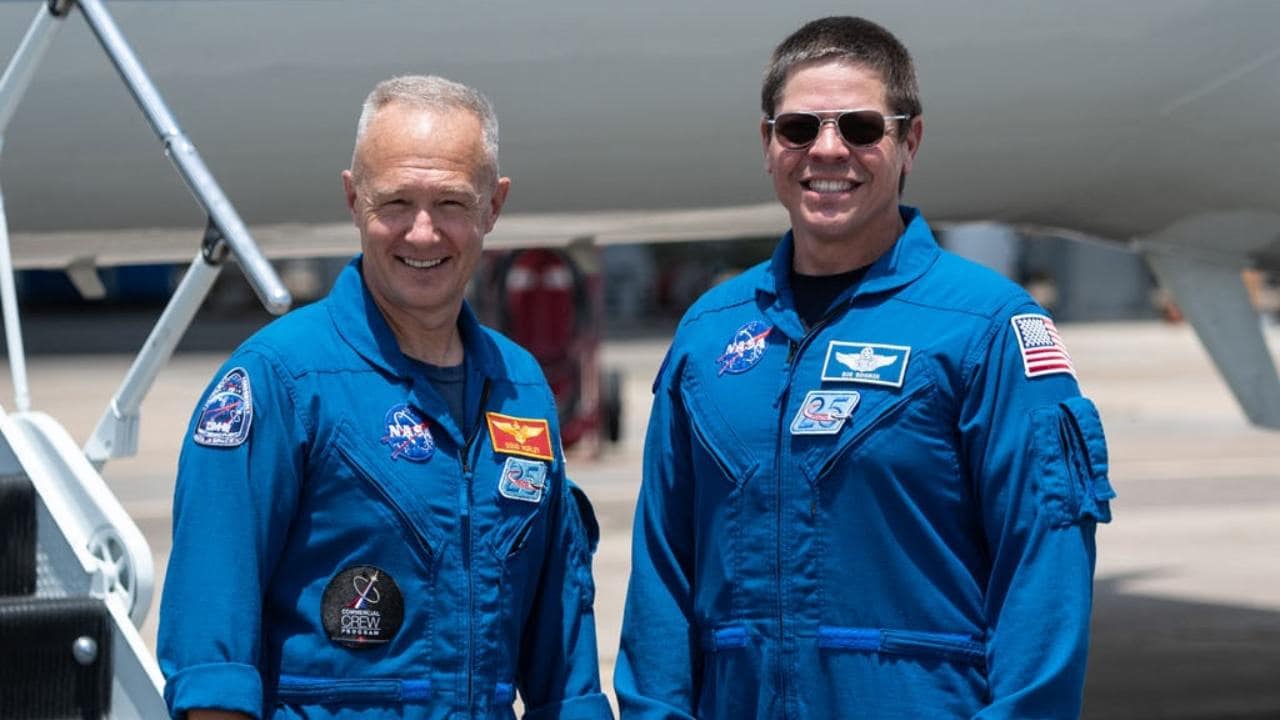
Astronauts Douglas Hurley (left) and Robert Behnken before boarding the Gulfstream jet that will carry them to Kennedy Space Center in Florida. Image credit: NASA/James Blair[/caption]As a space policy expert, I find it hard to overstate the significance for both SpaceX and spaceflight in general. For SpaceX, it’s another step on their road to Mars, but more generally, it demonstrates that spaceflight need not be reserved for only the most powerful of states.
A dream and an opening
In many ways, SpaceX’s achievement is due not only to technological advances, but opportunity brought about by disaster. The breakup of the space shuttle Columbia in 2003 led the Bush administration to decide to end the shuttle program by 2010. They directed NASA to develop a replacement, Project Constellation, but due to budget cuts and other problems, NASA failed to make significant progress. As a result, in 2010, the Obama administration directed NASA to refocus its efforts on deep space missions and rely on private companies to provide access to the ISS and low Earth orbit.Enter SpaceX. Dreaming of colonization of Mars but frustrated with the slow pace at which it was coming, Elon Musk founded SpaceX in 2002. To get to Mars, he decided that spaceflight would first need to be made cheaper. His philosophy was to devise a rocket system that could be used again and again with minimal refurbishment between flights. Over the next decade, SpaceX designed, built and tested its Falcon series of rockets. It signed contracts with NASA to provide cargo services to the ISS and with other companies and the US military to provide general launch services. Perhaps most importantly, SpaceX has demonstrated that its rockets can be reused, with the core stages flying their way back to Earth to land themselves.The 2010 shift in American space policy gave SpaceX an opportunity to build on its early successes. By 2014, both SpaceX and Boeing were given contracts from NASA to provide commercial crew launch services. And it appears, so far, that SpaceX has made good on its promise of reducing the cost of human spaceflight. Compared to an average space shuttle mission that cost US$1.6 billion, NASA is paying only $55 million per seat for SpaceX’s upcoming ISS flights.[caption id="attachment_8428661" align="alignnone" width="1000"]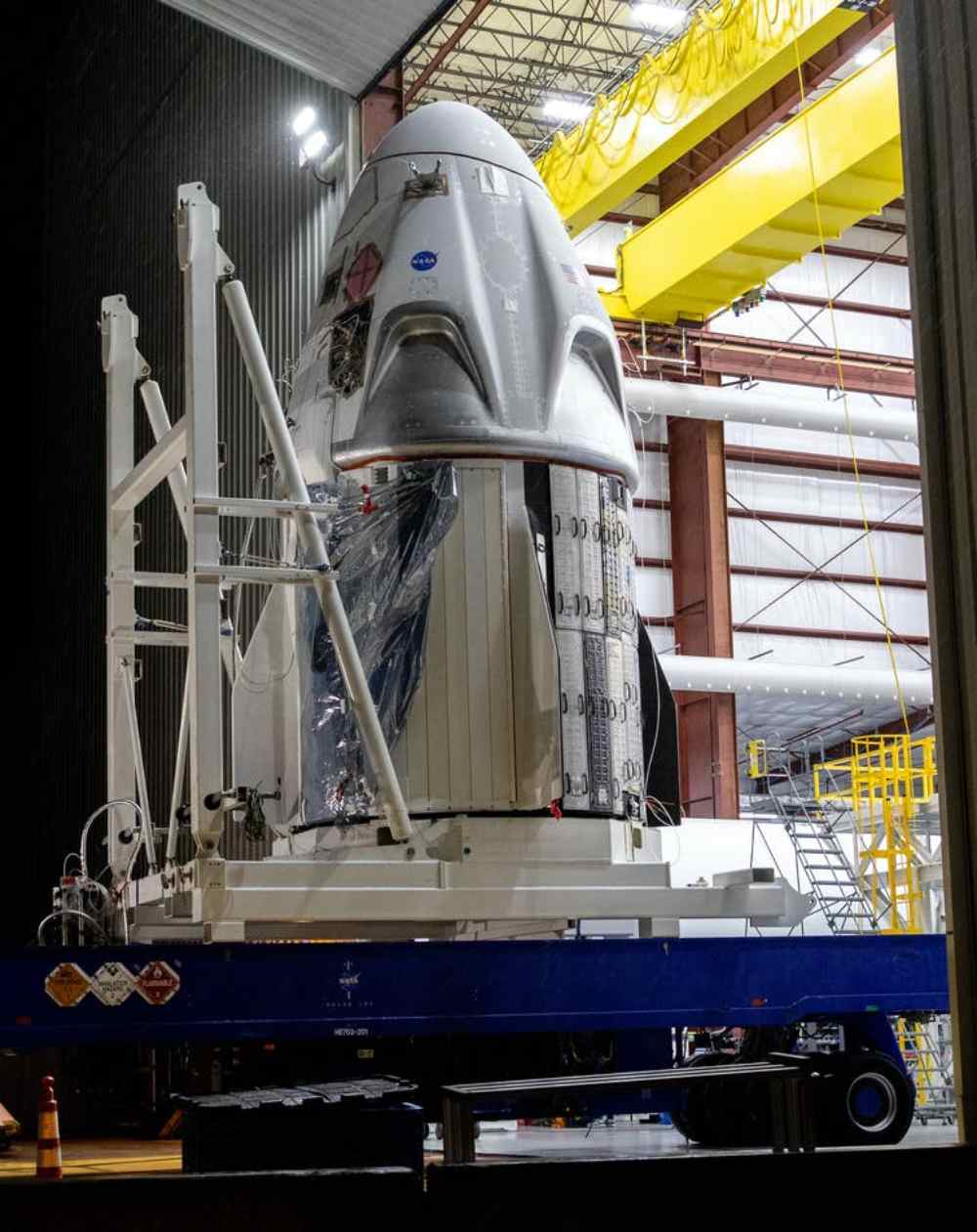
The SpaceX Crew Dragon spacecraft is designed to carry up to seven passengers. Image credit: NASA/Kim Shiflett[/caption]
Tourists in space?
This massive reduction in cost made possible through reusable rockets is contributing to several developments in spaceflight. First, it provides NASA a means of access to the ISS without relying on the Russian Soyuz. Since 2011, the US has been paying Russia upwards of $86 million per seat for flights to the space station.Second, with SpaceX and Boeing providing access to the ISS, NASA can concentrate on Project Artemis, which intends to return humans to the Moon by 2024. They are also leveraging new commercial capabilities from SpaceX, Blue Origin and others to further reduce costs to get there.If SpaceX is successful, it could also mean the opening of space to tourism. Blue Origin and Virgin Galactic are planning to offer brief suborbital launches that don’t enter Earth orbit. SpaceX, on the other hand, is already signing up passengers for several-day trips to space at $35 million a seat. Even Tom Cruise is looking to fly on SpaceX and film a movie aboard the ISS. While space companies have long predicted opportunities for space tourism, SpaceX’s Dragon brings that possibility closer to reality.More broadly, adding tourists to the mix in low Earth orbit may even help make space safer. Debris in orbit is a growing problem, along with increasing tensions between the US, China and Russia in space. Both of those things make operating in space more difficult, dangerous and costlier.For the space economy to really take off, countries will need to put in place regulations that ensure safety and reliability in several areas, including vehicle safety and debris mitigation. And, as I suggest in my new book, having more humans in space might force countries to think twice before taking potentially dangerous actions in space. While orbital space tourism might still be far off for the average American, SpaceX’s crew launch brings us closer to the day when an extraordinary event is a normal occurrence.Wendy Whitman Cobb, Professor of Strategy and Security Studies, US Air Force School of Advanced Air and Space StudiesThis article is republished from The Conversation under a Creative Commons license. Read the original article.

Careless Whispers: Scientists discover that plants can 'talk' to each other using smells
Life on Mars? European Space Agency’s Orbiter discovers ice water deposits at equator
Microsoft briefly overtakes Apple as the most valuable company, Apple back on top again
Even NASA is facing a tough time, starts layoffs following major budget cuts
ISRO, NASA's NISAR satellite to get ready by Jan-end, will monitor Earth's snow-covered regions