
Advertisement


Sections
SpaceX launches 60 more Starlink satellites into orbit; recovers Falcon 9 rocket
After deploying the satellites into the orbit, the Falcon 9 booster was successfully recovered.

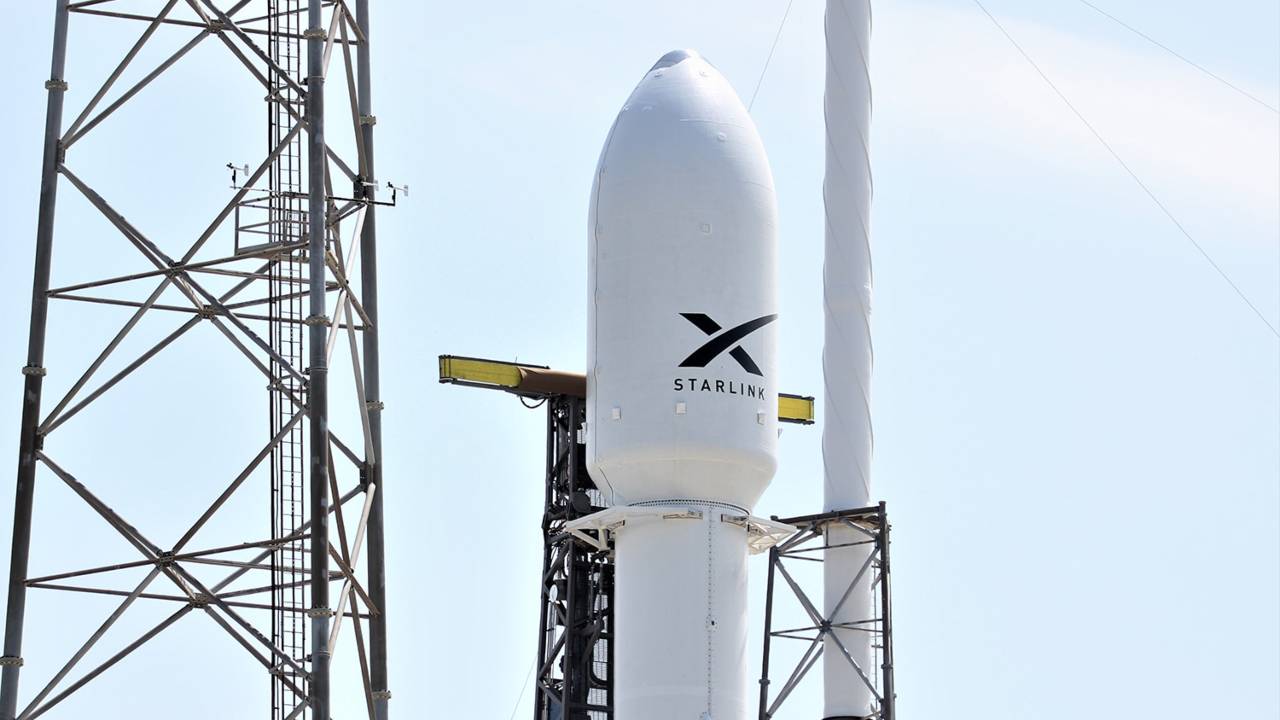
SpaceX successfully launched a fresh batch of Starlink satellites and deployed them into their intended target orbit. The space rocket company blasted off 60 mini-satellites aboard a Falcon 9 rocket from Cape Canaveral in Florida, US.[caption id="attachment_7546301" align="alignnone" width="1280"]![SpaceX Starlink logo on the Falcon 9 fairing. Image credit: Ken Kremer/SpaceUpClose]() SpaceX Starlink logo on the Falcon 9 fairing. Image credit: Ken Kremer/SpaceUpClose[/caption]In the previous launch, 60 satellites were launched, however, they were for testing purposes. The new batch of satellites was onboard a Falcon 9 rocket that flew its fourth successful mission. Each satellite weighs 260 kg.After successfully deploying the satellites into the orbit, the booster was recovered using controlled landing on the 'Of Course I Still Love You' drone ship in the Atlantic Ocean.It was the fourth launch of this first-stage booster — the most for SpaceX, which aimed to recover it again offshore. This also marked the first time SpaceX used a previously flown nose cone. The company reuses rocket parts to cut costs.SpaceX was also aiming to recover the fairing of the Starlink satellites after detaching from the boosters. The fairing is the protective casing that is used to protect the payload, the satellites in this case. However, the conditions weren't favourable to recover the fairing in this launch.SpaceX founder Elon Musk wants to put thousands of these Starlink satellites in orbit, to offer high-speed internet service everywhere. He plans to start service next year in the northern U.S. and Canada.With inputs from The Associated Press.
SpaceX Starlink logo on the Falcon 9 fairing. Image credit: Ken Kremer/SpaceUpClose[/caption]In the previous launch, 60 satellites were launched, however, they were for testing purposes. The new batch of satellites was onboard a Falcon 9 rocket that flew its fourth successful mission. Each satellite weighs 260 kg.After successfully deploying the satellites into the orbit, the booster was recovered using controlled landing on the 'Of Course I Still Love You' drone ship in the Atlantic Ocean.It was the fourth launch of this first-stage booster — the most for SpaceX, which aimed to recover it again offshore. This also marked the first time SpaceX used a previously flown nose cone. The company reuses rocket parts to cut costs.SpaceX was also aiming to recover the fairing of the Starlink satellites after detaching from the boosters. The fairing is the protective casing that is used to protect the payload, the satellites in this case. However, the conditions weren't favourable to recover the fairing in this launch.SpaceX founder Elon Musk wants to put thousands of these Starlink satellites in orbit, to offer high-speed internet service everywhere. He plans to start service next year in the northern U.S. and Canada.With inputs from The Associated Press.
 SpaceX Starlink logo on the Falcon 9 fairing. Image credit: Ken Kremer/SpaceUpClose[/caption]In the previous launch, 60 satellites were launched, however, they were for testing purposes. The new batch of satellites was onboard a Falcon 9 rocket that flew its fourth successful mission. Each satellite weighs 260 kg.After successfully deploying the satellites into the orbit, the booster was recovered using controlled landing on the 'Of Course I Still Love You' drone ship in the Atlantic Ocean.It was the fourth launch of this first-stage booster — the most for SpaceX, which aimed to recover it again offshore. This also marked the first time SpaceX used a previously flown nose cone. The company reuses rocket parts to cut costs.SpaceX was also aiming to recover the fairing of the Starlink satellites after detaching from the boosters. The fairing is the protective casing that is used to protect the payload, the satellites in this case. However, the conditions weren't favourable to recover the fairing in this launch.SpaceX founder Elon Musk wants to put thousands of these Starlink satellites in orbit, to offer high-speed internet service everywhere. He plans to start service next year in the northern U.S. and Canada.With inputs from The Associated Press.
First Published:Nov 11, 2019, 21:31:12 IST
Advertisement
Advertisement

Careless Whispers: Scientists discover that plants can 'talk' to each other using smells
Japanese scientists have recorded a video that shows plants, in certain conditions, communicate with each other using mists that carry smells. The discovery, reveals that plants release a fine mist of airborne compounds, to warn nearby plants of potential dangers
Life on Mars? European Space Agency’s Orbiter discovers ice water deposits at equator
European Space Agency's Mars Express Orbiter has identified massive ice and ice water deposits beneath the surface of Mars. The Mars Express orbiter was also the first to confirmed the presence of ice on Mars in 2004
Microsoft briefly overtakes Apple as the most valuable company, Apple back on top again
At its peak during the session, Microsoft's value reached $2.903 trillion, with a 2% surge. As of writing this article, Apple closed at $2.89 trillion, whereas Microsoft closed at $2.86 trillion
Even NASA is facing a tough time, starts layoffs following major budget cuts
NASA is facing some massive budget cuts, because of which, it has been forced to postpone some upcoming missions. NASA's Jet Propulsion Laboratory has been hit hard by recent federal budget cuts, resulting in the layoff of 100 contractors last week
ISRO, NASA's NISAR satellite to get ready by Jan-end, will monitor Earth's snow-covered regions
The NISAR satellite which has been developed jointly ISRO and NASA, should be ready for launch by the end of January 2024. The collaboration between NASA and ISRO on NISAR is the first time the two agencies have cooperated on hardware development for an Earth-observing mission
Advertisement
Advertisement