
Advertisement


Sections
SpaceX gears up to launch sixty demo Starlink internet satellites on 15 May
The Starlink satellites look snugly placed inside the Falcon 9's nosecone in Musk's recent tweet.

SpaceX CEO Elon Musk announced Saturday that sixty new satellites in the Starlink network will be launched into space on 15 May — the first in a series of thousands that SpaceX hopes to launch over the next few years for internet coverage from space.The satellites look snugly packed inside the Falcon 9 rocket's nose cone in a picture Musk tweeted. They'll be housed in this payload fairing till the spacecraft releases them into orbit."This next batch of satellites will really be a demonstration set for us to see the deployment scheme and start putting our network together," Gwynne Shotwell, SpaceX President and Chief Operating Officer, said at the Satellite 2019 conference in Washington DC, according to SpaceNews. "We start launching satellites for actual service later this year."[caption id="attachment_6593081" align="alignnone" width="1280"]![A prototype Starlink satellite. The first two prototype Starlink satellites were launched by SpaceX in February 2018. Image: SpaceX]() A prototype Starlink satellite. The first two prototype Starlink satellites were launched by SpaceX in February 2018. Image: SpaceX[/caption]SpaceX's Starlink constellation is a massive planned network of 12,000 internet-providing satellites. So far, SpaceX successfully sought approval for all of them from the American Federal Communications Commission.The demo satellites to be launched on 15 May will be "test satellites" that don't have some of the features (inter-satellite links, for one) intended for the final Starlink satellites. They will sport some highly capable antennas and electric propulsion, though, Shotwell said. A few more Starlink satellites launches are on the cards this year, but specific counts and dates for these depend on how this second set of satellites fare.[caption id="attachment_6530671" align="alignnone" width="1280"]
A prototype Starlink satellite. The first two prototype Starlink satellites were launched by SpaceX in February 2018. Image: SpaceX[/caption]SpaceX's Starlink constellation is a massive planned network of 12,000 internet-providing satellites. So far, SpaceX successfully sought approval for all of them from the American Federal Communications Commission.The demo satellites to be launched on 15 May will be "test satellites" that don't have some of the features (inter-satellite links, for one) intended for the final Starlink satellites. They will sport some highly capable antennas and electric propulsion, though, Shotwell said. A few more Starlink satellites launches are on the cards this year, but specific counts and dates for these depend on how this second set of satellites fare.[caption id="attachment_6530671" align="alignnone" width="1280"]![SpaceX Falcon 9 rocket, launching SpaceX's two test Starlink satellites in 2018. Image: SpaceX]() SpaceX Falcon 9 rocket, launching SpaceX's two test Starlink satellites in 2018. Image: SpaceX[/caption]Once up and running, satellite internet can provide access to a much wider range of people than today's fibre and cable-based networks can. One of the only disadvantages for widespread use is latency: satellite systems have a latency of 638 milliseconds, which is roughly 20 times slower than wired. Data can be downloaded on these high-latency networks at similar speeds to regular connections, but response times for gaming and other reaction-sensitive uses could be disappointing, according to an Ars Technica report.There are many satellite internet projects competing with SpaceX's Starlink. Satellite internet firm OneWeb and satellite operator Kepler Communications have work underway on their own constellations and have also filed against Starlink, claiming that it could cause signal interference at the lower elevation and potentially even pose a collision risk. When the FCC approved the project, it found that "the modification proposed by SpaceX does not present significant interference problems and is in the public interest." That's promising.[caption id="attachment_5569961" align="alignnone" width="1280"]
SpaceX Falcon 9 rocket, launching SpaceX's two test Starlink satellites in 2018. Image: SpaceX[/caption]Once up and running, satellite internet can provide access to a much wider range of people than today's fibre and cable-based networks can. One of the only disadvantages for widespread use is latency: satellite systems have a latency of 638 milliseconds, which is roughly 20 times slower than wired. Data can be downloaded on these high-latency networks at similar speeds to regular connections, but response times for gaming and other reaction-sensitive uses could be disappointing, according to an Ars Technica report.There are many satellite internet projects competing with SpaceX's Starlink. Satellite internet firm OneWeb and satellite operator Kepler Communications have work underway on their own constellations and have also filed against Starlink, claiming that it could cause signal interference at the lower elevation and potentially even pose a collision risk. When the FCC approved the project, it found that "the modification proposed by SpaceX does not present significant interference problems and is in the public interest." That's promising.[caption id="attachment_5569961" align="alignnone" width="1280"]![Representational image. Telesat]() Representational image. Telesat[/caption]Beaming down internet from satellites sounds like a terrific idea with a lot of perks, but numerous other companies have run into problems with similar projects. Facebook's Project Athena, after failing to get its drones to work properly, turned to satellites with the aim of launching an internet constellation by early 2019 which the company hasn't yet.Similarly, Google is working on Project Loon, which aims to provide 4G internet (LTE) to remote regions of the world using hot air balloons. It, too, has run into numerous obstacles, a major patent lawsuit among them. Amazon, too, has also announced Project Kuiper, its own project for satellite internet services.
Representational image. Telesat[/caption]Beaming down internet from satellites sounds like a terrific idea with a lot of perks, but numerous other companies have run into problems with similar projects. Facebook's Project Athena, after failing to get its drones to work properly, turned to satellites with the aim of launching an internet constellation by early 2019 which the company hasn't yet.Similarly, Google is working on Project Loon, which aims to provide 4G internet (LTE) to remote regions of the world using hot air balloons. It, too, has run into numerous obstacles, a major patent lawsuit among them. Amazon, too, has also announced Project Kuiper, its own project for satellite internet services.
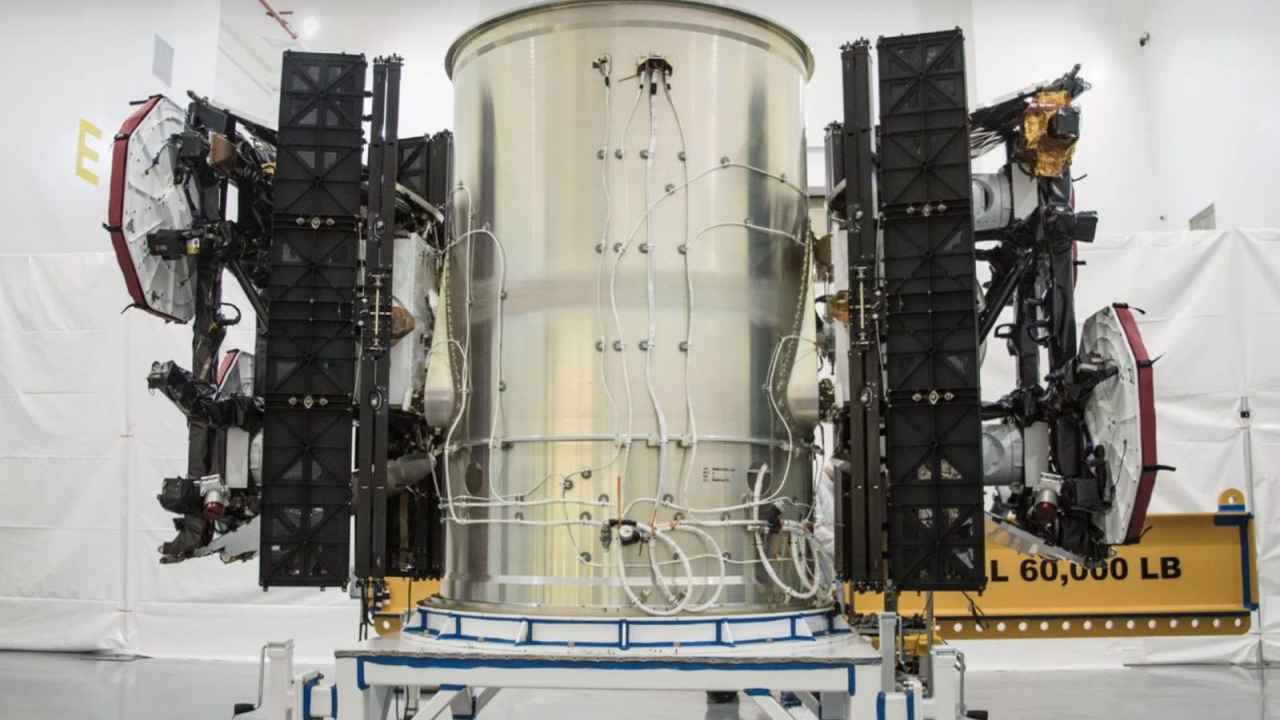 A prototype Starlink satellite. The first two prototype Starlink satellites were launched by SpaceX in February 2018. Image: SpaceX[/caption]SpaceX's Starlink constellation is a massive planned network of 12,000 internet-providing satellites. So far, SpaceX successfully sought approval for all of them from the American Federal Communications Commission.The demo satellites to be launched on 15 May will be "test satellites" that don't have some of the features (inter-satellite links, for one) intended for the final Starlink satellites. They will sport some highly capable antennas and electric propulsion, though, Shotwell said. A few more Starlink satellites launches are on the cards this year, but specific counts and dates for these depend on how this second set of satellites fare.[caption id="attachment_6530671" align="alignnone" width="1280"]
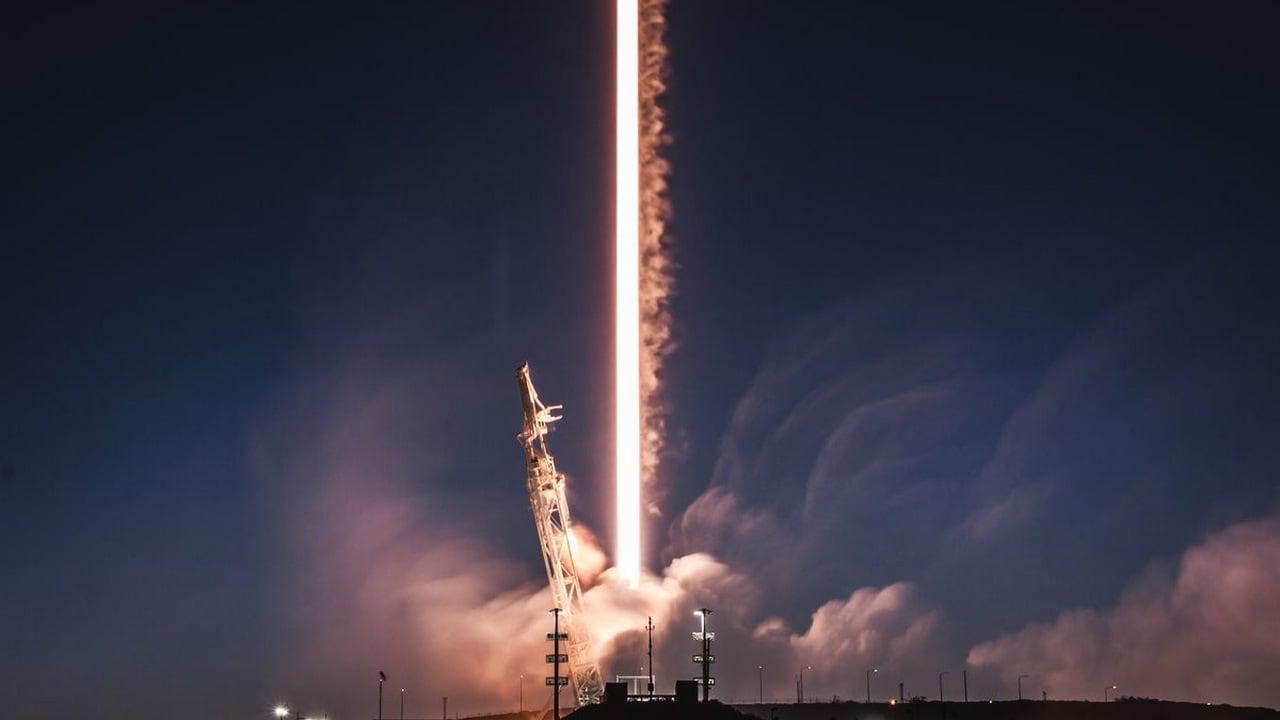 SpaceX Falcon 9 rocket, launching SpaceX's two test Starlink satellites in 2018. Image: SpaceX[/caption]Once up and running, satellite internet can provide access to a much wider range of people than today's fibre and cable-based networks can. One of the only disadvantages for widespread use is latency: satellite systems have a latency of 638 milliseconds, which is roughly 20 times slower than wired. Data can be downloaded on these high-latency networks at similar speeds to regular connections, but response times for gaming and other reaction-sensitive uses could be disappointing, according to an Ars Technica report.There are many satellite internet projects competing with SpaceX's Starlink. Satellite internet firm OneWeb and satellite operator Kepler Communications have work underway on their own constellations and have also filed against Starlink, claiming that it could cause signal interference at the lower elevation and potentially even pose a collision risk. When the FCC approved the project, it found that "the modification proposed by SpaceX does not present significant interference problems and is in the public interest." That's promising.[caption id="attachment_5569961" align="alignnone" width="1280"]
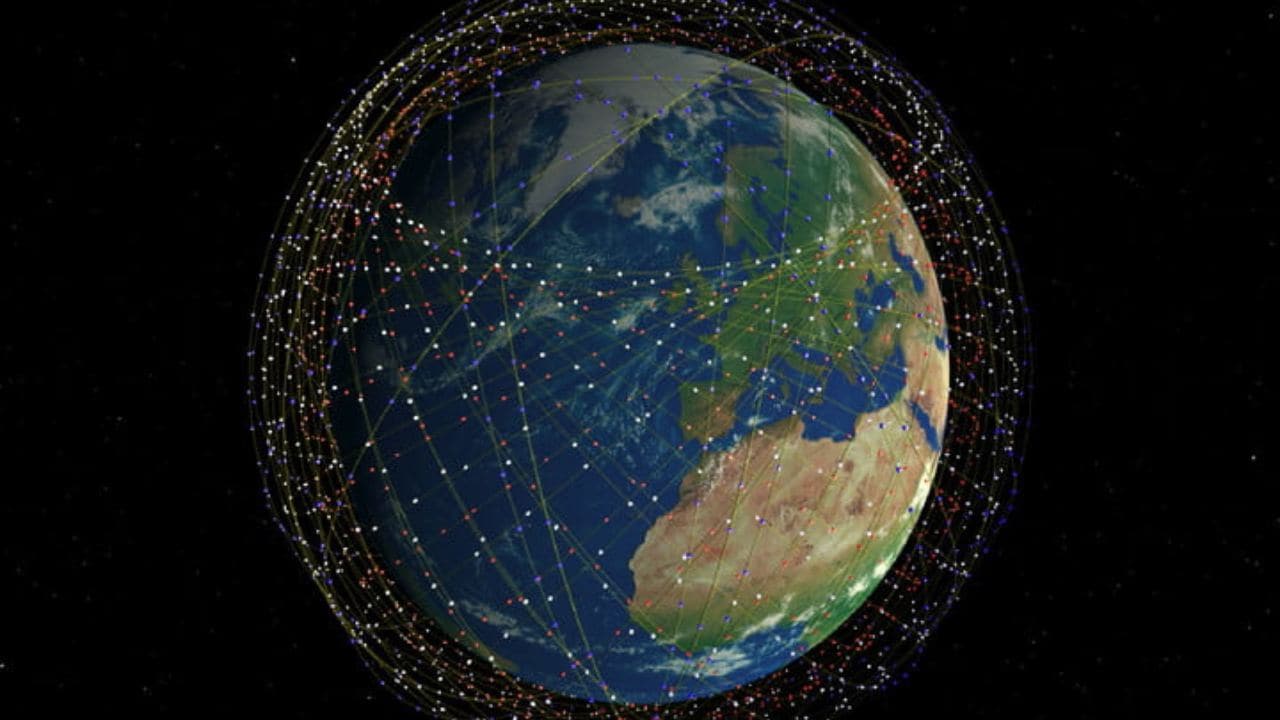 Representational image. Telesat[/caption]Beaming down internet from satellites sounds like a terrific idea with a lot of perks, but numerous other companies have run into problems with similar projects. Facebook's Project Athena, after failing to get its drones to work properly, turned to satellites with the aim of launching an internet constellation by early 2019 which the company hasn't yet.Similarly, Google is working on Project Loon, which aims to provide 4G internet (LTE) to remote regions of the world using hot air balloons. It, too, has run into numerous obstacles, a major patent lawsuit among them. Amazon, too, has also announced Project Kuiper, its own project for satellite internet services.
First Published:May 13, 2019, 18:00:27 IST
Advertisement
Advertisement

Careless Whispers: Scientists discover that plants can 'talk' to each other using smells
Japanese scientists have recorded a video that shows plants, in certain conditions, communicate with each other using mists that carry smells. The discovery, reveals that plants release a fine mist of airborne compounds, to warn nearby plants of potential dangers
Life on Mars? European Space Agency’s Orbiter discovers ice water deposits at equator
European Space Agency's Mars Express Orbiter has identified massive ice and ice water deposits beneath the surface of Mars. The Mars Express orbiter was also the first to confirmed the presence of ice on Mars in 2004
Microsoft briefly overtakes Apple as the most valuable company, Apple back on top again
At its peak during the session, Microsoft's value reached $2.903 trillion, with a 2% surge. As of writing this article, Apple closed at $2.89 trillion, whereas Microsoft closed at $2.86 trillion
Even NASA is facing a tough time, starts layoffs following major budget cuts
NASA is facing some massive budget cuts, because of which, it has been forced to postpone some upcoming missions. NASA's Jet Propulsion Laboratory has been hit hard by recent federal budget cuts, resulting in the layoff of 100 contractors last week
ISRO, NASA's NISAR satellite to get ready by Jan-end, will monitor Earth's snow-covered regions
The NISAR satellite which has been developed jointly ISRO and NASA, should be ready for launch by the end of January 2024. The collaboration between NASA and ISRO on NISAR is the first time the two agencies have cooperated on hardware development for an Earth-observing mission
Advertisement
Advertisement