


Some of our system's youngest orbiting asteroids discovered in the asteroid belt
The asteroids all under 7 million years old, orbit in the Main Asteroid Belt between Mars & Jupiter.

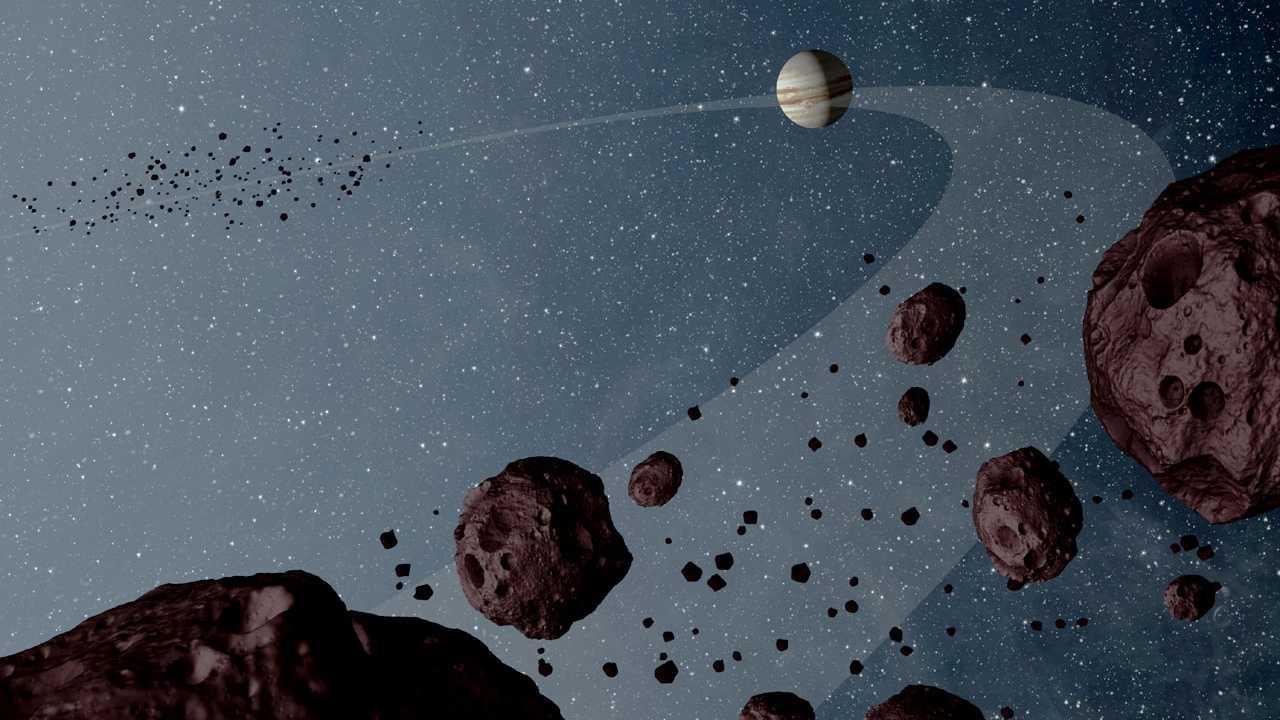
Representational image. Image courtesy: NASA/JPL[/caption]The Main Belt is an extraordinary niche of asteroids, with more than 700 known objects. The number is rising steadily thanks to improving methods of detection, and it can be estimated at a million.According to Carruba, the asteroids in the Main Belt are far from evenly distributed. Various different regions have formed within the belt owing to the highly complex gravitational interaction among so many bodies and, above all, to Jupiter's powerful gravitational field.In the study, published in the journal Monthly Notices of the Royal Astronomical Society, the key dating parameters used were the longitudes of the pericentre and ascending node.For a planet, comet or asteroid moving around the Sun in an elliptical orbit, the pericentre is the point at which it comes closest to the Sun.The ascending node is the point at which the orbit crosses from the southern side of a reference plane, typically the ecliptic plane, to the northern side."When an asteroid family is formed, all the asteroids' pericentres and ascending nodes are aligned, but as the family evolves, the alignment is lost owing to gravitational disturbances produced by planets and possibly by some massive asteroids," Carruba explained.

Careless Whispers: Scientists discover that plants can 'talk' to each other using smells
Life on Mars? European Space Agency’s Orbiter discovers ice water deposits at equator
Microsoft briefly overtakes Apple as the most valuable company, Apple back on top again
Even NASA is facing a tough time, starts layoffs following major budget cuts
ISRO, NASA's NISAR satellite to get ready by Jan-end, will monitor Earth's snow-covered regions