
Advertisement


Sections
Some octopus species appear to be coping well with increase in ocean acidity, for now
While the species may be able to acclimate to near-term ocean acidification, the environmental effects of acidification and hypoxia may be challenging.

A new study has now tested the effects of ocean acidity on octopuses. The study, conducted by the Walla Walla University, in collaboration with La Sierra University, was published in Physiological and Biochemical Zoology journal. The collaborative study provides new insights to how activities impact the world and how it adapts in response. The study focused on the metabolic rate of octopuses exposed to water acidified due to CO2 and the changes it brought about in the animals.The study authors claim that the results show that, with no prior acclimatisation, octopuses had significantly higher RMRs (routine metabolic rate) in high CO2 pressure environments those octopuses in 700- or 360-μatm environments. Researchers, however, found that after 1 and 5 week at 1,500 μatm Pco2, they observed impaired hypoxia tolerance than those acclimated to 700 μatm Pco2. These findings, according to study authors, suggest that the octopus species O.rubescens experiences short-term stress in elevated PCO2, but is able to acclimatise over time.[caption id="attachment_9205911" align="alignnone" width="1280"]![A rescued East pacific red octopus. Image: Wikimedia Commons]()
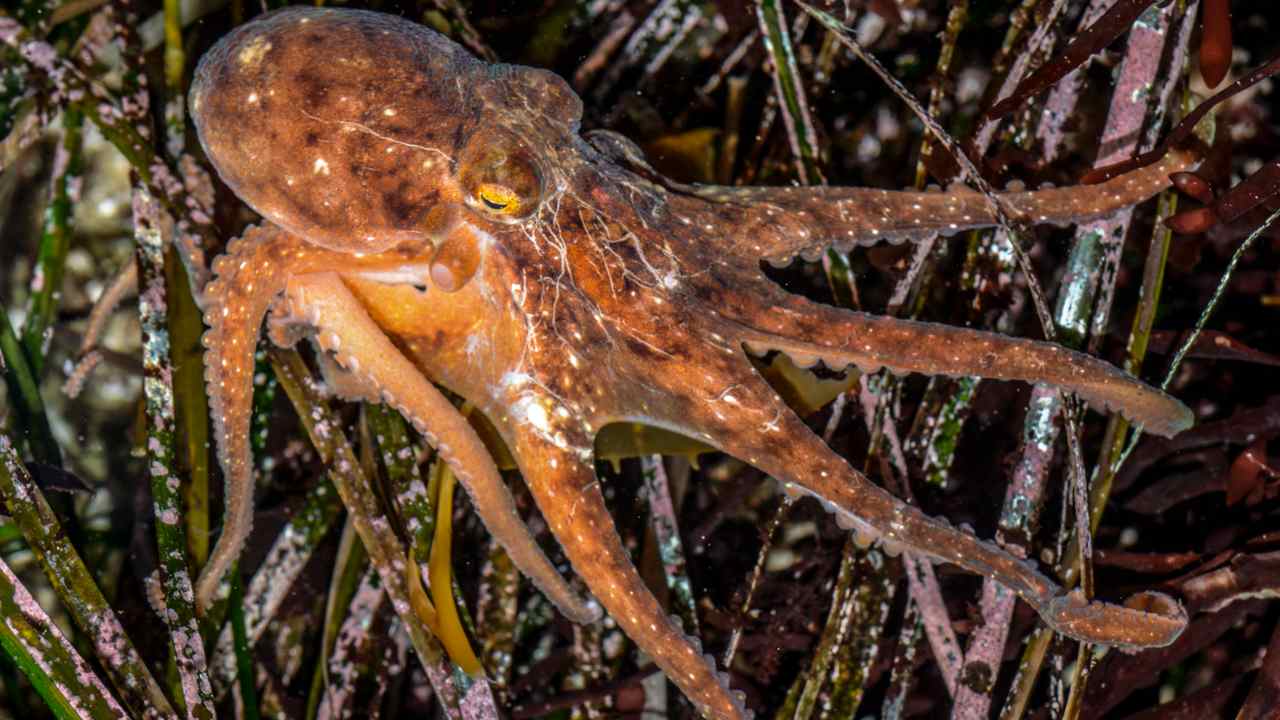
A rescued East pacific red octopus. Image: Wikimedia Commons[/caption]However, while the species may be able to acclimate to near-term ocean acidification, environmental effects of acidification and hypoxia may cause a physiological challenge for the species. The study also showed that increased ocean acidity had no significant change to the metabolism of cuttlefish, while squid subjected to the same conditions showed a reduction in aerobic metabolism, including reduced oxygen circulation in subjects.
First Published:Jan 15, 2021, 16:10:26 IST
Advertisement
Advertisement

Careless Whispers: Scientists discover that plants can 'talk' to each other using smells
Japanese scientists have recorded a video that shows plants, in certain conditions, communicate with each other using mists that carry smells. The discovery, reveals that plants release a fine mist of airborne compounds, to warn nearby plants of potential dangers
Life on Mars? European Space Agency’s Orbiter discovers ice water deposits at equator
European Space Agency's Mars Express Orbiter has identified massive ice and ice water deposits beneath the surface of Mars. The Mars Express orbiter was also the first to confirmed the presence of ice on Mars in 2004
Microsoft briefly overtakes Apple as the most valuable company, Apple back on top again
At its peak during the session, Microsoft's value reached $2.903 trillion, with a 2% surge. As of writing this article, Apple closed at $2.89 trillion, whereas Microsoft closed at $2.86 trillion
Even NASA is facing a tough time, starts layoffs following major budget cuts
NASA is facing some massive budget cuts, because of which, it has been forced to postpone some upcoming missions. NASA's Jet Propulsion Laboratory has been hit hard by recent federal budget cuts, resulting in the layoff of 100 contractors last week
ISRO, NASA's NISAR satellite to get ready by Jan-end, will monitor Earth's snow-covered regions
The NISAR satellite which has been developed jointly ISRO and NASA, should be ready for launch by the end of January 2024. The collaboration between NASA and ISRO on NISAR is the first time the two agencies have cooperated on hardware development for an Earth-observing mission
Advertisement
Advertisement