


Skull of largest meat-eating mammal to roam Earth found in museum cabinet in Kenya
A skull of a carnivore mammal that roamed the Earth after the dinosaurs has been discovered in a drawer in African museums.

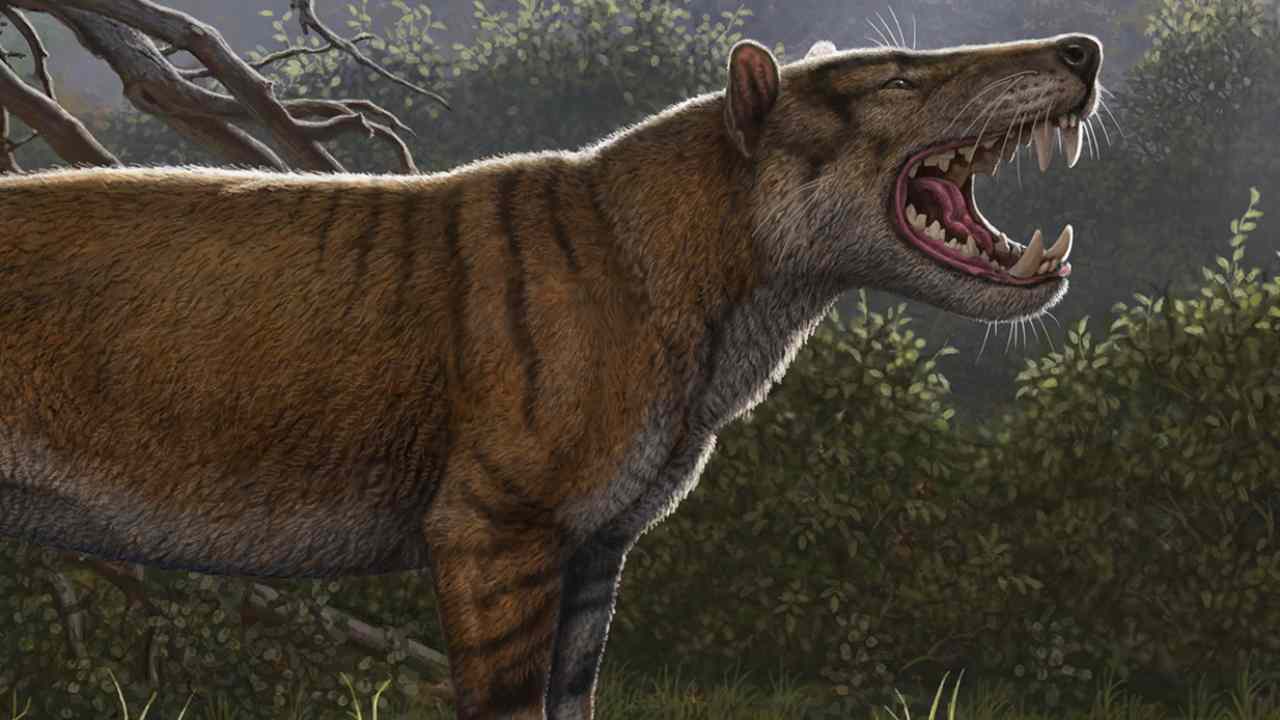
An artistic impression of the Simbakubwa kutokaafrika, a gigantic carnivore that roamed the Earth roughly 22 million years ago. Image credit: Mauricio Anton[/caption]"Most of the specimens that I study are quite small, so you can imagine my surprise when I opened a drawer that I hadn’t examined yet, and saw the enormous teeth glinting up at me. The specimen had been collected decades before, and the team that discovered this fossil was more focused on other parts of the fauna, particularly primates,” Stevens said.Simbakubwa was a member of a group called Hyaenodonts that appeared 62 million years ago, 4 million years after the extinction of the dinosaurs paved the way for mammalian dominance, and went extinct 9 million years ago. Hyaenodonts preceded carnivore groups like cats, bears, hyenas and wolves, and were closely related to none of them.“At first glance, it would have looked like a gigantic hyena or long-tailed wolf with a head that was a little too big for its body. I imagine something like the ‘wargs’ from ‘Lord of the Rings,’” said Borths, a Duke Lemur Center paleontologist, referring to fictional monstrous wolves.Simbakubwa’s name means “big lion” in Swahili though it was not a cat. It was the largest predator in its ecosystem, a fragmented forest inhabited by early apes, hippo relatives and elephant relatives, and was probably the largest carnivorous land mammal in Africa up to that time.“It was not an animal built for long efficient runs across open ground. Instead, its foot was flexed. Carnivores with this posture tend to be ambush hunters like tigers rather than pursuit hunters like wolves,” Borths said.

Careless Whispers: Scientists discover that plants can 'talk' to each other using smells
Life on Mars? European Space Agency’s Orbiter discovers ice water deposits at equator
Microsoft briefly overtakes Apple as the most valuable company, Apple back on top again
Even NASA is facing a tough time, starts layoffs following major budget cuts
ISRO, NASA's NISAR satellite to get ready by Jan-end, will monitor Earth's snow-covered regions