
Advertisement


Sections
Semen frozen for 50 years used to breed 34 healthy lambs in breakthrough study
Amazingly, the sperm resulted in birth rates comparable to semen frozen for 12 months.

Sperm is one of the shortest-lived cells in the animal kingdom, with just 5 days of life in the best of conditions before it dies out or gets recycled by the body. Now, scientists have managed to revive semen stored in a lab since 1968 and used the cells to get 34 lambs pregnant.Amazingly, the sperm resulted in birth rates comparable to semen frozen for 12 months, which is an established benchmark timeline for current freezing tech.[caption id="attachment_6289481" align="alignnone" width="1280"]![One of the new lambs born from 50-year-old semen. Image credit: Morgan Hancock]() The success bodes well not just in the veterinary sciences, but also human medicine. As de Graaf told Inverse, "What is true for the sheep is also true for humans."There’s no reason to believe that human sperm will behave any differently than sheeps'. The researchers will have to keep a close eye on those wrinkly lambs to make sure they develop normally. But as far as scope for the future, this success means hope for people at risk of losing their fertility (like males undergoing chemotherapy).This could also be great news for breeders of purebred dogs — the genetic diversity in many dog breeds is down to worrying levels, which means more abnormalities and poorer health with every successive generation. One of the most awesome of its applications is making (existing or extinct) animals and people parents long after their death.
The success bodes well not just in the veterinary sciences, but also human medicine. As de Graaf told Inverse, "What is true for the sheep is also true for humans."There’s no reason to believe that human sperm will behave any differently than sheeps'. The researchers will have to keep a close eye on those wrinkly lambs to make sure they develop normally. But as far as scope for the future, this success means hope for people at risk of losing their fertility (like males undergoing chemotherapy).This could also be great news for breeders of purebred dogs — the genetic diversity in many dog breeds is down to worrying levels, which means more abnormalities and poorer health with every successive generation. One of the most awesome of its applications is making (existing or extinct) animals and people parents long after their death.
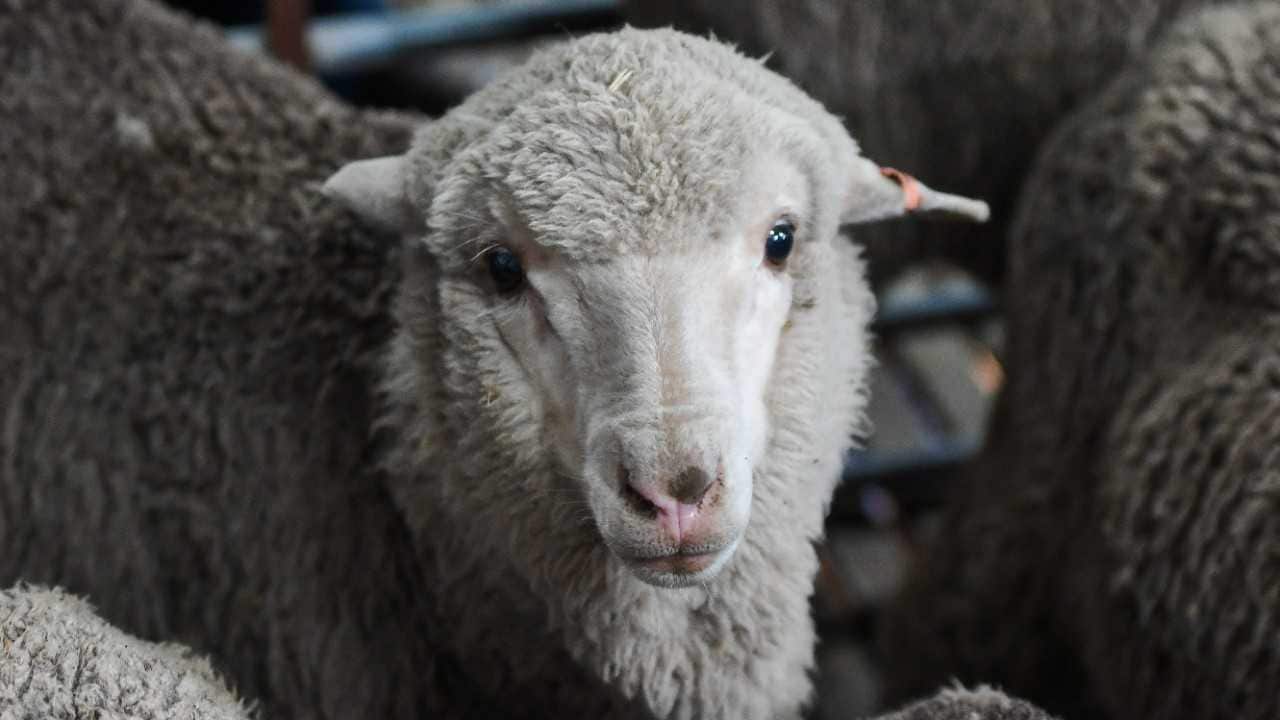
One of the new lambs born from 50-year-old semen. Image credit: Morgan Hancock[/caption]"This demonstrates the clear viability of long-term frozen storage of semen," Professor Simon de Graaf from the University of Sydney, said in a press release.All the semen used in the study came from four rams — Sir Freddie, born in 1959, two rams born in 1963, and a ram born in 1965. Their sperm was used to revive lambs with wrinkles on their body — a feature common in Merino rams in the mid-20th-century. The wrinkles meant a larger skin surface area and better wool yields, which eventually grew tedious to manage and sheer.
First Published:Mar 19, 2019, 17:03:09 IST
Advertisement
Advertisement

Careless Whispers: Scientists discover that plants can 'talk' to each other using smells
Japanese scientists have recorded a video that shows plants, in certain conditions, communicate with each other using mists that carry smells. The discovery, reveals that plants release a fine mist of airborne compounds, to warn nearby plants of potential dangers
Life on Mars? European Space Agency’s Orbiter discovers ice water deposits at equator
European Space Agency's Mars Express Orbiter has identified massive ice and ice water deposits beneath the surface of Mars. The Mars Express orbiter was also the first to confirmed the presence of ice on Mars in 2004
Microsoft briefly overtakes Apple as the most valuable company, Apple back on top again
At its peak during the session, Microsoft's value reached $2.903 trillion, with a 2% surge. As of writing this article, Apple closed at $2.89 trillion, whereas Microsoft closed at $2.86 trillion
Even NASA is facing a tough time, starts layoffs following major budget cuts
NASA is facing some massive budget cuts, because of which, it has been forced to postpone some upcoming missions. NASA's Jet Propulsion Laboratory has been hit hard by recent federal budget cuts, resulting in the layoff of 100 contractors last week
ISRO, NASA's NISAR satellite to get ready by Jan-end, will monitor Earth's snow-covered regions
The NISAR satellite which has been developed jointly ISRO and NASA, should be ready for launch by the end of January 2024. The collaboration between NASA and ISRO on NISAR is the first time the two agencies have cooperated on hardware development for an Earth-observing mission
Advertisement
Advertisement