


Scientists propose an aerosol sunscreen in the atmosphere to curb global warming
Aircrafts designed to fly at altitudes of 20km can disperse the aerosols as required: Researchers.

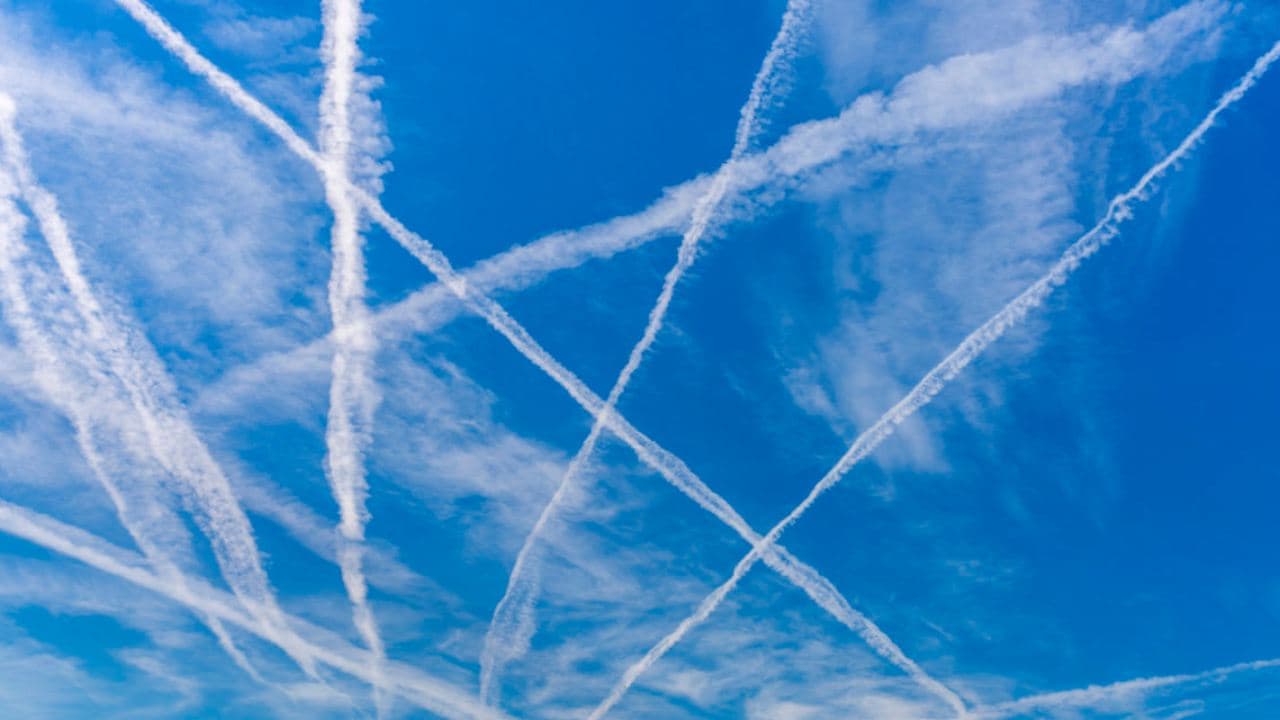
Contrails over blue sky.[/caption]After direct input from several aerospace and engine companies, the scientists said they have developed a design that could be suitable and could be ready to be deployed in 15 years, aiming to cut the rate of temperature change in half.The scientists emphasised that this is merely a hypothetical scenario.“We make no judgment about the desirability of SAI. We simply show that a hypothetical deployment programme commencing 15 years hence, while both highly uncertain and ambitious, would indeed be technically possible from an engineering perspective. It would also be remarkably inexpensive,” the report said.There are risks to such unproven potential technologies. Scientists have said SAI could result in negative consequences such as causing droughts or extreme weather in other parts of the world, harm crop yields as well as potential public health and governance issues.It also does not address the issue of rising carbon dioxide emissions, the main greenhouse gas blamed for global warming.Commenting on the study, Phil Williamson at the University of East Anglia said: “Such scenarios are fraught with problems — and international agreement to go ahead with such action would seem near-impossible to achieve.”

Careless Whispers: Scientists discover that plants can 'talk' to each other using smells
Life on Mars? European Space Agency’s Orbiter discovers ice water deposits at equator
Microsoft briefly overtakes Apple as the most valuable company, Apple back on top again
Even NASA is facing a tough time, starts layoffs following major budget cuts
ISRO, NASA's NISAR satellite to get ready by Jan-end, will monitor Earth's snow-covered regions