


Scientists identify asteroids of interstellar origin moving in our Solar System
The first space rock that the scientists discovered was the asteroid 514107 Ka'epaoka'awela which means 'mischievous opposite-moving companion of Jupiter.'

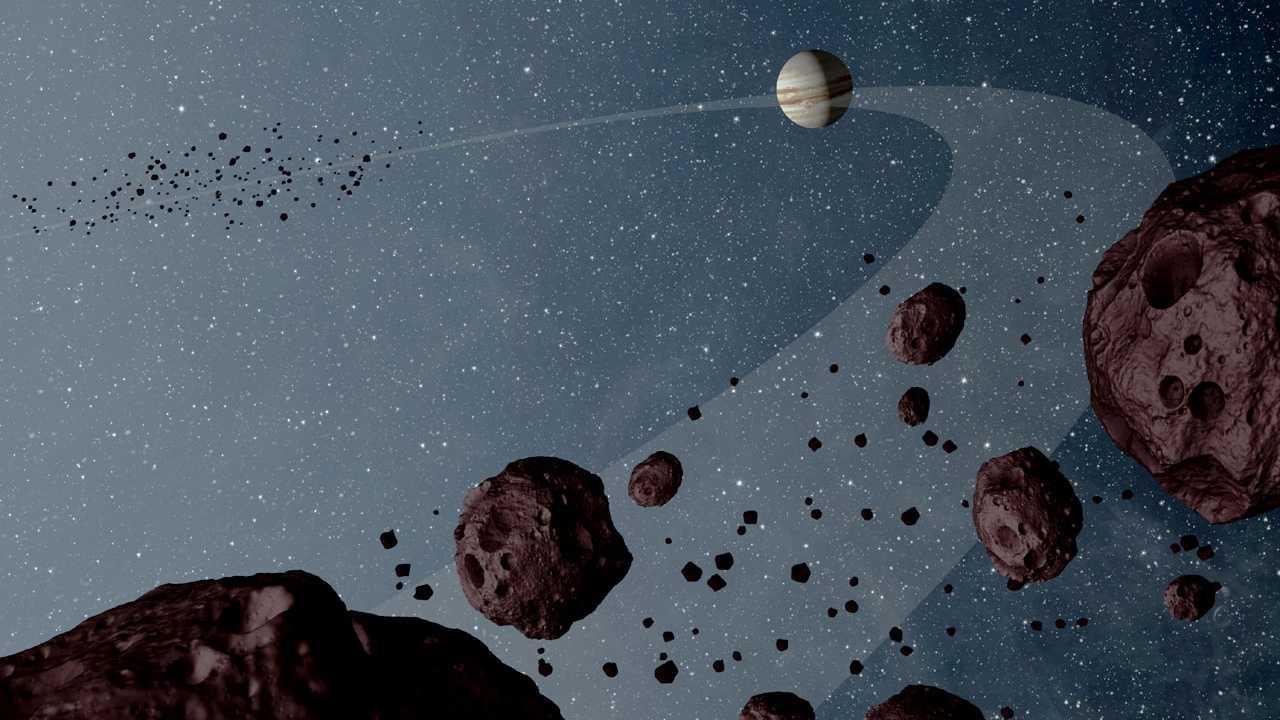
Representational image. Image courtesy: NASA/JPL[/caption]“Some objects now in the Solar System must, therefore, have formed around other stars. Until recently, however, we couldn't distinguish between captured interstellar objects and objects that formed around the Sun. The first identification was made by us in 2018," said Maria Helena Moreira Morais, one of the two co-authors.The first space rock that the scientists discovered was the asteroid 514107 Ka'epaoka'awela. The name of the asteroid is Hawaiian and loosely translates to "mischievous opposite-moving companion of Jupiter".The study reveals that the Centaurs have highly inclined orbits with respect to the orbital plane of the planets. It also divulged that the space rocks and planets which arose in the Solar System were produced from a thin disk of gas and dust that orbited the sun.According to researchers, celestial bodies and objects that were formed in the solar system moved in the plane of the disk 4.5 billion years ago. If this was the case, it should have also been true for Centaurs."However, our simulation showed that 4.5 billion years ago, these objects revolved around the Sun in orbits perpendicular to the disk's plane. In addition, they did so in a region distant from the gravitational effects of the original disk," Morais said.

Careless Whispers: Scientists discover that plants can 'talk' to each other using smells
Life on Mars? European Space Agency’s Orbiter discovers ice water deposits at equator
Microsoft briefly overtakes Apple as the most valuable company, Apple back on top again
Even NASA is facing a tough time, starts layoffs following major budget cuts
ISRO, NASA's NISAR satellite to get ready by Jan-end, will monitor Earth's snow-covered regions