


Scientists find two dozen ‘superhabitable’ exoplanets located over 100 light-years away
Looking among the 4,500 known exoplanets, 24 planets were shortlisted that ranged from anywhere between five billion years and eight billion years old.

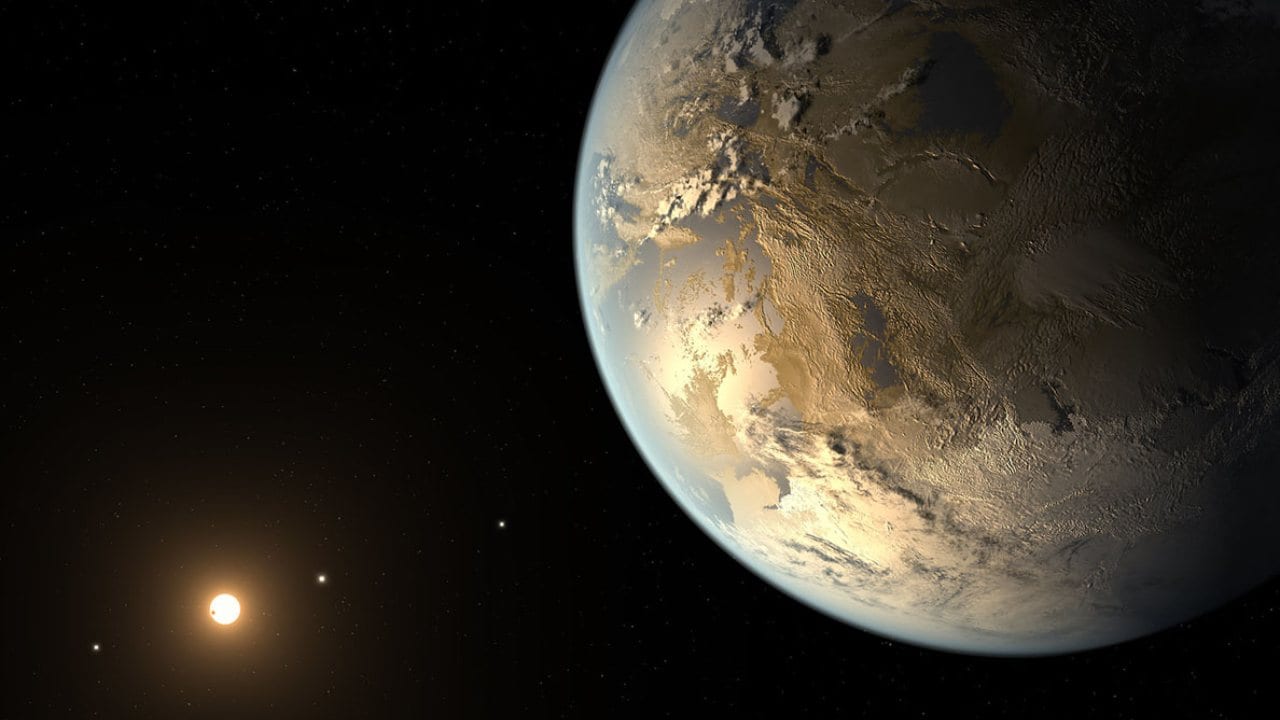
Artist’s depiction of the first validated Earth-size planet to orbit a distant star in the habitable zone identified by NASA’s Kepler Space Telescope. Researchers are proposing that future telescopes look for planets that are better for life than Earth. Image Credit: NASA Ames/SETI Institute/JPL-Caltech[/caption]The findings from this study have been published in the journal Astrobiology.For the search, the researchers that some criteria that the planets needed to check. They looked among the 4,500 known exoplanets and shortlisted those that range from anywhere between five billion years and eight billion years old. These planets also needed to be located within their star's habitable zone so that water is available in its liquid state and their stars should be older and colder than our Sun.As per a statement given out by WSU, the team did not go looking for worlds similar to Earth but planets that are “older, a little larger, slightly warmer and possibly wetter than Earth”. This was because life could easily thrive on planets that circle more slowly changing stars with longer lifespans than our Sun. such parameters have created some problems as well. All the 24 exoplanets are located over 100 light-years away. However, Schulze-Makuch said this study will help future telescopes set targets easily.“We have to focus on certain planets that have the most promising conditions for complex life. However, we have to be careful to not get stuck looking for a second Earth because there could be planets that might be more suitable for life than ours,” he said.He teamed up with astronomers René Heller of the Max Planck Institute for Solar System Research and Edward Guinan of Villanova University for the recent study.

Careless Whispers: Scientists discover that plants can 'talk' to each other using smells
Life on Mars? European Space Agency’s Orbiter discovers ice water deposits at equator
Microsoft briefly overtakes Apple as the most valuable company, Apple back on top again
Even NASA is facing a tough time, starts layoffs following major budget cuts
ISRO, NASA's NISAR satellite to get ready by Jan-end, will monitor Earth's snow-covered regions