


Scientists discover four-billion-year-old organic compounds in Martian meteorite that smashed into Antarctica
The organic materials were synthesised locally on Mars or were delivered meteorically on the surface of the Red planet during the Noachian age.

Researchers have identified four-billion-year-old nitrogen-containing organic molecules in a Martian meteorite.As per a study published in the journal Nature Communications, the organic molecules were found in the famed Martian meteorite Allan Hills 84001, which was uncovered in Antarctica in 1984.According to researchers, the organic materials were synthesised locally on Mars or were delivered meteorically on the surface of the Red planet during the Noachian age.The study paper says that the presence of the Nitrogen-bearing compounds suggests that Mars earlier had a lesser oxidizing environment.[caption id="attachment_6374211" align="alignnone" width="1280"]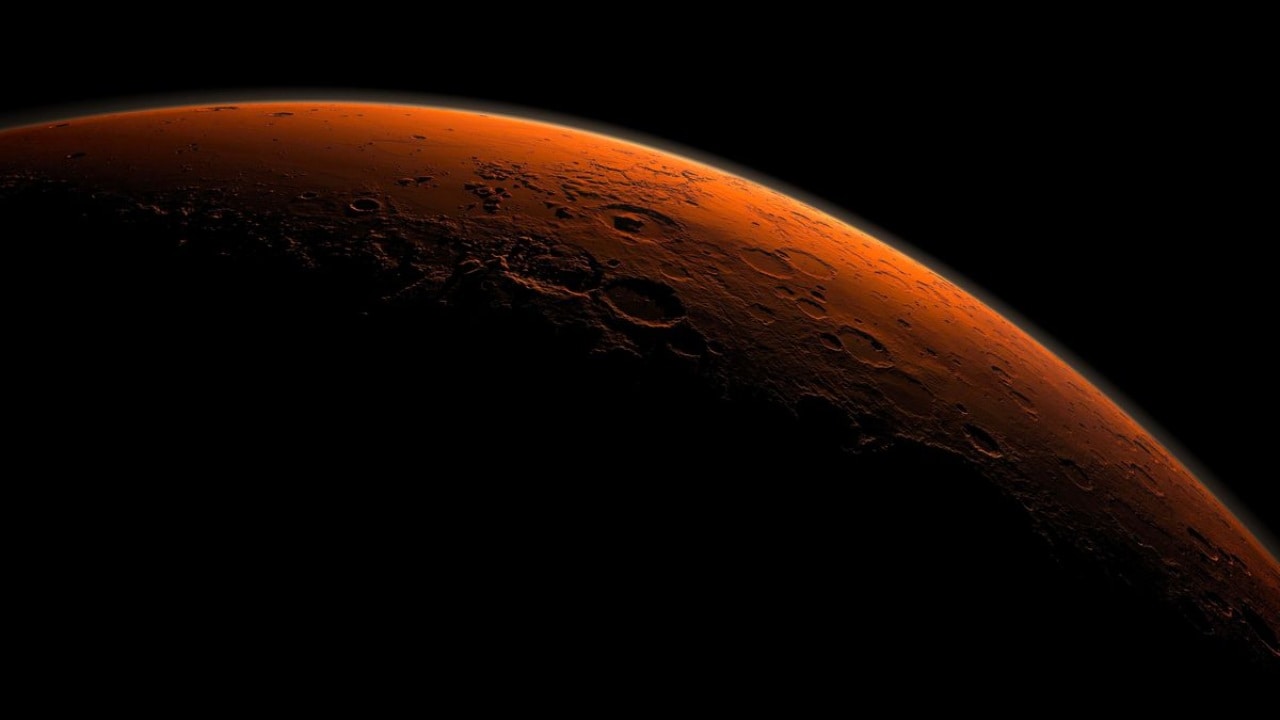 The meteorite is made up of orange-coloured carbonate minerals which have been preserved for about four billion years.[/caption]In a conversation with Newsweek, Atsuko Kobayashi, an author of the study from the Tokyo Institute of Technology and California Institute of Technology, said that the "rock is at the centre of the 'life on Mars' debate."As per the report, the meteorite is made up of orange-coloured carbonate minerals which have been preserved for about four billion years. The researchers detected nitrogen in the carbonate mineral compounds, likely formed as a result of near-surface salt and liquid groundwater.Study authors say the detection of Nitrogen suggests that early Mars had a less oxygen-rich environment than today.[caption id="attachment_8317411" align="alignnone" width="1000"]
 Researchers say that this rock is at the centre of the 'life on Mars' debate. Image credit: Nature communications[/caption]As per a report in Tech Explorist, Atsuko Kobayashi added that the chemical reactions on early Mars may have produced the N-bearing organics on-site."Either way, they say, these findings show there was organic nitrogen on Mars before it became the red planet we know today; early Mars may have been more ‘Earth-like,’ less oxidizing, wetter, and organic-rich. Perhaps it was ‘blue,'" the scientist revealed.

Careless Whispers: Scientists discover that plants can 'talk' to each other using smells
Life on Mars? European Space Agency’s Orbiter discovers ice water deposits at equator
Microsoft briefly overtakes Apple as the most valuable company, Apple back on top again
Even NASA is facing a tough time, starts layoffs following major budget cuts
ISRO, NASA's NISAR satellite to get ready by Jan-end, will monitor Earth's snow-covered regions