


Scientists create high-tech planters allowing astronauts to grow beans in space
Could beans in space be used to produce more food on the Earth in a sustainable way?

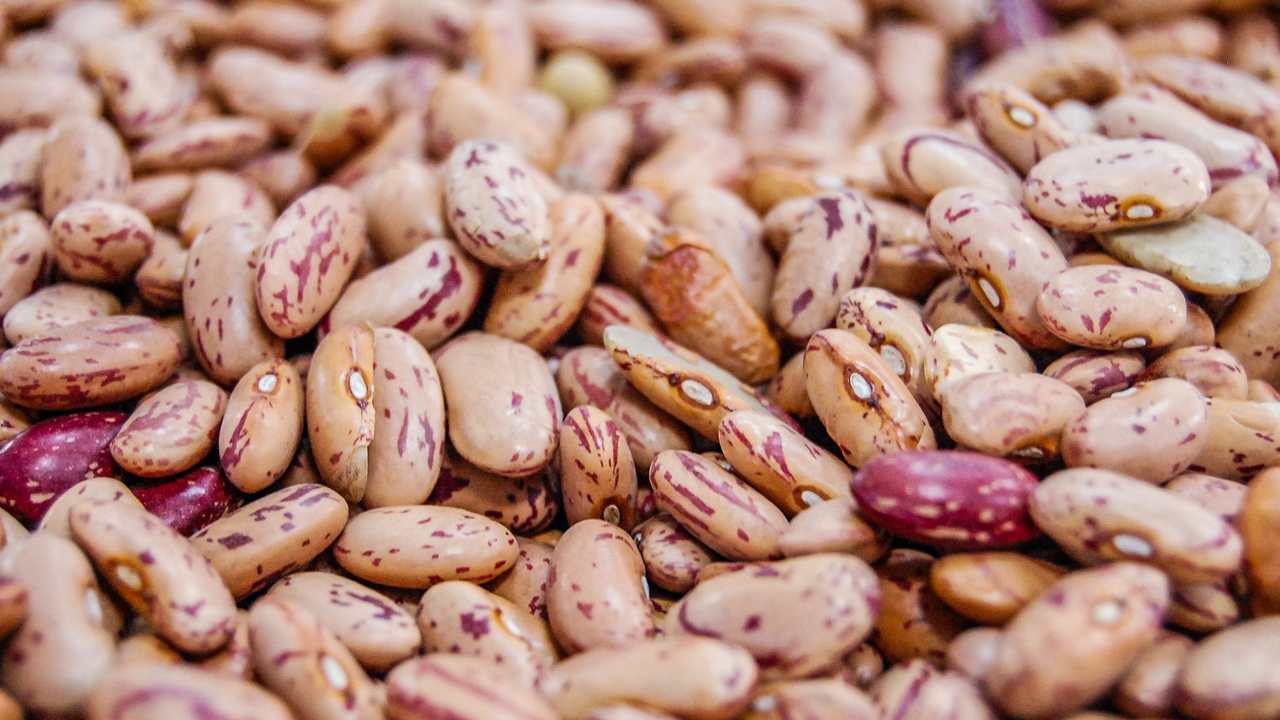
Representational image[/caption]Today's astronauts eat only freeze-dried and vacuum-packed foods."Astronauts struggle with having little appetite. They often lose weight. Addressing the psychological aspect of eating something fresh is one of our goals. Vacuum-packed food doesn't really remind you of food. Having something fresh that triggers the appetite and the right receptors in the brain is important," Wolff said.The new equipment comprises very sophisticated planters that regulate all the water, nutrients, gas and air the plants need. In space, all the water and food has to be recovered. This means that plant fertilisation needs to be as precise as possible.Wolff has conducted experiments in climate-regulated growth chambers in the Netherlands as one aspect of this research.Of all the nutrients plants use, they use nitrogen the most. During her experiments, Wolff looked at different nutrient doses and how they affected the plants' water uptake."We found that plants can, in a way, 'smell' the amount of nutrients available to them. When the nitrogen concentration is very low, the plant will absorb more water and thus more nitrogen until it reaches an optimal level," said Wolff."The plant has a mechanism that turns on when the nitrogen level is adequate. Then it adjusts both nitrogen and water absorption down," she said.The next step is to grow beans in space to observe the effect of no gravity on plants' ability to transport water and absorb nutrients. Simulating the absence of gravity can't be done on Earth.The beans are placed in a centrifuge to sprout and grow in the space station. The centrifuge is rotated to create different amounts of gravity."The art of getting something to grow in space can be transferred to our planet," Wolff said.Food production in cities offers an opportunity to produce more food in the most sustainable way. Cities do not have much soil for cultivation, but a lot becomes possible if you can plant directly in water in indoor closed systems where all aspects of the climate are regulated.

Careless Whispers: Scientists discover that plants can 'talk' to each other using smells
Life on Mars? European Space Agency’s Orbiter discovers ice water deposits at equator
Microsoft briefly overtakes Apple as the most valuable company, Apple back on top again
Even NASA is facing a tough time, starts layoffs following major budget cuts
ISRO, NASA's NISAR satellite to get ready by Jan-end, will monitor Earth's snow-covered regions