


Salt of the Alps: Hallstatt, an ancient Austrian mine, reveals Bronze Age secrets
The vast deposit of salt inside was left by the ocean that covered the region 250 million years ago.

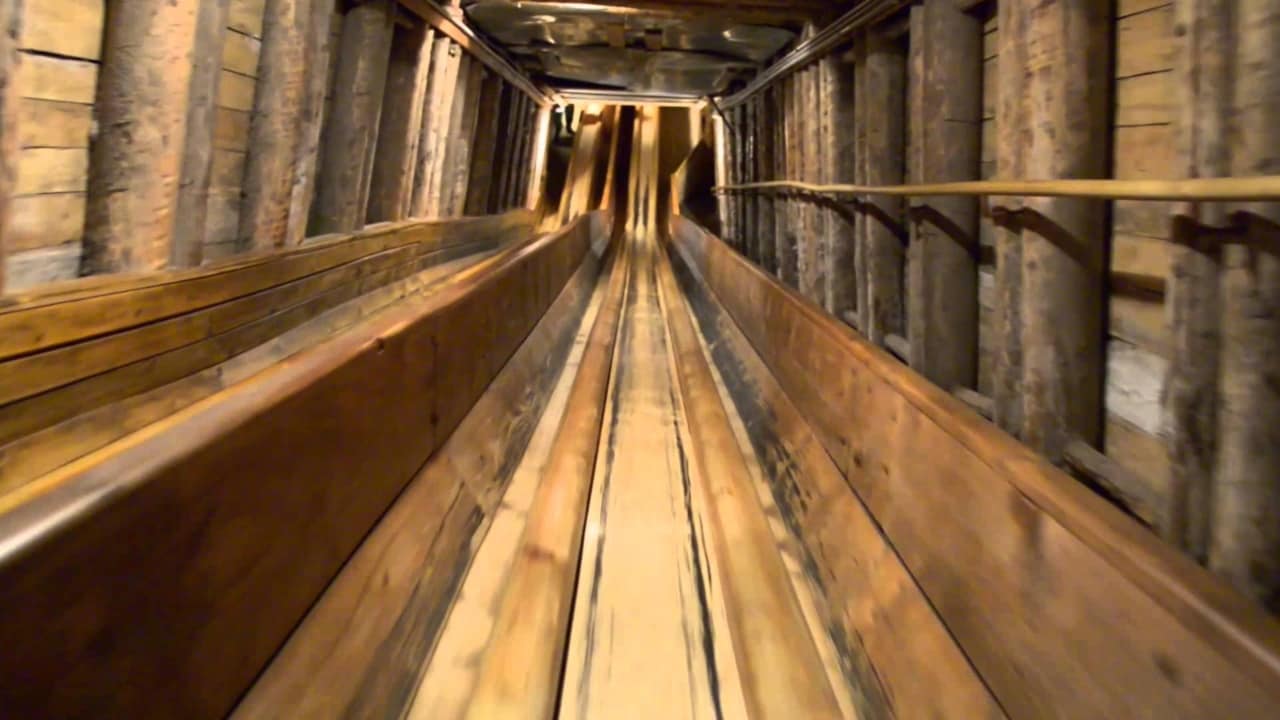
The Hallstatt salt mine. YouTube screegrab[/caption]The vast deposit of sea salt inside was left by the ocean that covered the region some 250 million years ago.3,000-year-old stairsAmong the most striking archaeological discoveries was that of an eight-metre-long wooden staircase dating back to 1100 BC, the oldest such staircase found in Europe."It was so well preserved that we could take it apart and reassemble it," Reschreiter said.Other items date back much further. Excavated in 1838, an axe made from staghorn dating from 5,000 BC showed that as early as then, miners "tried hard to extract salt from here," Reschreiter said.In the mid-19th century, excavations revealed a necropolis that showed the site's prominence during the early Iron Age.The civilisation became known as "Hallstatt culture", ensuring the site's fame."Thousands of bodies have been excavated, almost all flaunting rich bronze ornaments, typically worn by only the wealthiest," Reschreiter said. "The remains bore the marks of hard physical labour from childhood, while also showing signs of unequalled prosperity."Priceless 'white gold'Salt — long known as "white gold" — was priceless at the time. And Hallstatt produced up to a tonne every day, supplying "half of Europe", he said, adding that the difficult-to-access location "became the continent's richest, and a major platform for trading in 800 BC".Testifying to this are sword handles made of African ivory and Mediterranean wine bowls found at the site.A second series of excavations — started by Vienna's Museum of Natural History some 60 years ago — produced more surprises.In tunnels more than 100 metres below the surface, archaeologists discovered "unique evidence" of mining activity at an "industrial" scale during the Bronze Age, Reschreiter said.As well as revealing wooden retaining structures more than 3,000 years old which were perfectly preserved by the salt, the excavation unearthed numerous tools, leather gloves and a rope — thick as a fist — as well as the remains of millions of wooden torches.Continuously activeAlso used by Celts and during the Roman era when salt was used to pay legions stationed along the Danube River — it is the origin of the word "salary" — the mine has never stopped working since prehistoric times.
Today, about 40 people still work there, using high-pressure water to extract the equivalent of 250,000 tonnes of salt per year."Salt doesn't have the same value as in antiquity anymore. But some of its new uses, such as in the pharmaceutical and chemical industries, are still highly profitable," said Kurt Thomanek, technical director of salt supplier Salinen Austria.Tourism linked to the archaeological discoveries is also "a pillar of our activities", Thomanek added.Last year, some 200,000 people visited the Hallstatt mine.

Careless Whispers: Scientists discover that plants can 'talk' to each other using smells
Life on Mars? European Space Agency’s Orbiter discovers ice water deposits at equator
Microsoft briefly overtakes Apple as the most valuable company, Apple back on top again
Even NASA is facing a tough time, starts layoffs following major budget cuts
ISRO, NASA's NISAR satellite to get ready by Jan-end, will monitor Earth's snow-covered regions