


Salt is bad for you – but how it affects the body is still a big scientific debate
Excessive salt intake is linked to high blood pressure, and increased risk of heart disease & stroke.

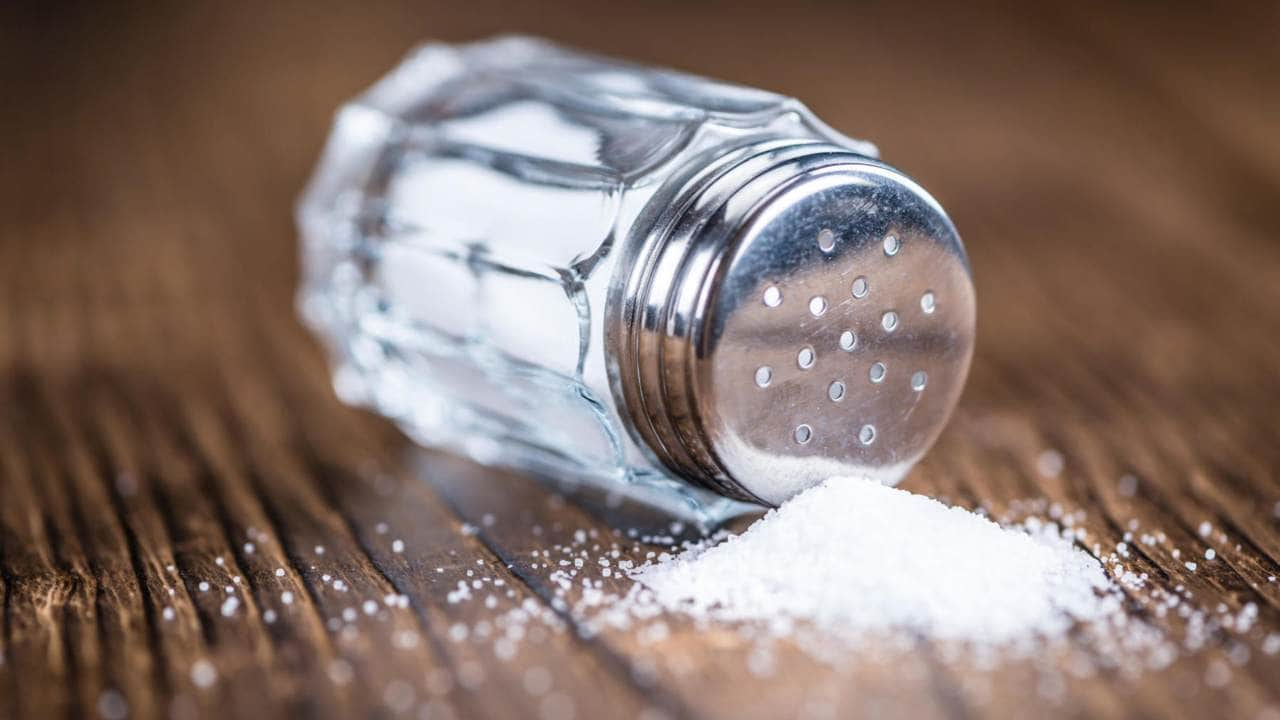
As part of a WHO study on global ageing, we reviewed South Africans’ salt intake before the new laws were implemented, and are now repeating this exercise to determine whether salt intake has reduced.South Africa has also made concerted efforts to promote public awareness on excessive salt intake and cardiovascular health. Research suggests that this has been effective in changing people’s behaviour such as adding salt to food when cooking and at the table during meals.But, in the medium to longer term, will these interventions produce the health outcomes the government has forecast? The key indicators would be lower blood pressure, fewer cardiovascular events such as hearts attacks and strokes.The answer lies partly in policies being adjusted to take into account new scientific findings about how salt affects the body. This is a frontier that’s being explored by scientists around the world. It’s also the subject of our research.Our research challenge some assumptions that have been held for decades about how salt affects the body. Our findings – together with those of other international researchers – suggest that the mechanisms surrounding salt and cardiovascular health may be more complex than originally thought. This in turns suggests that there’s significant scope to fine-tune policies to improve prevention and treatment of common disorder like hypertension.
What we know now
Compelling evidence over many years has strongly linked high salt intake with raised blood pressure and cardiovascular events like heart attacks. But emerging research has started to raise questions about the physiological mechanisms for the link between salt intake and raised blood pressure.A common understanding – prevalent in medical textbooks for decades – has been that a high salt intake results in thirst. The higher water intake consequently leads to increased blood volume which raises blood pressure, and ultimately both water and salt are excreted by the kidneys and blood pressure is maintained.But German researcher, Jens Titze, recently found salt to be stored in the skin. Researchers have further shown that high salt intake is accompanied by minimal water loss. These surprising findings were met with scepticism by the global health sciences community, but underscores that a much better understanding of blood pressure mechanisms is required.US investigators, Alexei Bagrov and Olga Fedorova, identified another player in how salt affects cardiovascular health. Marinobufagenin is a steroid hormone that has similar properties to active substances found in the venom of the Bufo marinus toad. The hormone’s function is to manage salt balance and is thus produced in response to high salt intake.[caption id="attachment_6242051" align="alignnone" width="564"]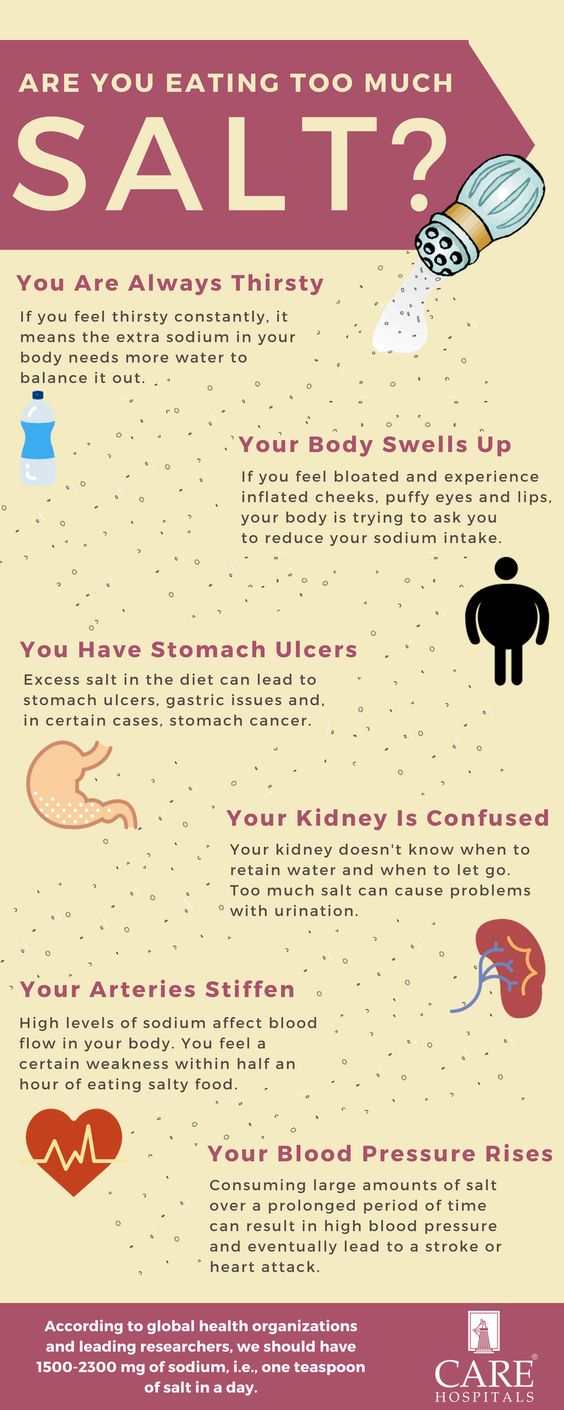
Signs to watch for if you think you may be consuming a little too much salt. Image credit: CARE hospital[/caption]But very high levels of the steroid hormone, in response to excessive salt intake, resulted in increased blood pressure, affected heart structure and increased the stiffness of the blood vessel walls in animals.We recently set out to test this for the first time in healthy young humans. We confirmed a strong positive association between increased salt intake and an increase in the steroid hormone. We found that high salt intake was linked to stiffer aortas, even in very young people.We then tested whether this was due to the steroid hormone or salt itself. When we included both in our statistics, we found that the culprit was the steroid hormone, and not necessarily salt.Not only was the steroid hormone associated with aortic stiffness, but also with increased blood pressure, and left ventricular mass in young healthy adults who consumed a mean of 11.8 grams (more than two teaspoons) of salt a day. The WHO recommends an intake of less than 5 grams (one teaspoon) of salt per day.
Conclusion
Our findings support South Africa’s second phase implementation of reducing salt in staple foods to further lower the daily intake of salt.The evidence also strongly supports the importance of continued public awareness campaigns to reduce excessive salt intake to protect cardiovascular health. Alta Schutte, Research professor, North-West University and Michél Strauss, PhD candidate, North-West UniversityThis article is republished from The Conversation under a Creative Commons license. Read the original article.

Careless Whispers: Scientists discover that plants can 'talk' to each other using smells
Life on Mars? European Space Agency’s Orbiter discovers ice water deposits at equator
Microsoft briefly overtakes Apple as the most valuable company, Apple back on top again
Even NASA is facing a tough time, starts layoffs following major budget cuts
ISRO, NASA's NISAR satellite to get ready by Jan-end, will monitor Earth's snow-covered regions