


Russian Soyuz spacecraft carrying humanoid robot 'FEDOR' fails to dock with the ISS
The docking process failed due to issues related to the automatic docking system

A Russian Soyuz spacecraft carrying a humanoid robot failed to dock with the International Space Station (ISS) on Saturday, Russian news agencies reported, citing a live broadcast.[caption id="attachment_7218431" align="alignnone" width="1920"]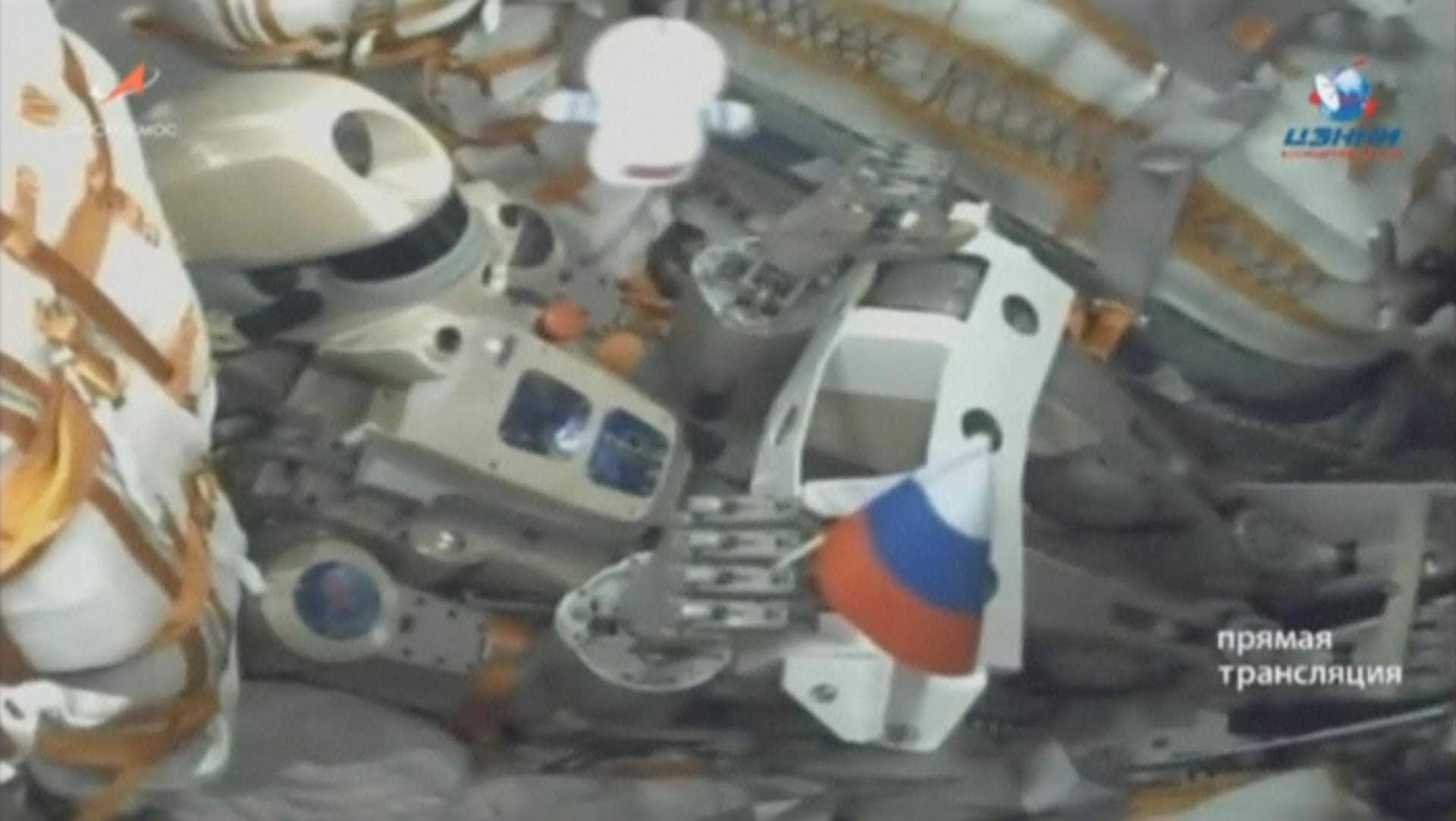 A still image, taken from video footage and released by Russian space agency Roscosmos, shows robot Skybot F-850, also known as FEDOR, inside the Russian Soyuz MS-14 spacecraft carried by Soyuz-2.1a booster after the launch from the Baikonur Cosmodrome, Kazakhstan August 22, 2019. Image: Reuters.[/caption]The FEDOR (Final Experimental Demonstration Object Research) robot on its way to the ISS on a planned two-week mission to support the crew and test its skills.The docking process, originally planned for 0530 GMT, failed due to issues related to the automatic docking system, news agency, Interfax added, cited NASA TV as saying.The spacecraft is currently 96 meters away from the station and officials plan to attempt docking again on Monday morning, RIA reported, citing Russia’s flight control centre.The Skybot F-850 is the first humanoid robot sent to space by Russia. NASA sent humanoid robot Robonaut 2 to space in 2011 to work in hazardous environments.FEDOR is the size of a human adult and can emulate the movements of the human body.The ISS is a joint project of the space agencies of the United States, Russia, Europe, Japan and Canada.

Careless Whispers: Scientists discover that plants can 'talk' to each other using smells
Life on Mars? European Space Agency’s Orbiter discovers ice water deposits at equator
Microsoft briefly overtakes Apple as the most valuable company, Apple back on top again
Even NASA is facing a tough time, starts layoffs following major budget cuts
ISRO, NASA's NISAR satellite to get ready by Jan-end, will monitor Earth's snow-covered regions