


Researchers find Mars' snow has dust mixed into it, could melt into water
The team intends to dig deeper into ice exposures on Mars and learn more about the planet's climate history.

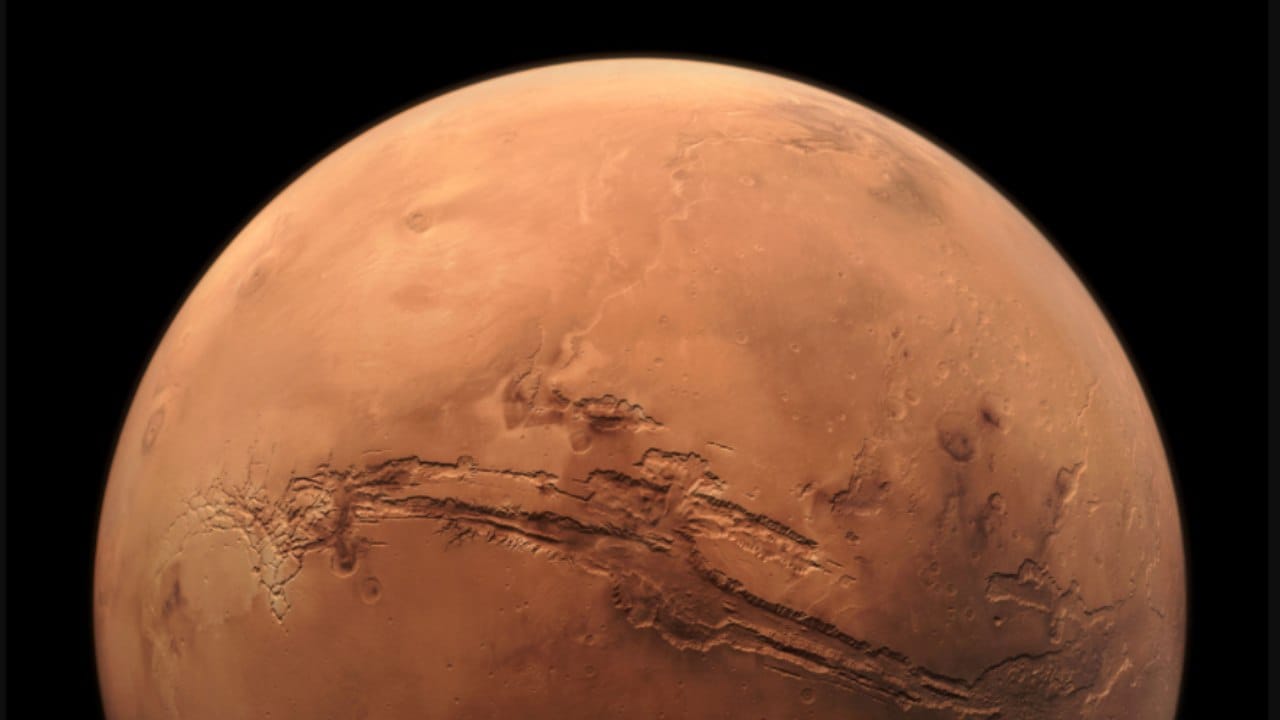
In 1609 Italian Galileo Galilei observed Mars with a primitive telescope and in doing so became the first person to use the new technology for astronomical purposes. Imagte credit: NASA[/caption]Dusty Mars with its dusty ice (or snow) results in it getting darker and thus warmer which affects both its stability and evolution through time. Under these conditions, it might also mean that the ice or snow on Mars could melt faster.“There is a chance that this dusty and dark ice might melt a few centimetres down. And any subsurface liquid water produced from melting will be protected from evaporating in Mars' wispy atmosphere by the overlying blanket of ice," said Aditya Khuller, a scientist at Arizona State University.A team of planetary scientists including Khuller, Philip Christensen, and Stephen Warren, came up with this new approach to research Mars’ ice. A result regarding the research has been recently published in the Journal of Geophysical Research: Planets.Further speaking on the research, Khuller stated that throughout its history, Mars has experienced multiple ice ages. Over the last million years, the dusty snowfall on the planet has formed a layer that was then dug up by the Phoenix Mars Lander. The ice being exposed on the mid-latitudes of Mars is a residue of this ancient dusty snowfall that had taken place, explains Khuller.The team intends to dig deeper into ice exposures on Mars and learn more about the planet's climate history.Giving an insight into their study, he emphasized that they are currently working on developing improved computer simulations of Martian ice. As a team, they are working on how the Martian ice has evolved over time and if it melts into the water gradually or not.

Careless Whispers: Scientists discover that plants can 'talk' to each other using smells
Life on Mars? European Space Agency’s Orbiter discovers ice water deposits at equator
Microsoft briefly overtakes Apple as the most valuable company, Apple back on top again
Even NASA is facing a tough time, starts layoffs following major budget cuts
ISRO, NASA's NISAR satellite to get ready by Jan-end, will monitor Earth's snow-covered regions