


Reseachers train AI bot to identify galaxies in deep space through image scans
The AI bot named "ClaRAN" spots radio galaxies that emit radio jets from supermassive black holes.

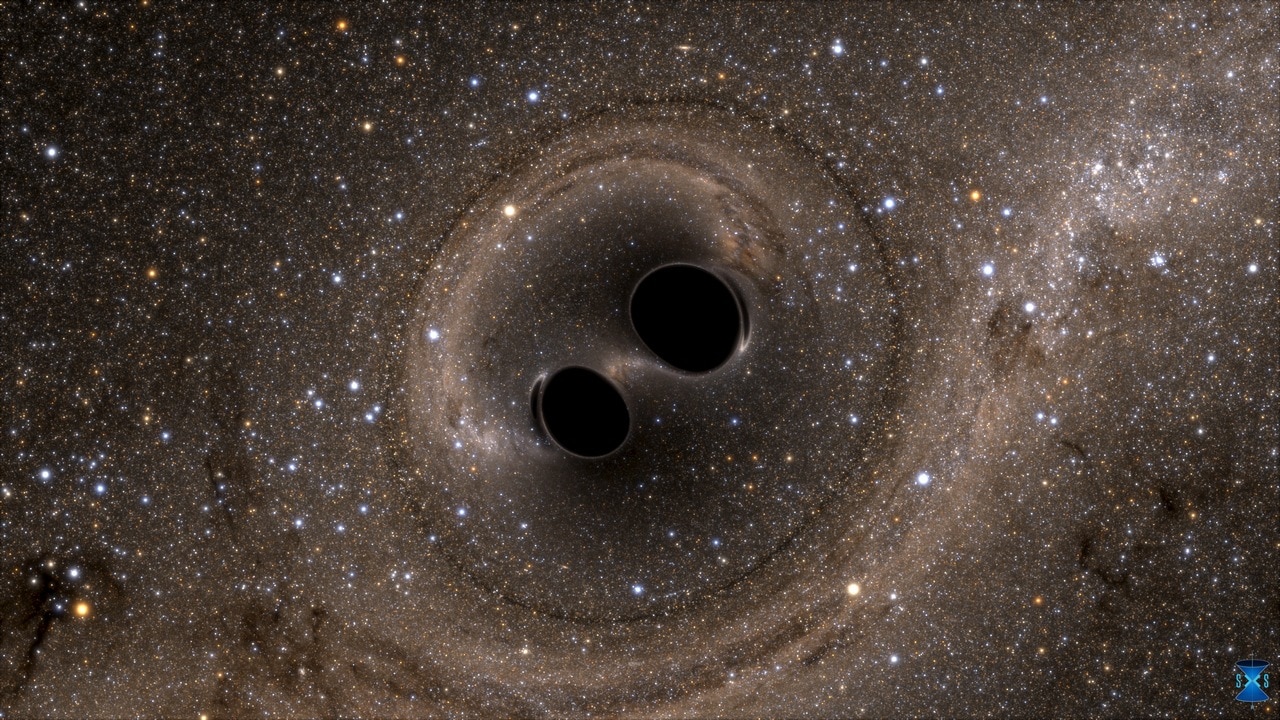
The collision of two black holes. Image: Reuters[/caption]Black holes are found at the centre of most, if not all, galaxies."These supermassive black holes occasionally burp out jets that can be seen with a radio telescope," said Dr Wong."Over time, the jets can stretch a long way from their host galaxies, making it difficult for traditional computer programmes to figure out where the galaxy is. That's what we're trying to teach ClaRAN to do," she added."ClaRAN" grew out of an open source version of Microsoft and Facebook's object detection software, said Dr Wu, adding that the programme was overhauled and trained to recognise galaxies instead of people.ClaRAN itself is an open source and publicly available on Microsoft-owned GitHub.Traditional computer algorithms are able to correctly identify 90 per cent of the sources."That still leaves 10 percent or seven million 'difficult' galaxies that have to be eyeballed by a human due to the complexity of their extended structures," Dr Wong said."If ClaRAN reduces the number of sources that require visual classification down to one per cent, this means more time for our citizen scientists to spend looking at new types of galaxies," she added in a paper published in the journal Monthly Notices of the Royal Astronomical Society."ClaRAN" has huge implications for how telescope observations are processed.

Careless Whispers: Scientists discover that plants can 'talk' to each other using smells
Life on Mars? European Space Agency’s Orbiter discovers ice water deposits at equator
Microsoft briefly overtakes Apple as the most valuable company, Apple back on top again
Even NASA is facing a tough time, starts layoffs following major budget cuts
ISRO, NASA's NISAR satellite to get ready by Jan-end, will monitor Earth's snow-covered regions