


Repair work for Arecibo telescope too dangerous, will be dismantled after 57 years of service
The telescope is one of the largest in the world and has been a tool for many astronomical discoveries.

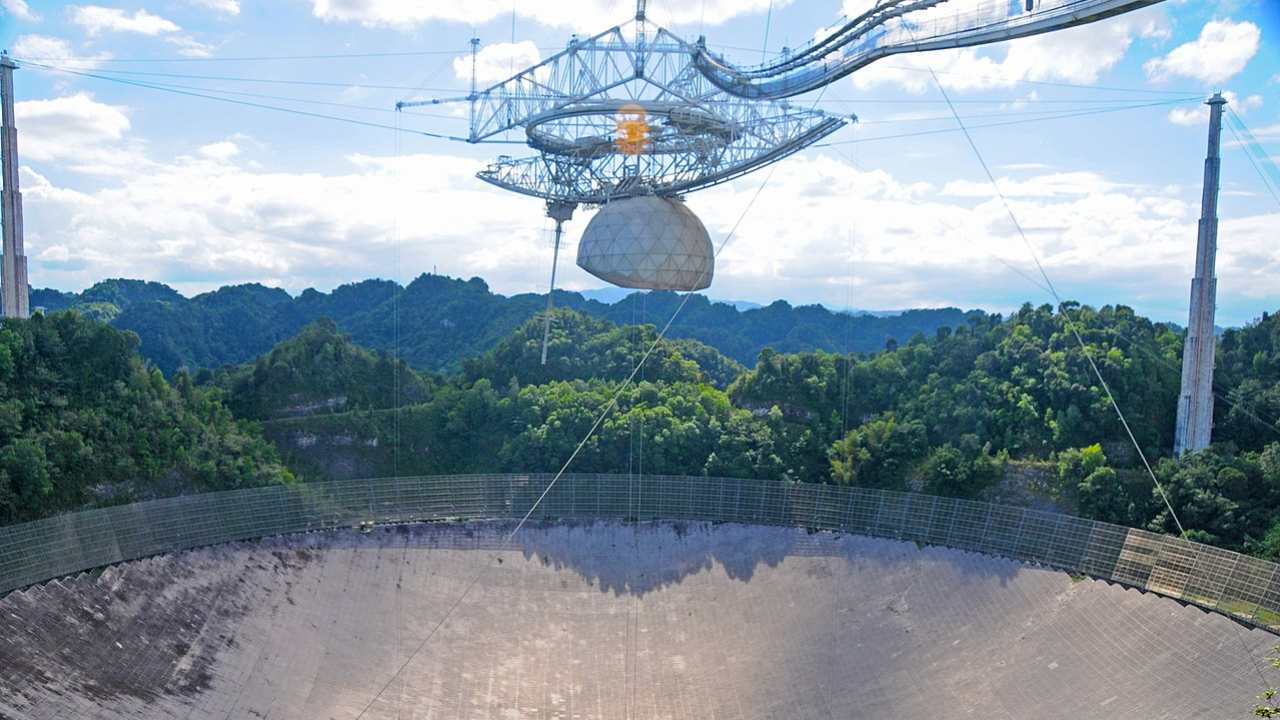
Last week, one of the telescope’s main steel cables that was capable of sustaining 544,000 kilograms snapped under only 283,000 kilograms. Image credit: Wikipedia[/caption]The foundation "prioritizes the safety of workers, Arecibo Observatory's staff and visitors, which makes this decision necessary, although unfortunate," said NSF Director Sethuraman Panchanathan."For nearly six decades, the Arecibo Observatory has served as a beacon for breakthrough science and what a partnership with a community can look like."Using the hashtag "WhatAreciboMeansToMe", messages of sadness at the news spread on Twitter from both professional and amateur astronomers who have used the telescope for their work in observing the cosmos for decades."More than a telescope, Arecibo is the reason I am even in astronomy," local astronomer Kevin Ortiz Ceballos wrote on Twitter.Karen Masters, an astrophysics professor at Haverford College in Pennsylvania, posted a photo of herself and her baby daughter near the radio dish in 2008 and said she was "heartbroken and disappointed."An action scene from the James Bond film "GoldenEye" takes place above the telescope, and in the film "Contact" an astronomer played by Jodie Foster uses the observatory in her quest for alien signals.The engineering company that examined the structure concluded that the remaining cables were possibly weaker than expected and recommended controlled demolition, which the foundation accepted.

Careless Whispers: Scientists discover that plants can 'talk' to each other using smells
Life on Mars? European Space Agency’s Orbiter discovers ice water deposits at equator
Microsoft briefly overtakes Apple as the most valuable company, Apple back on top again
Even NASA is facing a tough time, starts layoffs following major budget cuts
ISRO, NASA's NISAR satellite to get ready by Jan-end, will monitor Earth's snow-covered regions