


'Recoiling' black hole in a nearby star cluster keeps slipping detection, baffling scientists
Recoiling black holes, like the one in question, are hypothetical objects that are yet to be definitively spotted.

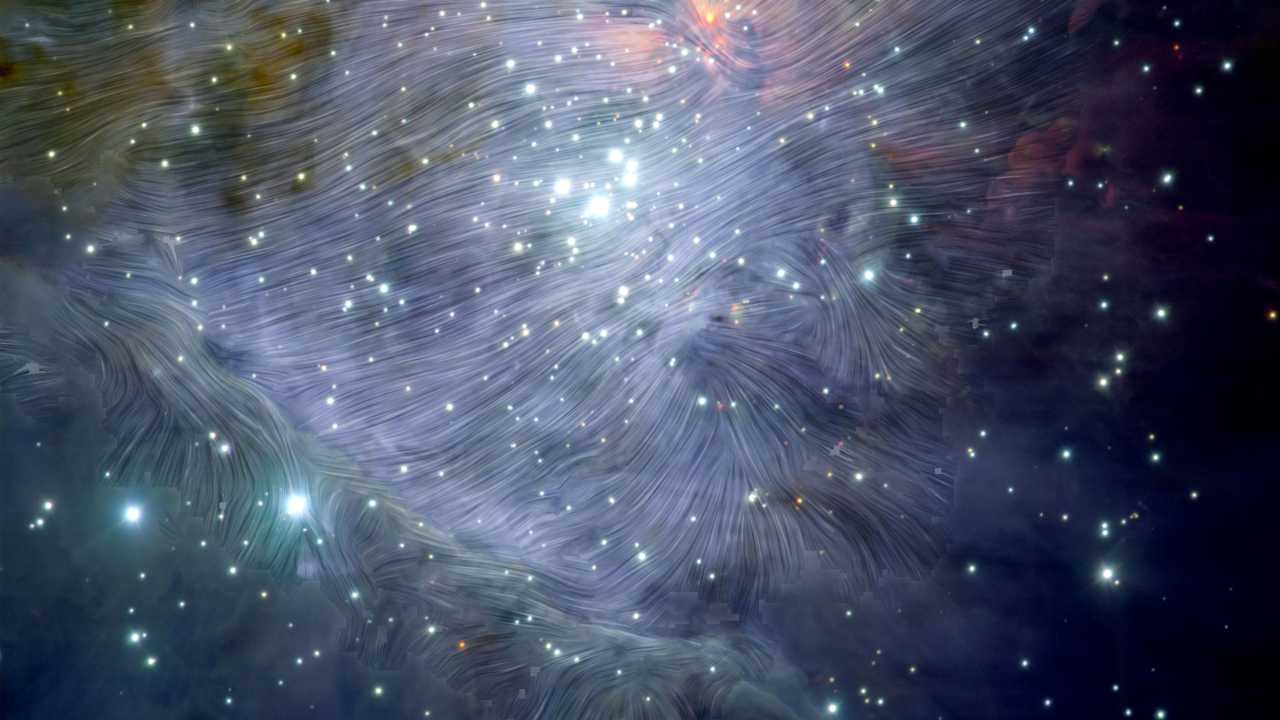
Streamlines showing magnetic fields layered over a color image of the dusty ring around the Milky Way’s massive black hole. Image credit: NASA/SOFIA/Hubble Space Telescope[/caption]Such recoiling black holes are however, hypothetical creatures since no one has definitively spotted one till date. According to researchers, Abell 2261's central galaxy could be a good place to study them, since it shows signs of a dramatic merger.The new study was carried out by a team of researchers led by Kayhan Gultekin from the University of Michigan. They found that the densest concentrations of hot gas were not in the galaxy's central regions. But the Chandra data didn't reveal any significant X-ray sources, either in the galactic core or in big clumps of stars farther afield. So the mystery of the missing supermassive black hole persists.The mystery could be solved by the James Webb Space Telescope, scheduled for launch in October 2021. However, if it too does not spot a black hole at the centre of the galaxy, then the only plausible explanation is that it has recoiled well out of the centre of the galaxy.The new study is published in the journal of the American Astronomical Society.

Careless Whispers: Scientists discover that plants can 'talk' to each other using smells
Life on Mars? European Space Agency’s Orbiter discovers ice water deposits at equator
Microsoft briefly overtakes Apple as the most valuable company, Apple back on top again
Even NASA is facing a tough time, starts layoffs following major budget cuts
ISRO, NASA's NISAR satellite to get ready by Jan-end, will monitor Earth's snow-covered regions