


Rare glimpse of Venus in a new light captured by WISPR camera on NASA's Parker probe
Experts are still looking into the cause and origin of the streaks in the ethereal photograph, taken from 12,380 kilometres away.

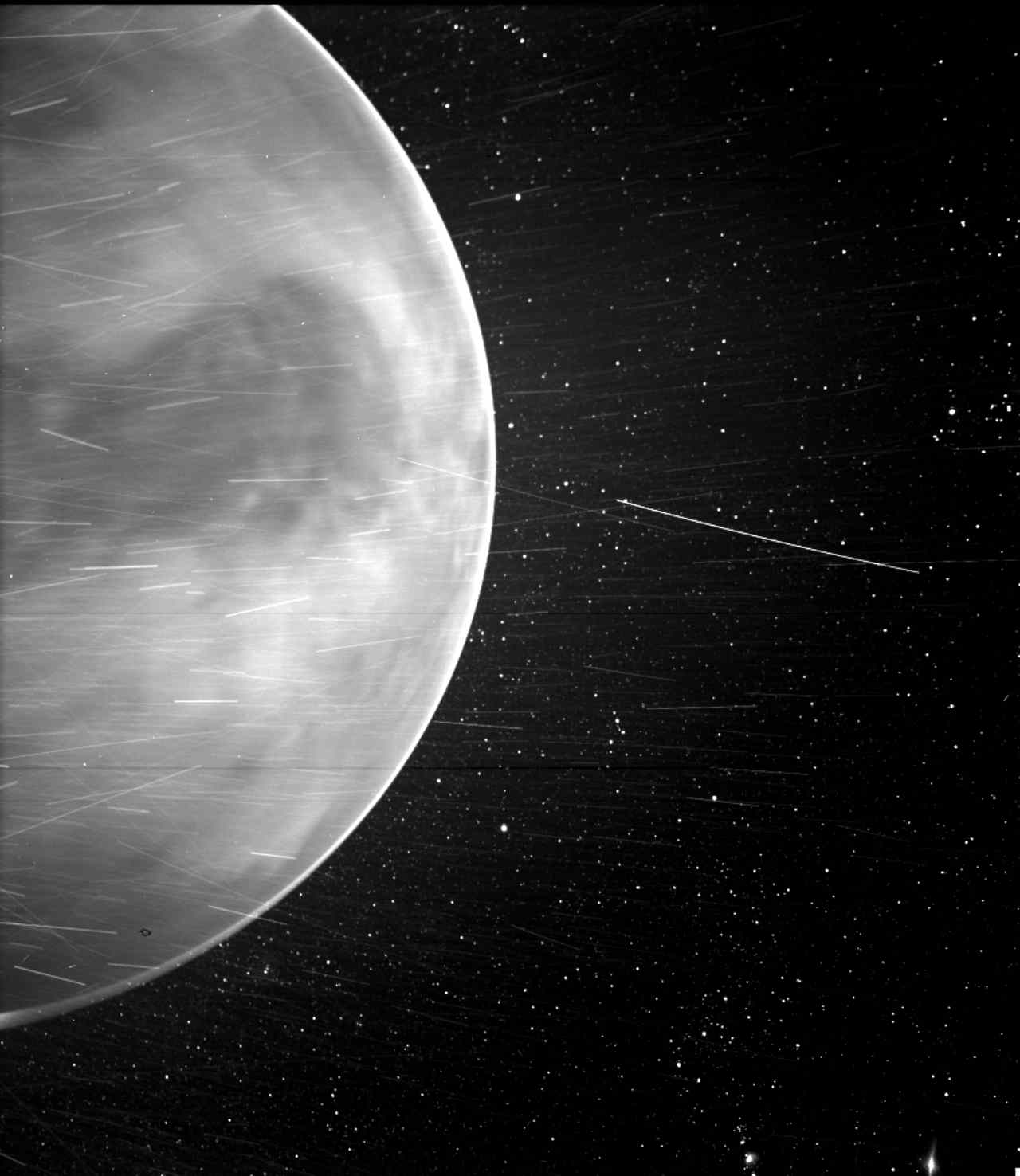
When flying past Venus in July 2020, Parker Solar Probe’s WISPR camera, detected a bright rim around the edge of the planet that may be nightglow. Bright streaks like the ones seen here are typically caused by a combination of charged particles (cosmic rays), sunlight reflected by space dust, and particles of material expelled from the spacecraft’s structures after impact with those dust grains. Image: NASA[/caption]In a blog post, NASA said that bright streaks in WISPR, like the ones seen here, usually are caused when many charged particles, reflected sunlight, and particles from the spacecraft as it strikes dust grains, come together. That said, experts are still studying the exact origin of the streaks in this particular case.Angelos Vourlidas, the WISPR project scientist from the Johns Hopkins Applied Physics Laboratory (APL), said that the image took the team by surprise. WISPR has been designed to take images of the solar corona and inner heliosphere in visible light but when it captured the Venusian surface, the scientists had expected to only find clouds. This means the instrument was able to capture near-infrared wavelengths of light, which can come in handy for studying the sun. Alternatively, the spacecraft may have found a previously unknown window of transparency through the Venusian atmosphere to capture the surface below.

Careless Whispers: Scientists discover that plants can 'talk' to each other using smells
Life on Mars? European Space Agency’s Orbiter discovers ice water deposits at equator
Microsoft briefly overtakes Apple as the most valuable company, Apple back on top again
Even NASA is facing a tough time, starts layoffs following major budget cuts
ISRO, NASA's NISAR satellite to get ready by Jan-end, will monitor Earth's snow-covered regions