


Quantum state: Astronauts create 'exotic' fifth state of matter on the International Space Station
This substance was first theorised by Albert Einstein and Satyendra Nath Bose in the early 1920s as the fifth state of matter.

Astronauts on board the International Space Station have managed to create an 'exotic matter' by using the microgravity of space.
The study saw researchers generate the fifth state of matter, which is also known as Bose-Einstein condensates (BEC). These are created when a gas of bosons is cooled down nearly to absolute zero.
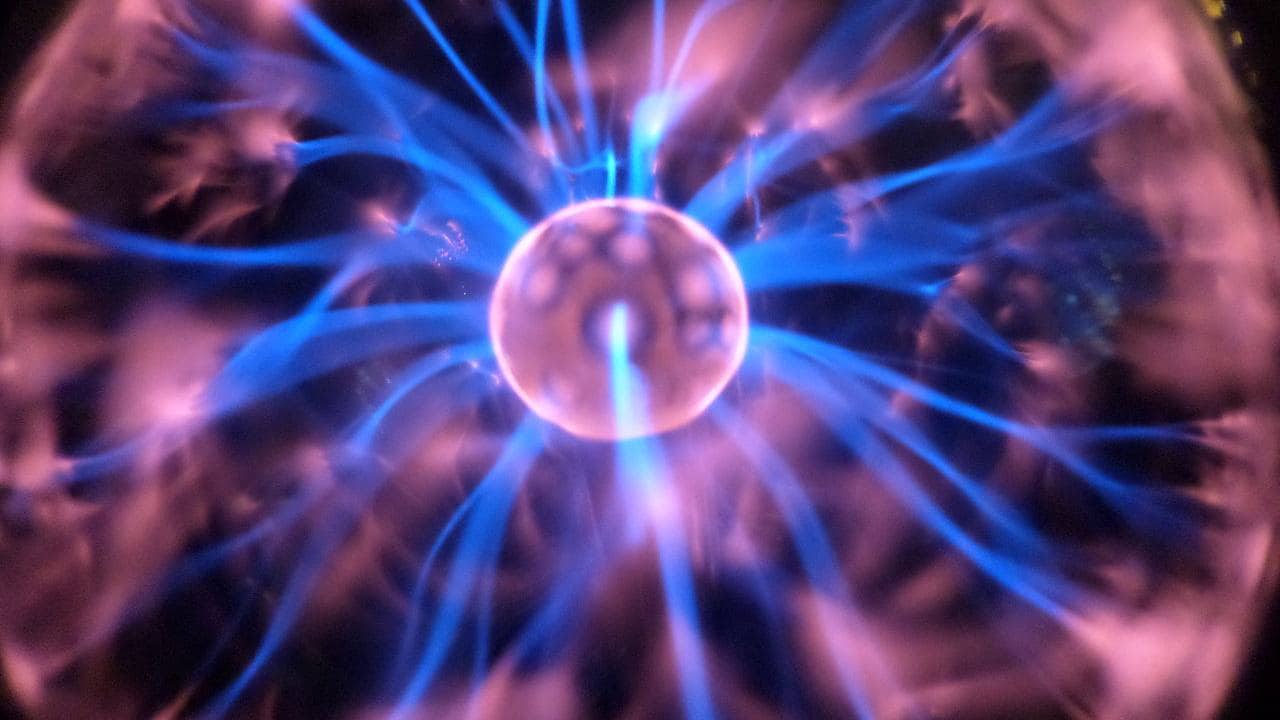
Plasma filaments in a Nikola Tesla style plasma lamp. representational Image. Image credit: Wikipedia[/caption]The report mentions that scientists have always hoped to use the Bose-Einstein condensates to gain insight into quantum mechanics, but gravity has always been a deterring factor. This led researchers to send equipment known as the Cold Atom Lab to the International Space Station.
New Scientist reports that Cold Atom Laboratory (CAL) was launched to the ISS in 2018 to investigate the Bose-Einstein condensate.
It reveals that the substance was first theorised by Albert Einstein and Satyendra Nath Bose in the early 1920s as the fifth state of matter.
A report in Space.com mentions Robert Thompson, a physicist at the California Institute of Technology in Pasadena saying that while researchers have created Bose-Einstein condensates using rubidium atoms, they eventually incorporate potassium atoms as well to find out what happens when two condensates intermingle.
 More from Science
Thomson added that while earlier their major insights into the inner workings of nature have come from particle accelerators and astronomical observatories, he believes that in in the future, “Precision measurements using cold atoms will play an increasingly important role.”
The report stated that researchers, by using the Cold Atom Lab, found they could increase the amount of time they can analyze these condensates to more than one second. Scientists would only have hundredths of a single second for the same task when performing the experiments on Earth.
The results of the study were published in the 11 June issue of the journal Nature.

Careless Whispers: Scientists discover that plants can 'talk' to each other using smells
Life on Mars? European Space Agency’s Orbiter discovers ice water deposits at equator
Microsoft briefly overtakes Apple as the most valuable company, Apple back on top again
Even NASA is facing a tough time, starts layoffs following major budget cuts
ISRO, NASA's NISAR satellite to get ready by Jan-end, will monitor Earth's snow-covered regions