


Pythagoras' theorem used to build Stonehenge 2,000 years before philosopher's birth
Nearly two miles north-east of Stonehenge, stood Woodhenge, which was also constructed using a 12:35:37 triangle.

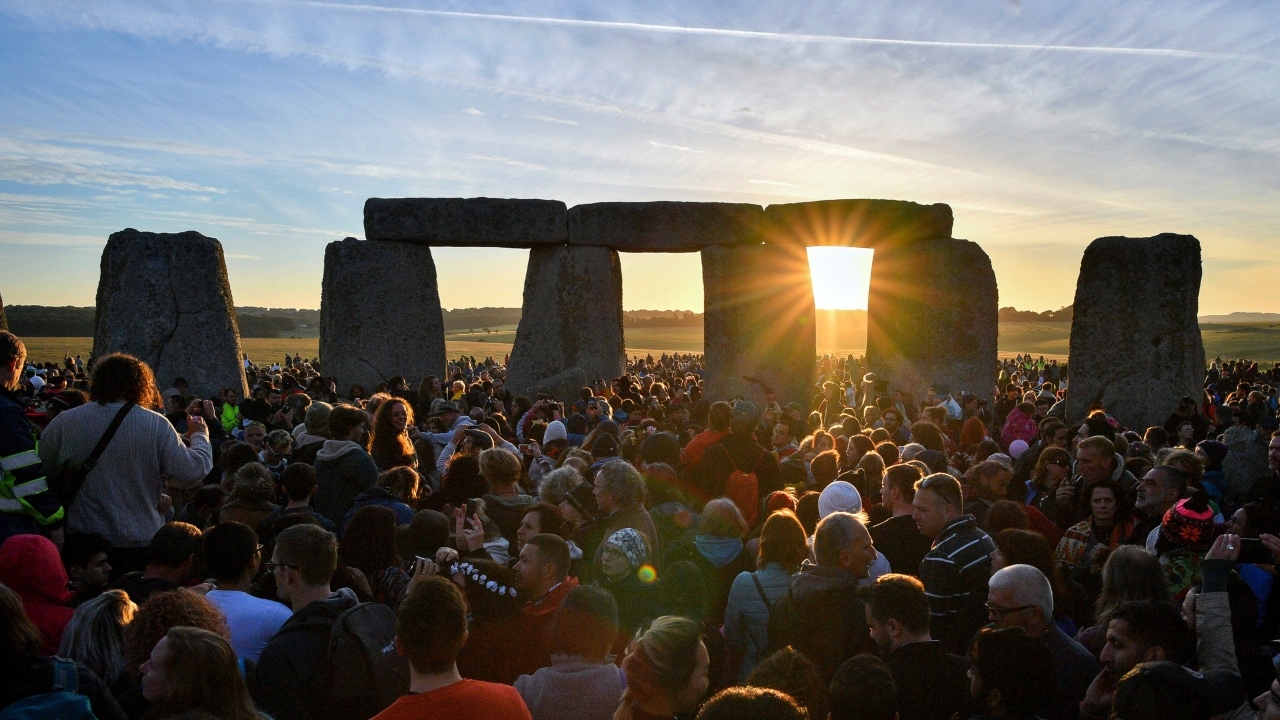
The eight lines which radiate from the rectangle and triangles also perfectly align to important dates in the Neolithic calendar, such as the summer and winter solstices and spring and autumn equinoxes, The Telegraph reported."People often think of our ancestors as rough cavemen but they were also sophisticated astronomers," contributor and editor John Matineau said."They were applying Pythagorean geometry over 2,000 years before Pythagoras was born," he said.Nearly two miles north-east of Stonehenge, stood Woodhenge, which was also constructed using a 12:35:37 triangle.Consequently many stone circle' were not fully circular but have geometry derived from Pythagorean triangles often in whole numbers of Megalithic yards (2.72 feet) which were probably laid out using ropes and pegs.The huge stones of Stonehenge were also once surrounded by 56 wooden posts or stones which could be used for predicting eclipses as well as showing the position of the Sun and the Moon and the lunar phases.The bluestone horseshoe in the centre is thought to contain 19 stones to represent the number of years it takes for the Sun and Moon metonic cycle to go full circle and reset.The authors believe that much of the knowledge was lost following the rise of Christianity in Britain.

Careless Whispers: Scientists discover that plants can 'talk' to each other using smells
Life on Mars? European Space Agency’s Orbiter discovers ice water deposits at equator
Microsoft briefly overtakes Apple as the most valuable company, Apple back on top again
Even NASA is facing a tough time, starts layoffs following major budget cuts
ISRO, NASA's NISAR satellite to get ready by Jan-end, will monitor Earth's snow-covered regions