


Puzzling dimming of Betelgeuse's brightness could be due to supernova, study suggests
The mystery has enthralled skywatchers since the star began to lose brightness, and fast, in October 2019.

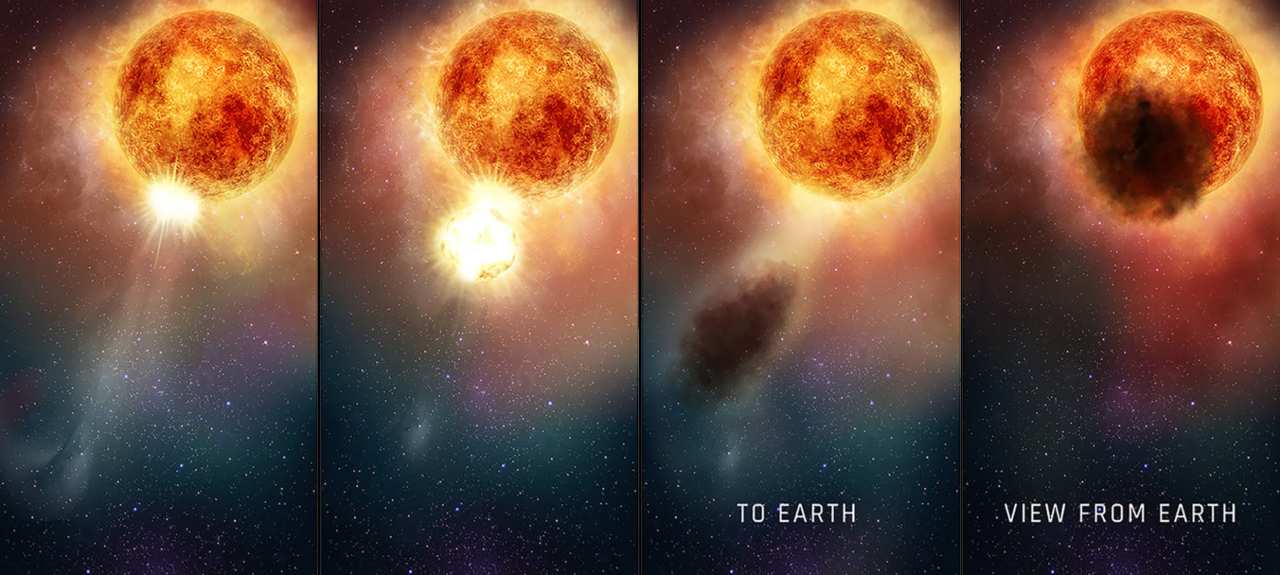
An illustration of how the Southern region of the rapidly evolving, bright red supergiant star Betelgeuse became fainter for several months during 2019-20. Image: NASA/ESA[/caption]"With Hubble, we see the material as it left the star's visible surface and moved out through the atmosphere, before the dust formed that caused the star to appear to dim," said lead researcher Andrea Dupree of the Harvard-Smithsonian Center for Astrophysics in the United States."We could see the effect of a dense, hot region in the southeast part of the star moving outward."The researchers, due to publish their findings in The Astrophysical Journal, said they were not sure of the ultimate cause of the plasma eruption.Betelgeuse, almost 1,000 times the size of the Sun, is 725 light years from Earth, meaning the event witnessed by the telescope happened around the beginning of the 14th century.

Careless Whispers: Scientists discover that plants can 'talk' to each other using smells
Life on Mars? European Space Agency’s Orbiter discovers ice water deposits at equator
Microsoft briefly overtakes Apple as the most valuable company, Apple back on top again
Even NASA is facing a tough time, starts layoffs following major budget cuts
ISRO, NASA's NISAR satellite to get ready by Jan-end, will monitor Earth's snow-covered regions