


Our Milky Way galaxy weighs 1.5 trillion solar masses, Hubble & Gaia estimate
The new mass estimate puts our galaxy on the beefier side compared to other galaxies in the universe.

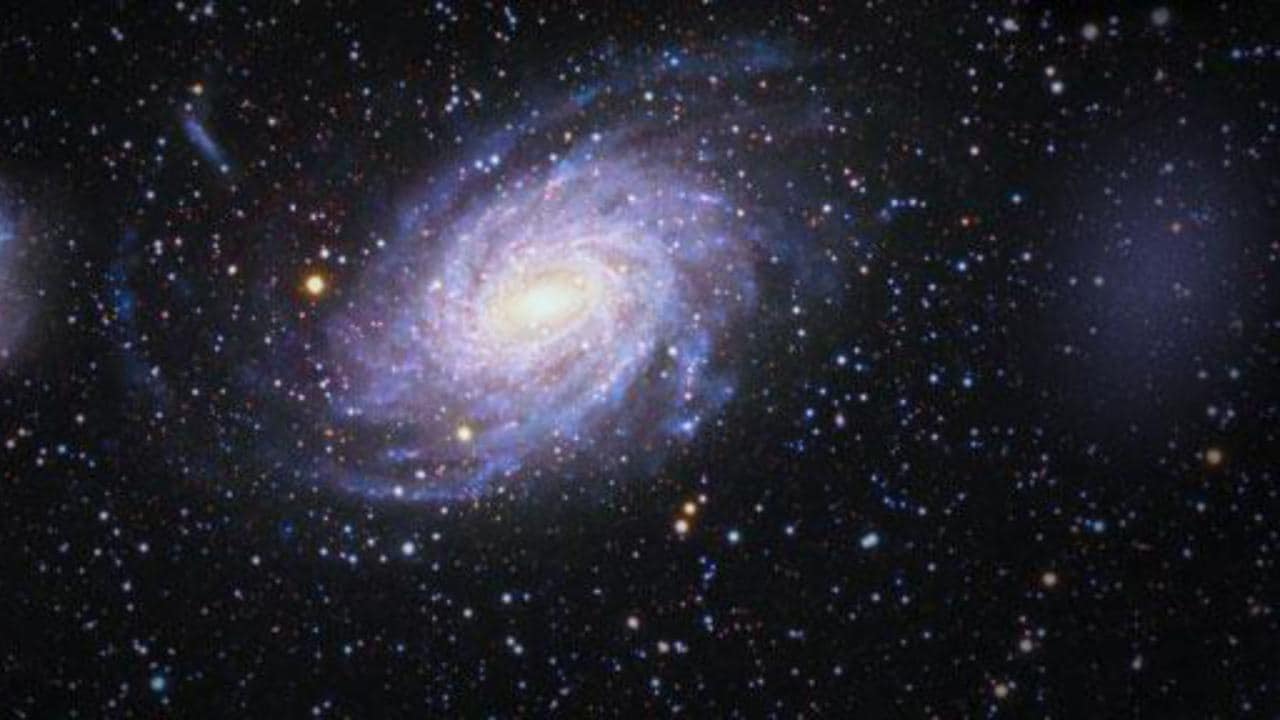
An artist's rendition of the faint Antlia-2 lurking to the right of our Milky Way. Image courtesy: ESA[/caption]This new and "more accurate" measurement also falls neatly in the middle of the range predicted in past studies. Having an accurate measurement is important for our understanding of the universe as well as calculations made about them. The Milky Way is one single galaxy, but it happens to be the only one we can study using the technology we have today.It is also likely going to affect how we understand dark energy – the distribution and effects of which are still fairly unknown. Dark matter is a huge area of research today since it is linked to how the majority of structures in the universe has formed, including the Milky Way.It is thought that these objects work similarly to our own galaxy. And so, having an accurate number for the galaxy's mass goes a long way towards solving the larger astronomical puzzle.

Careless Whispers: Scientists discover that plants can 'talk' to each other using smells
Life on Mars? European Space Agency’s Orbiter discovers ice water deposits at equator
Microsoft briefly overtakes Apple as the most valuable company, Apple back on top again
Even NASA is facing a tough time, starts layoffs following major budget cuts
ISRO, NASA's NISAR satellite to get ready by Jan-end, will monitor Earth's snow-covered regions