


New type of Trojan asteroid discovered near Jupiter has an orbit like an asteroid but the tail of a comet
It is believed that Trojan asteroids have large amounts of ice beneath their surfaces, but there was never any evidence untill now.

A rare kind of space object, which is something between an asteroid and a comet, has been discovered by astronomers. It has been called an active asteroid.
The newly discovered asteroid named 2019 LD2 has an orbit like an asteroid but the tail of a comet. While not entirely unknown, what makes 2019 LD2 special is that it shares Jupiter’s orbit in an asteroid swarm known as the Jupiter Trojans.
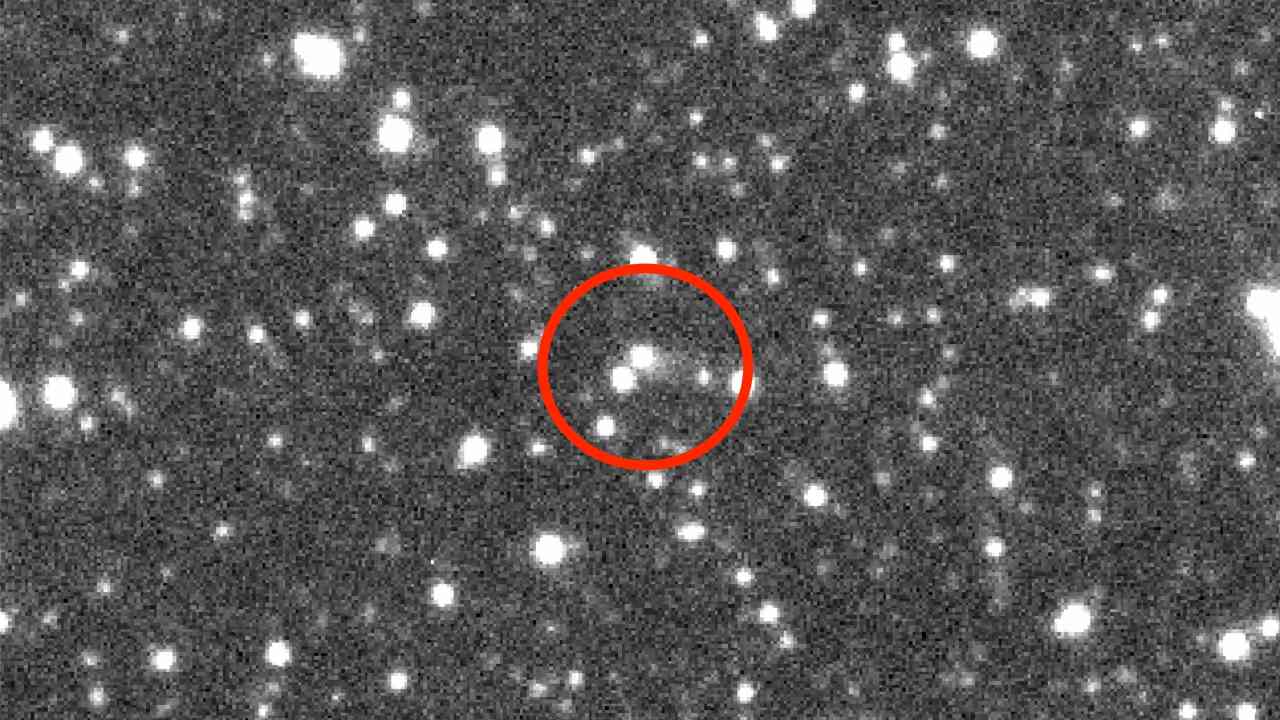
Image of asteroid 2019LD2 taken on June 11th, 2019, using the Las Cumbres Observatory Global Telescope (LCOGT) Networkʻs 1.0-meter telescope at Cerro Tololo, Chile.
Image Credit: JD Armstrong/IfA/LCOGT[/caption]The celestial body first grabbed the attention of astronomers last year in June when University of Hawaii’s Asteroid Terrestrial-impact Last Alert System (ATLAS) detected a faint new signal that appeared to be an asteroid in the Trojan group.
Subsequent observations confirmed the comet-like properties and in April 2002, researchers found that it still had a tail.
 More from Science
There are two theories as to why LD2 is active and among the Jupiter Trojans.
According to a report in Science Alert, astronomer Alan Fitzsimmons of Queen’s University Belfast, Ireland, said that they have believed for decades that Trojan asteroids should have large amounts of ice beneath their surfaces, but there was never any evidence till now.
“ATLAS has shown that the predictions of their icy nature may well be correct,” Fitzsimmons added.
The report said that it is possible that the LD2 collided with another asteroid and exposed the previously sealed ice leading to the tail and gas leak.
The second theory is that LD2 was a stray asteroid 2 captured by Jupiter from further out in the solar system where it is cold enough for ice to remain on the surface.
In December 2019, a group of astronomers had put in a request to take a closer look at the heavenly body using the Spitzer Space Telescope. However, Spitzer was retired in January of this year.

Careless Whispers: Scientists discover that plants can 'talk' to each other using smells
Life on Mars? European Space Agency’s Orbiter discovers ice water deposits at equator
Microsoft briefly overtakes Apple as the most valuable company, Apple back on top again
Even NASA is facing a tough time, starts layoffs following major budget cuts
ISRO, NASA's NISAR satellite to get ready by Jan-end, will monitor Earth's snow-covered regions