
Advertisement


Sections
New study uses piece of wood to filter salt water, provides sustainable alternative
This distillation method filters about 20 litres of water per square meter of membrane per hour.

While seventy percent of the world is covered in water, only 2.5 percent of it is fresh water. Of that, only one percent is easily accessible because the rest is frozen in the form of glaciers and ice. However, with the rise in temperatures, even this precious resource is fast disappearing into the sea.According to a United Nations report, nearly half of the world’s population is currently living in regions where it is facing water scarcity for at least one month per year. This number could increase by 4.8 billion to 5.7 billion by 2050. That's the bulk of the world's population.One solution to this problem could be the desalination of salt water.[caption id="attachment_7111601" align="alignnone" width="1280"]![A thin piece of wood acts like a membrane to turn saltwater into freshwater]() A thin piece of wood acts like a membrane to turn saltwater into freshwater[/caption]A team of researchers have found a way to use a wood membrane to distil water, which is a form of desalination.Distillation is a process in which saline water is heated to produce water vapour. This vapour is then condensed to produce fresh water – because salt doesn't get vapourised with the water. In membrane distillation, there are two phases and in the second phase, the water vapour passes through a membrane that is usually made of a type of polymer. It only allows the water molecules to pass through, filtering out the salt. However, these polymers are made of plastic, which isn't exactly environmentally friendly.The team used a thin slice of wood made from American basswood that underwent a chemical treatment to strip away the extra wood fibres and to make the surface slippery. One side of the wood is then heated so that when the saline water flows over that side, it gets vapourised. The vapour then moves through the pores in the wood membrane to the cooler side and the salt gets left behind.When the vapour moves to the other, cooler side of the wood, it also gets cooler and condenses.[caption id="attachment_7111561" align="alignnone" width="1000"]
A thin piece of wood acts like a membrane to turn saltwater into freshwater[/caption]A team of researchers have found a way to use a wood membrane to distil water, which is a form of desalination.Distillation is a process in which saline water is heated to produce water vapour. This vapour is then condensed to produce fresh water – because salt doesn't get vapourised with the water. In membrane distillation, there are two phases and in the second phase, the water vapour passes through a membrane that is usually made of a type of polymer. It only allows the water molecules to pass through, filtering out the salt. However, these polymers are made of plastic, which isn't exactly environmentally friendly.The team used a thin slice of wood made from American basswood that underwent a chemical treatment to strip away the extra wood fibres and to make the surface slippery. One side of the wood is then heated so that when the saline water flows over that side, it gets vapourised. The vapour then moves through the pores in the wood membrane to the cooler side and the salt gets left behind.When the vapour moves to the other, cooler side of the wood, it also gets cooler and condenses.[caption id="attachment_7111561" align="alignnone" width="1000"]![Schematic of the process of using the new wood membrane to distill water.]() Schematic of the process of using the new wood membrane to distill water.[/caption]Jason Ren, co-author of the study, in an interview with New Scientist, said that this process takes less energy than boiling all the saline water because there is no need to maintain a high temperature for more than a thin layer of water at a time.This method also filters about 20 litres of water per square meter of membrane per hour, which is not as quick as with polymer membranes. One of the reasons could be the thickness of the wood membranes (500 microns) vs the polymer membranes (130 microns).However, Ren believes that with the right equipment, the membrane could be made thinner, increasing the efficiency of the process.The findings from this study have been published in the journal Science Advances.
Schematic of the process of using the new wood membrane to distill water.[/caption]Jason Ren, co-author of the study, in an interview with New Scientist, said that this process takes less energy than boiling all the saline water because there is no need to maintain a high temperature for more than a thin layer of water at a time.This method also filters about 20 litres of water per square meter of membrane per hour, which is not as quick as with polymer membranes. One of the reasons could be the thickness of the wood membranes (500 microns) vs the polymer membranes (130 microns).However, Ren believes that with the right equipment, the membrane could be made thinner, increasing the efficiency of the process.The findings from this study have been published in the journal Science Advances.
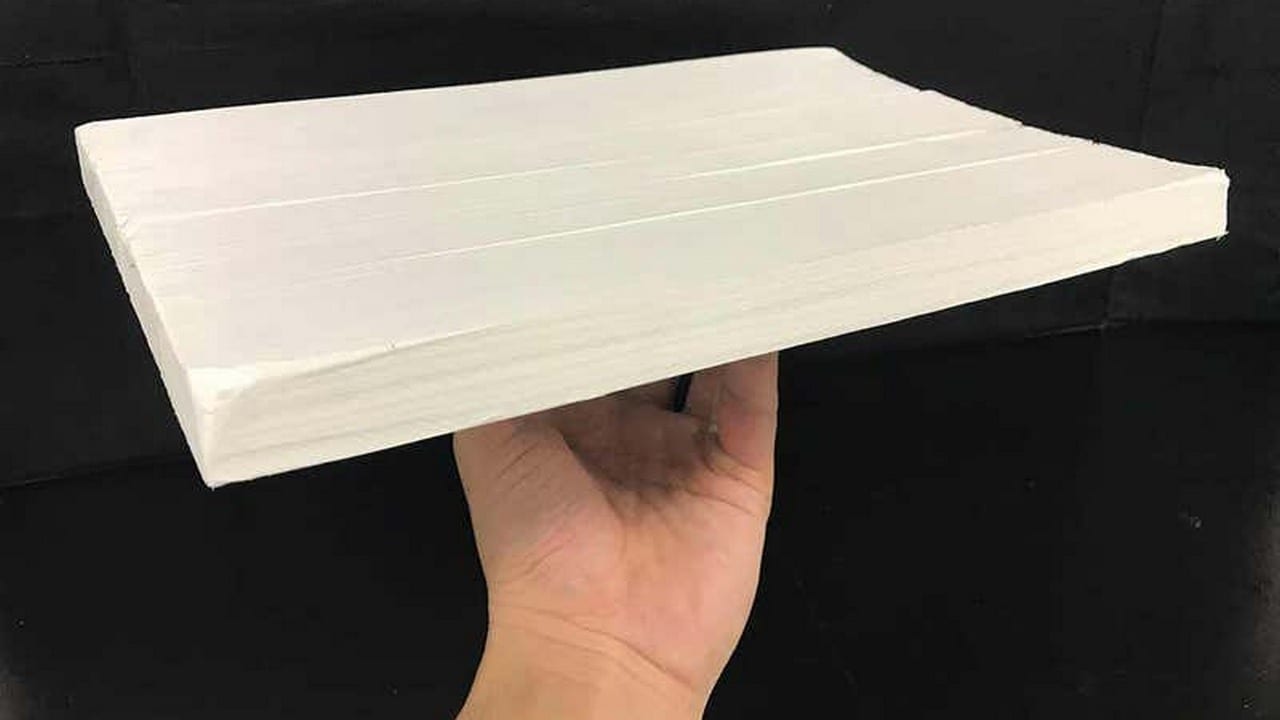 A thin piece of wood acts like a membrane to turn saltwater into freshwater[/caption]A team of researchers have found a way to use a wood membrane to distil water, which is a form of desalination.Distillation is a process in which saline water is heated to produce water vapour. This vapour is then condensed to produce fresh water – because salt doesn't get vapourised with the water. In membrane distillation, there are two phases and in the second phase, the water vapour passes through a membrane that is usually made of a type of polymer. It only allows the water molecules to pass through, filtering out the salt. However, these polymers are made of plastic, which isn't exactly environmentally friendly.
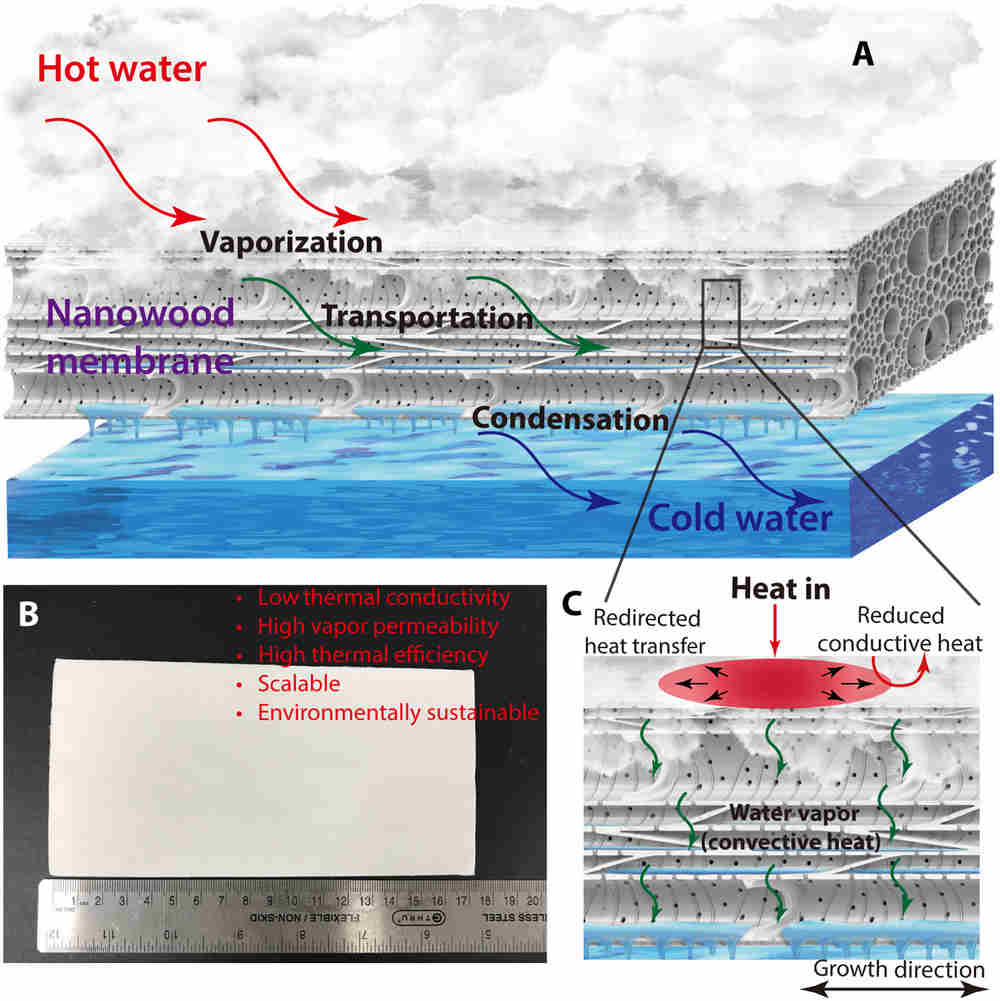 Schematic of the process of using the new wood membrane to distill water.[/caption]Jason Ren, co-author of the study, in an interview with New Scientist, said that this process takes less energy than boiling all the saline water because there is no need to maintain a high temperature for more than a thin layer of water at a time.This method also filters about 20 litres of water per square meter of membrane per hour, which is not as quick as with polymer membranes. One of the reasons could be the thickness of the wood membranes (500 microns) vs the polymer membranes (130 microns).However, Ren believes that with the right equipment, the membrane could be made thinner, increasing the efficiency of the process.The findings from this study have been published in the journal Science Advances.
First Published:Aug 05, 2019, 14:05:35 IST
Advertisement
Advertisement

Careless Whispers: Scientists discover that plants can 'talk' to each other using smells
Japanese scientists have recorded a video that shows plants, in certain conditions, communicate with each other using mists that carry smells. The discovery, reveals that plants release a fine mist of airborne compounds, to warn nearby plants of potential dangers
Life on Mars? European Space Agency’s Orbiter discovers ice water deposits at equator
European Space Agency's Mars Express Orbiter has identified massive ice and ice water deposits beneath the surface of Mars. The Mars Express orbiter was also the first to confirmed the presence of ice on Mars in 2004
Microsoft briefly overtakes Apple as the most valuable company, Apple back on top again
At its peak during the session, Microsoft's value reached $2.903 trillion, with a 2% surge. As of writing this article, Apple closed at $2.89 trillion, whereas Microsoft closed at $2.86 trillion
Even NASA is facing a tough time, starts layoffs following major budget cuts
NASA is facing some massive budget cuts, because of which, it has been forced to postpone some upcoming missions. NASA's Jet Propulsion Laboratory has been hit hard by recent federal budget cuts, resulting in the layoff of 100 contractors last week
ISRO, NASA's NISAR satellite to get ready by Jan-end, will monitor Earth's snow-covered regions
The NISAR satellite which has been developed jointly ISRO and NASA, should be ready for launch by the end of January 2024. The collaboration between NASA and ISRO on NISAR is the first time the two agencies have cooperated on hardware development for an Earth-observing mission
Advertisement
Advertisement