


New immunotherapy treatment shows promising results for stubborn breast cancers
Cases of triple-negative breast cancer are higher in India compared to other regions of the world.

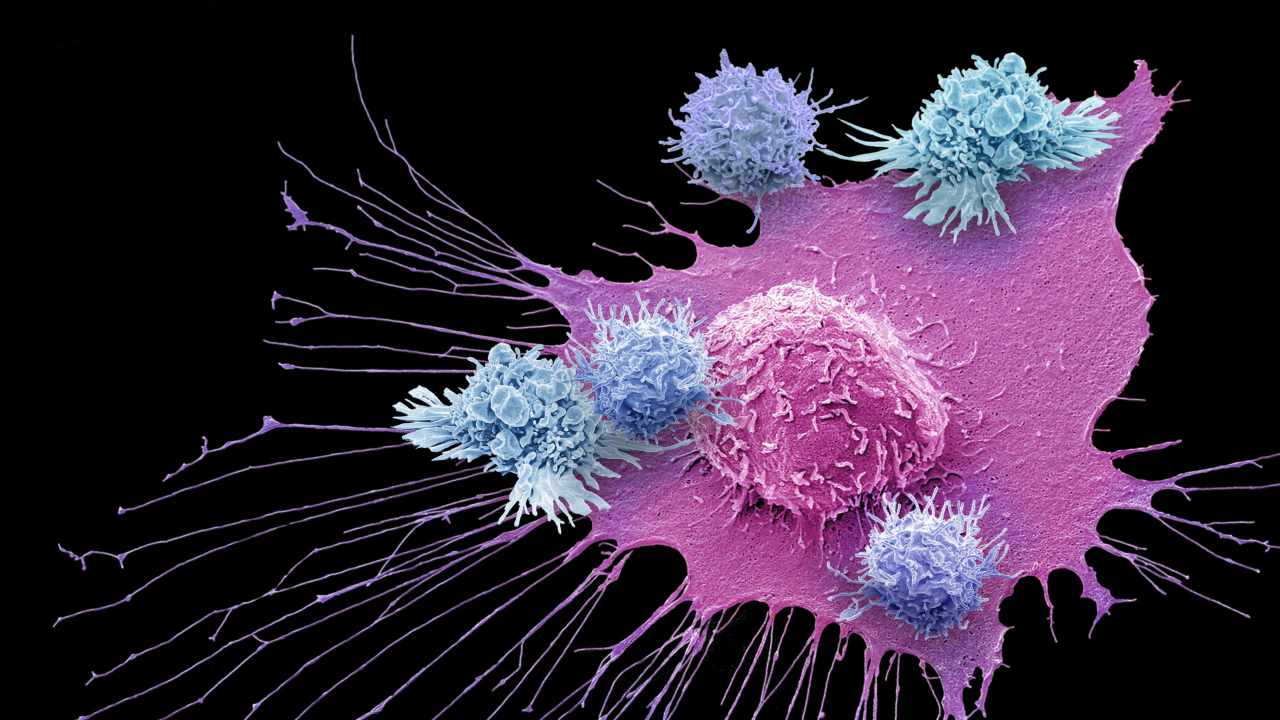
A false-coloured image of reprogrammed T-cells attacking a breast cancer cell under immunotherapy treatment, captured by a scanning electron microscope (SEM). Image courtesy: Gschmeissner/Science[/caption]In the body, immune T cells express a surface molecule called PD-1 which can attach with another molecule called PD-L1 present on other cells. This attachment conveys to T cells that the other cell is not to be destroyed and hence prevents them from being attacked by the immune system.Some cancer cells very cleverly exploit this in a Trojan horse-like manner by having more PD-L1 molecules on their surface and hence escape an immune attack. The immunotherapy drug, Atezolizumab, works by blocking PD-L1 molecules on cancer cells and thus prevents them from conveying wrong signals to immune cells.However, there are significant drawbacks in this study. The combination therapy was found to increase the average survival to 25 months as against 15.5 months. But cancer cells had to have a high level of PD-L1 molecules on their surface which may not be so in all patients. This means there is a need to check the status of PD-L1 receptor in patients before commencing the therapy.In addition, it must be considered that side effects associated with combination therapy are more severe than for single-agent chemotherapy. Also, the cost of such personalised immunotherapy could be extremely high with one round of therapy being Rs 1 lakh to Rs 13 lakh.Immunotherapy is still evolving in developing nations like India and is now being offered in just a few treatment centres and that too primarily for solid tumours like prostate, breast, renal, colon, hepatocellular carcinoma, colorectal, oral, lung and ovarian.Although this is only the first large clinical trial involving immunotherapy and more studies are required, the positive findings shine a ray of hope for TNBC patients.

Careless Whispers: Scientists discover that plants can 'talk' to each other using smells
Life on Mars? European Space Agency’s Orbiter discovers ice water deposits at equator
Microsoft briefly overtakes Apple as the most valuable company, Apple back on top again
Even NASA is facing a tough time, starts layoffs following major budget cuts
ISRO, NASA's NISAR satellite to get ready by Jan-end, will monitor Earth's snow-covered regions