
Advertisement


Sections
Natural climate loads the dice that turns California's droughts, wildfires ugly
Human vulnerability to climate change can have a lot to do with where people choose to settle.

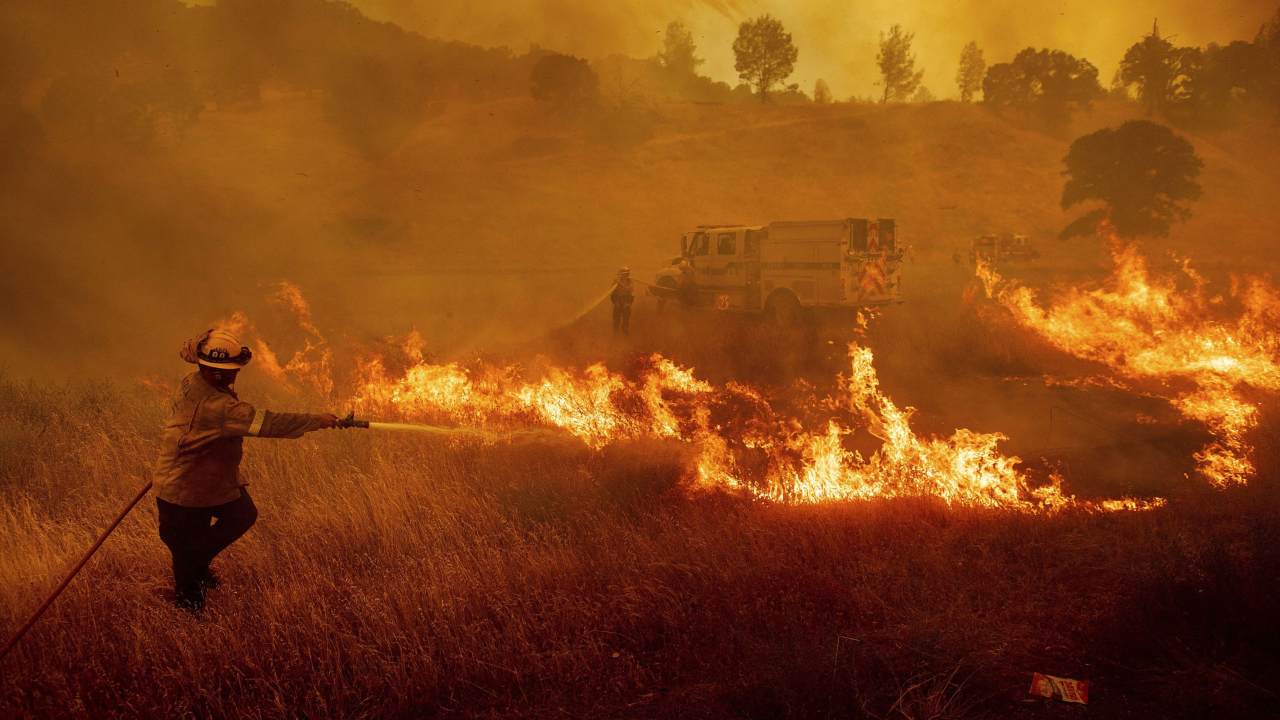
Human vulnerability to climate change can have a lot to do with where we choose to settle. Many civilizations in the past have gone extinct due to bad choices, as happened to the Indus Valley civilisation (Mohenjodaro), the Harappans, Vikings, Mayans and so on. Human struggles with climate change continue to date, and California is a prime example of man vs nature.All of California seemed to be on fire during fall of 2018 with a total fatality of 88, making it the deadliest season on record. The state's droughts and wildfires have religiously brought up anthropogenic climate change as a driver for the occurrence or severity of these disasters.The fact is: anthropogenic activity has resulted in temperatures rising well above one degree over California. This is accompanied by a water vapour deficit, a longer fire-season and increasing strengths of the high-speed, dangerous Santa Ana winds that periodically kick up and blow from the mountains inland to the coast in Southern California. Population continues to grow monotonically with more and more people living closer to the increasing tree density-driven by fire suppression efforts.Unfortunately, American federal agencies like the Forest Service, which are responsible for more than 60 percent of the forests in California have also struggled between contradictory strategies of maintaining wild forests versus landscaping forests for fire control.[caption id="attachment_5810601" align="alignnone" width="1280"]![A firefighter scrambles to stop a wildfire as wind drives embers across Highway 20 near Clearlake Oaks, California, on 1 July, 2018. AP]() A firefighter scrambles to stop a wildfire as wind drives embers across Highway 20 near Clearlake Oaks, California, on 1 July, 2018. AP[/caption]Location makes all the differenceDespite these human factors that exacerbate drought and wildfires, it would be a larger blunder to ignore the fact that California has a massive head start on droughts and forest fires simply because of where it is situated. Everything humans have done since settling in has only been about adding fuel to the fire that is a part of nature’s bounty in California.A spherical Earth rotating on its axis from west to east with the current configuration of continents can only produce a dry climate over California. To make the dry climate more palatable, we can call it the Mediterranean climate – warm dry summers and cool wet winters. This makes California a drought-prone combustible tinderbox over the last few million years due to natural climate variability.The role of natural variabilityWhy does natural variability favour a dry climate over California? Consider a flashlight pointed at a basketball. The fat middle will receive much more light than the curving top and bottom. The spherical shape of the Earth ensures that it receives far more energy from the sun at lower latitudes than it loses back to space and less energy from the sun at higher latitudes than it emits to space.Earth loses energy to space via infrared radiation just like our body does which is required to balance the energy received by the sun. This balance is mediated by the greenhouse effect, which traps outgoing infrared radiation.To keep the lower latitudes from warming continuously because of excess energy and the poles from cooling continuously from an energy deficit, energy has to be moved constantly by the ocean and atmosphere from low latitudes to the poles. This is accomplished by generating winds which then drive ocean currents.[caption id="attachment_5857791" align="alignnone" width="1280"]
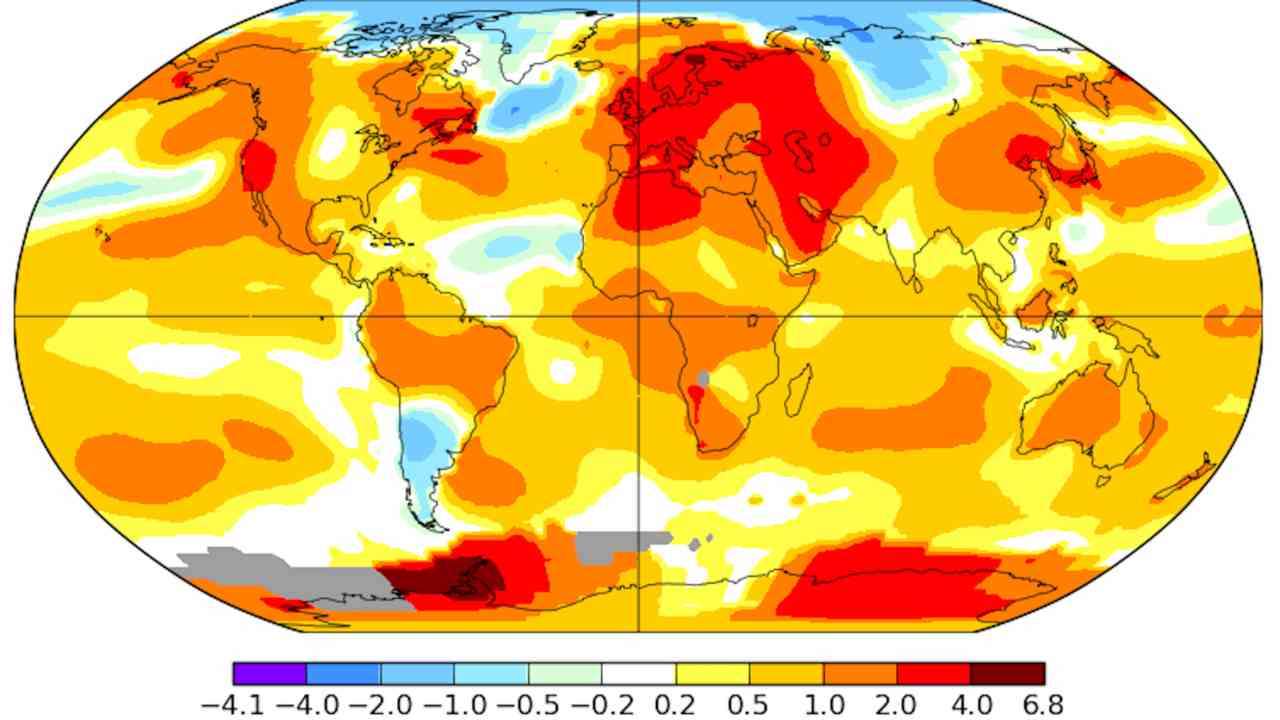
A firefighter scrambles to stop a wildfire as wind drives embers across Highway 20 near Clearlake Oaks, California, on 1 July, 2018. AP[/caption]Location makes all the differenceDespite these human factors that exacerbate drought and wildfires, it would be a larger blunder to ignore the fact that California has a massive head start on droughts and forest fires simply because of where it is situated. Everything humans have done since settling in has only been about adding fuel to the fire that is a part of nature’s bounty in California.A spherical Earth rotating on its axis from west to east with the current configuration of continents can only produce a dry climate over California. To make the dry climate more palatable, we can call it the Mediterranean climate – warm dry summers and cool wet winters. This makes California a drought-prone combustible tinderbox over the last few million years due to natural climate variability.The role of natural variabilityWhy does natural variability favour a dry climate over California? Consider a flashlight pointed at a basketball. The fat middle will receive much more light than the curving top and bottom. The spherical shape of the Earth ensures that it receives far more energy from the sun at lower latitudes than it loses back to space and less energy from the sun at higher latitudes than it emits to space.Earth loses energy to space via infrared radiation just like our body does which is required to balance the energy received by the sun. This balance is mediated by the greenhouse effect, which traps outgoing infrared radiation.To keep the lower latitudes from warming continuously because of excess energy and the poles from cooling continuously from an energy deficit, energy has to be moved constantly by the ocean and atmosphere from low latitudes to the poles. This is accomplished by generating winds which then drive ocean currents.[caption id="attachment_5857791" align="alignnone" width="1280"]![Global surface temperature anomalies during the month of July 2018. Image: NASA/GISS/Axios]() Global surface temperature anomalies during the month of July 2018. Image: NASA/GISS/Axios[/caption]The Coriolis effectRotation of the earth deviates the winds to their right in the Northern Hemisphere due to the so-called 'Coriolis effect'; a la the push you would expect on a merry-go-round. This gives us winds such as the subtropical trades and midlatitude westerlies.The net result is that we have a clockwise gyre in the subtropics with the trades pushing the water westward in the tropics and eastward at the northern edge of the subtropics. Winds can continue to flow from the ocean over to land but the ocean waters hit the coast and turn northward in the tropics and southward in the subtropics; again because of the Coriolis effect.Ocean currents thus carry warm tropical waters north in the east and cold waters south in the west to close the loop. The Kuroshio (Gulf Stream is the analogue in the Atlantic) in the east along the Asian coasts carries warm waters north while cold water flows south along the US west coast in the California current. The middle of the gyre has a high pressure which keeps the jet stream and the midlatitude storm track pushed to the north. Cold coastal waters and the subtropical high pressure together produce a dry climate over California with summer fog enveloping the Golden Gate Bridge.We know that the famous quip, "The coldest winter I experienced is a summer in San Francisco" is not attributable to Mark Twain. But the intrinsic tendency for dry climate and wildfires over California are attributable to natural variability.Rainfalls and El Nino stormsSince earth’s axis is tilted with respect to its orbital plane around the sun, we have seasons. This tends to create a waxing in summer and waning in winter of the subtropical high pressure.The shrinking of the subtropical high in winter allows the jet stream and the storm track to drift south, bringing precipitation, which can be dominated by snowfall on the mountain ranges. Warm and dry Southern California receives less than 5 inches of annual rainfall. Yet, the mountains can squeeze out over 2 meters of precipitation from the moist winds. This results in rich biodiversity over California, which serves as fodder for wildfires.Rainfall variability at all timescales from ice ages to El Niño is driven by the same process, i.e., the north-south migration of the jet stream and the storm track. But other factors can intervene. For example, the monster El Niño of 2015-16 did not bring any storms as the 1997-98 El Niño did, but the mild La Niña of 2016-17 was associated with near-record snow and rain.Precipitation has no significant trend since the Industrial Revolution, but temperatures have soared. A natural drought is magnified due to exacerbated evaporative losses. Add in a growing population and agriculture, and we have a perfect mix for megadroughts and devastating wildfires.Continued warming is obviously bad news in this context. Even though mean rainfall may not decrease in coming decades, Mediterranean climates are prone to more severe swings from extreme dry to extreme wet periods. This has been referred to as the ‘precipitation whiplash’ by UCLA climate scientists.It is also expected that continued warming is likely to deliver winter precipitation as rainfall instead of snow. The resulting changes in the magnitude and seasonality of peak streamflows will demand innovative approaches to managing the scarce water resources as well as ecosystems.Other countries of the world, India in particular, need to map their regions where natural climate spells 'disaster' so that growing population densities in those regions can be avoided and damage from the natural hazards and climate change can be mitigated to the best possible degree. The author is a Professor of Atmospheric & Oceanic Science and Earth System Science at the University of Maryland, currently a Visiting Professor at IIT Bombay.
Global surface temperature anomalies during the month of July 2018. Image: NASA/GISS/Axios[/caption]The Coriolis effectRotation of the earth deviates the winds to their right in the Northern Hemisphere due to the so-called 'Coriolis effect'; a la the push you would expect on a merry-go-round. This gives us winds such as the subtropical trades and midlatitude westerlies.The net result is that we have a clockwise gyre in the subtropics with the trades pushing the water westward in the tropics and eastward at the northern edge of the subtropics. Winds can continue to flow from the ocean over to land but the ocean waters hit the coast and turn northward in the tropics and southward in the subtropics; again because of the Coriolis effect.Ocean currents thus carry warm tropical waters north in the east and cold waters south in the west to close the loop. The Kuroshio (Gulf Stream is the analogue in the Atlantic) in the east along the Asian coasts carries warm waters north while cold water flows south along the US west coast in the California current. The middle of the gyre has a high pressure which keeps the jet stream and the midlatitude storm track pushed to the north. Cold coastal waters and the subtropical high pressure together produce a dry climate over California with summer fog enveloping the Golden Gate Bridge.We know that the famous quip, "The coldest winter I experienced is a summer in San Francisco" is not attributable to Mark Twain. But the intrinsic tendency for dry climate and wildfires over California are attributable to natural variability.Rainfalls and El Nino stormsSince earth’s axis is tilted with respect to its orbital plane around the sun, we have seasons. This tends to create a waxing in summer and waning in winter of the subtropical high pressure.The shrinking of the subtropical high in winter allows the jet stream and the storm track to drift south, bringing precipitation, which can be dominated by snowfall on the mountain ranges. Warm and dry Southern California receives less than 5 inches of annual rainfall. Yet, the mountains can squeeze out over 2 meters of precipitation from the moist winds. This results in rich biodiversity over California, which serves as fodder for wildfires.Rainfall variability at all timescales from ice ages to El Niño is driven by the same process, i.e., the north-south migration of the jet stream and the storm track. But other factors can intervene. For example, the monster El Niño of 2015-16 did not bring any storms as the 1997-98 El Niño did, but the mild La Niña of 2016-17 was associated with near-record snow and rain.Precipitation has no significant trend since the Industrial Revolution, but temperatures have soared. A natural drought is magnified due to exacerbated evaporative losses. Add in a growing population and agriculture, and we have a perfect mix for megadroughts and devastating wildfires.Continued warming is obviously bad news in this context. Even though mean rainfall may not decrease in coming decades, Mediterranean climates are prone to more severe swings from extreme dry to extreme wet periods. This has been referred to as the ‘precipitation whiplash’ by UCLA climate scientists.It is also expected that continued warming is likely to deliver winter precipitation as rainfall instead of snow. The resulting changes in the magnitude and seasonality of peak streamflows will demand innovative approaches to managing the scarce water resources as well as ecosystems.Other countries of the world, India in particular, need to map their regions where natural climate spells 'disaster' so that growing population densities in those regions can be avoided and damage from the natural hazards and climate change can be mitigated to the best possible degree. The author is a Professor of Atmospheric & Oceanic Science and Earth System Science at the University of Maryland, currently a Visiting Professor at IIT Bombay.
 A firefighter scrambles to stop a wildfire as wind drives embers across Highway 20 near Clearlake Oaks, California, on 1 July, 2018. AP[/caption]Location makes all the differenceDespite these human factors that exacerbate drought and wildfires, it would be a larger blunder to ignore the fact that California has a massive head start on droughts and forest fires simply because of where it is situated. Everything humans have done since settling in has only been about adding fuel to the fire that is a part of nature’s bounty in California.A spherical Earth rotating on its axis from west to east with the current configuration of continents can only produce a dry climate over California. To make the dry climate more palatable, we can call it the Mediterranean climate – warm dry summers and cool wet winters. This makes California a drought-prone combustible tinderbox over the last few million years due to natural climate variability.The role of natural variabilityWhy does natural variability favour a dry climate over California? Consider a flashlight pointed at a basketball. The fat middle will receive much more light than the curving top and bottom. The spherical shape of the Earth ensures that it receives far more energy from the sun at lower latitudes than it loses back to space and less energy from the sun at higher latitudes than it emits to space.Earth loses energy to space via infrared radiation just like our body does which is required to balance the energy received by the sun. This balance is mediated by the greenhouse effect, which traps outgoing infrared radiation.To keep the lower latitudes from warming continuously because of excess energy and the poles from cooling continuously from an energy deficit, energy has to be moved constantly by the ocean and atmosphere from low latitudes to the poles. This is accomplished by generating winds which then drive ocean currents.[caption id="attachment_5857791" align="alignnone" width="1280"]
 Global surface temperature anomalies during the month of July 2018. Image: NASA/GISS/Axios[/caption]The Coriolis effectRotation of the earth deviates the winds to their right in the Northern Hemisphere due to the so-called 'Coriolis effect'; a la the push you would expect on a merry-go-round. This gives us winds such as the subtropical trades and midlatitude westerlies.The net result is that we have a clockwise gyre in the subtropics with the trades pushing the water westward in the tropics and eastward at the northern edge of the subtropics. Winds can continue to flow from the ocean over to land but the ocean waters hit the coast and turn northward in the tropics and southward in the subtropics; again because of the Coriolis effect.
First Published:Jan 09, 2019, 15:29:12 IST
Advertisement
Advertisement

Careless Whispers: Scientists discover that plants can 'talk' to each other using smells
Japanese scientists have recorded a video that shows plants, in certain conditions, communicate with each other using mists that carry smells. The discovery, reveals that plants release a fine mist of airborne compounds, to warn nearby plants of potential dangers
Life on Mars? European Space Agency’s Orbiter discovers ice water deposits at equator
European Space Agency's Mars Express Orbiter has identified massive ice and ice water deposits beneath the surface of Mars. The Mars Express orbiter was also the first to confirmed the presence of ice on Mars in 2004
Microsoft briefly overtakes Apple as the most valuable company, Apple back on top again
At its peak during the session, Microsoft's value reached $2.903 trillion, with a 2% surge. As of writing this article, Apple closed at $2.89 trillion, whereas Microsoft closed at $2.86 trillion
Even NASA is facing a tough time, starts layoffs following major budget cuts
NASA is facing some massive budget cuts, because of which, it has been forced to postpone some upcoming missions. NASA's Jet Propulsion Laboratory has been hit hard by recent federal budget cuts, resulting in the layoff of 100 contractors last week
ISRO, NASA's NISAR satellite to get ready by Jan-end, will monitor Earth's snow-covered regions
The NISAR satellite which has been developed jointly ISRO and NASA, should be ready for launch by the end of January 2024. The collaboration between NASA and ISRO on NISAR is the first time the two agencies have cooperated on hardware development for an Earth-observing mission
Advertisement
Advertisement