


NASA's TESS discovers a super-Earth 31 light-years away, could harbour life
The exoplanet is more massive than our own blue planet and is located outside the solar system.

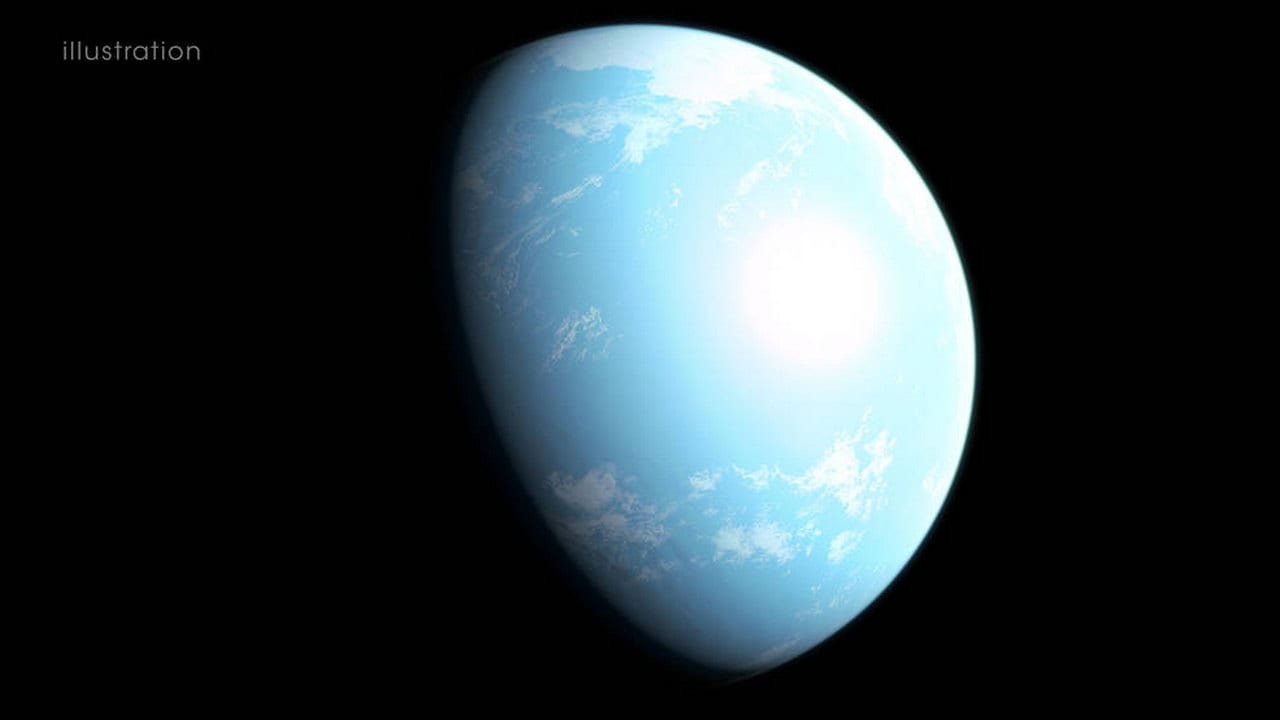
This illustration shows one interpretation of what GJ 357 d may be like. Image credits: NASA's Goddard Space Flight Center/Chris Smith[/caption]The exoplanet is more massive than our own blue planet, and Kaltenegger said the discovery will provide insight into Earth's heavyweight planetary cousins."With a thick atmosphere, the planet GJ 357 d could maintain liquid water on its surface like Earth, and we could pick out signs of life with telescopes that will soon be online," she said.Astronomers from the Institute of Astrophysics of the Canary Islands and the University of La Laguna, both in Spain, announced the discovery of the GJ 357 system in the journal Astronomy & Astrophysics.They showed that the distant solar system — with a diminutive M-type dwarf sun, about one-third the size of our own sun — harbours three planets, with one of those in that system's habitable zone: GJ 357 d.Last February, the TESS satellite observed that the dwarf sun GJ 357 dimmed very slightly every 3.9 days, evidence of a transiting planet moving across the star's face.That planet was GJ 357 b, a so-called "hot Earth" about 22 per cent larger than Earth, according to the NASA Goddard Space Flight Center, which guides TESS. Follow-up observations from the ground led to the discovery of two more exoplanetary siblings: GJ 357 c and GJ 357 d.The international team of scientists collected Earth-based telescopic data going back two decades — to reveal the newly found exoplanets' tiny gravitational tugs on its host star, according to NASA.

Careless Whispers: Scientists discover that plants can 'talk' to each other using smells
Life on Mars? European Space Agency’s Orbiter discovers ice water deposits at equator
Microsoft briefly overtakes Apple as the most valuable company, Apple back on top again
Even NASA is facing a tough time, starts layoffs following major budget cuts
ISRO, NASA's NISAR satellite to get ready by Jan-end, will monitor Earth's snow-covered regions