
Advertisement


Sections
NASA's 'supersonic parachute' for the Mars 2020 mission sets world record
NASA's supersonic parachute survived 37,000 kg load and was deployed in just four-tenths of a second.

NASA has created a world record with its "supersonic parachute" for the Mars 2020 mission that survived 37,000 kg load and was deployed in just four-tenths of a second -- twice the speed of sound.Less than two minutes after the launch of a 58-foot-tall (17.7-metre) Black Brant IX sounding rocket on September 7, a payload separated and began its dive back through Earth's atmosphere, the US space agency said in a statement late Monday.When onboard sensors determined the payload had reached the appropriate height and Mach number, the payload deployed a parachute made of nylon, Technora and Kevlar fibres.[caption id="attachment_5470761" align="alignnone" width="1024"]![NASA's Supersonic Parachute deployed at a record speed.]() NASA's Supersonic Parachute deployed at a record speed.[/caption]Within four-tenths of a second, the 180-pound parachute billowed out from being a solid cylinder to being fully inflated."It was the fastest inflation in history of a parachute this size and created a peak load of almost 70,000 pounds (37,000 kg) of force," said NASA.It was the third and final test flight of the Advanced Supersonic Parachute Inflation Research Experiment (ASPIRE) project that conducted a series of sounding rocket tests to help decide which parachute design to use on the Mars 2020 mission."Mars 2020 will be carrying the heaviest payload yet to the surface of Mars, and like all our prior Mars missions, we only have one parachute and it has to work," said John McNamee, project manager of Mars 2020 at JPL."The ASPIRE tests have shown in remarkable detail how our parachute will react when it is first deployed into a supersonic flow high above Mars. And let me tell you, it looks beautiful," he added.The 37,000-kg load was the highest ever survived by a supersonic parachute.That's about an 85-per cent higher load than what scientists would expect the Mars 2020 parachute to encounter during its deployment in Mars' atmosphere.
NASA's Supersonic Parachute deployed at a record speed.[/caption]Within four-tenths of a second, the 180-pound parachute billowed out from being a solid cylinder to being fully inflated."It was the fastest inflation in history of a parachute this size and created a peak load of almost 70,000 pounds (37,000 kg) of force," said NASA.It was the third and final test flight of the Advanced Supersonic Parachute Inflation Research Experiment (ASPIRE) project that conducted a series of sounding rocket tests to help decide which parachute design to use on the Mars 2020 mission."Mars 2020 will be carrying the heaviest payload yet to the surface of Mars, and like all our prior Mars missions, we only have one parachute and it has to work," said John McNamee, project manager of Mars 2020 at JPL."The ASPIRE tests have shown in remarkable detail how our parachute will react when it is first deployed into a supersonic flow high above Mars. And let me tell you, it looks beautiful," he added.The 37,000-kg load was the highest ever survived by a supersonic parachute.That's about an 85-per cent higher load than what scientists would expect the Mars 2020 parachute to encounter during its deployment in Mars' atmosphere.
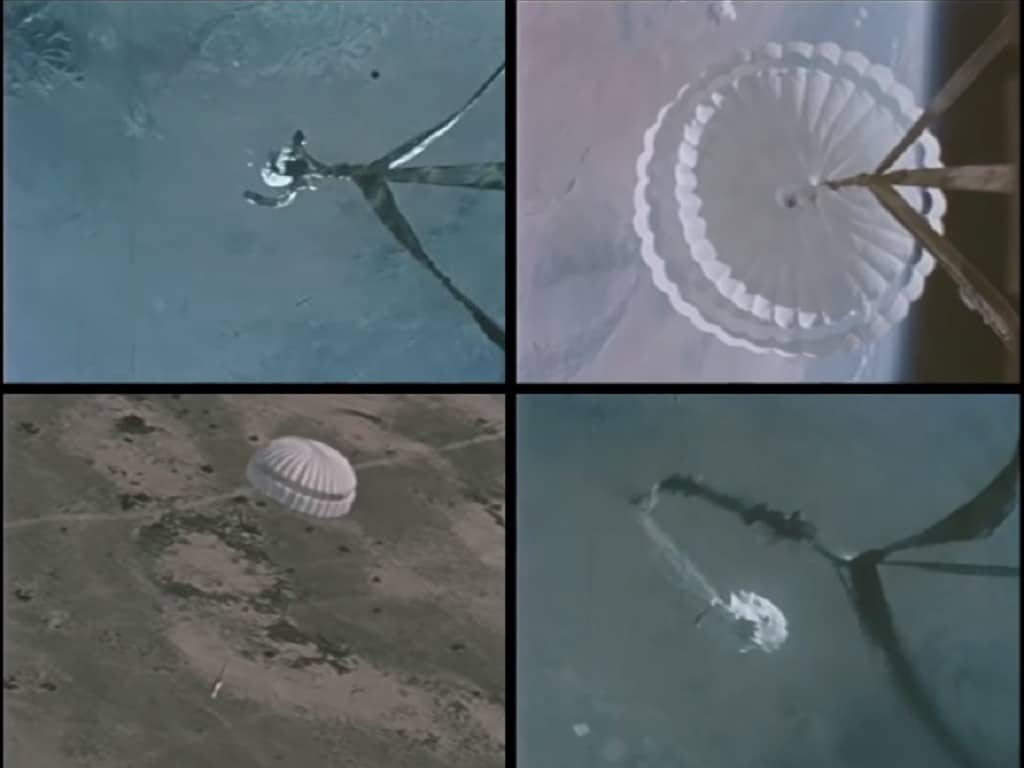 NASA's Supersonic Parachute deployed at a record speed.[/caption]Within four-tenths of a second, the 180-pound parachute billowed out from being a solid cylinder to being fully inflated."It was the fastest inflation in history of a parachute this size and created a peak load of almost 70,000 pounds (37,000 kg) of force," said NASA.It was the third and final test flight of the Advanced Supersonic Parachute Inflation Research Experiment (ASPIRE) project that conducted a series of sounding rocket tests to help decide which parachute design to use on the Mars 2020 mission.
First Published:Oct 30, 2018, 12:05:03 IST
Advertisement
Advertisement

Careless Whispers: Scientists discover that plants can 'talk' to each other using smells
Japanese scientists have recorded a video that shows plants, in certain conditions, communicate with each other using mists that carry smells. The discovery, reveals that plants release a fine mist of airborne compounds, to warn nearby plants of potential dangers
Life on Mars? European Space Agency’s Orbiter discovers ice water deposits at equator
European Space Agency's Mars Express Orbiter has identified massive ice and ice water deposits beneath the surface of Mars. The Mars Express orbiter was also the first to confirmed the presence of ice on Mars in 2004
Microsoft briefly overtakes Apple as the most valuable company, Apple back on top again
At its peak during the session, Microsoft's value reached $2.903 trillion, with a 2% surge. As of writing this article, Apple closed at $2.89 trillion, whereas Microsoft closed at $2.86 trillion
Even NASA is facing a tough time, starts layoffs following major budget cuts
NASA is facing some massive budget cuts, because of which, it has been forced to postpone some upcoming missions. NASA's Jet Propulsion Laboratory has been hit hard by recent federal budget cuts, resulting in the layoff of 100 contractors last week
ISRO, NASA's NISAR satellite to get ready by Jan-end, will monitor Earth's snow-covered regions
The NISAR satellite which has been developed jointly ISRO and NASA, should be ready for launch by the end of January 2024. The collaboration between NASA and ISRO on NISAR is the first time the two agencies have cooperated on hardware development for an Earth-observing mission
Advertisement
Advertisement