


NASA's Parker survives Sun's extreme heat after making its first close approach
It will be weeks after the current solar encounter phase before science data is downlinked to Earth.

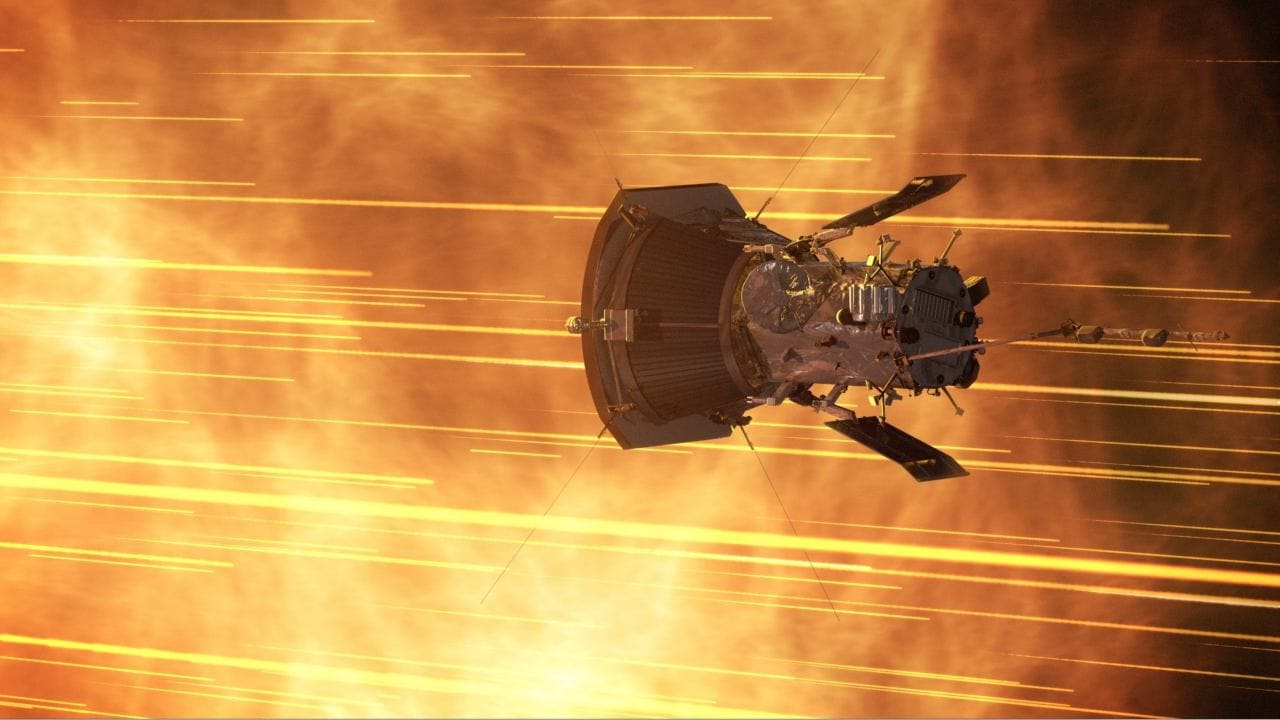
Parker has survived the first of its many close approaches over the next few years. Image courtesy: NASA Goddard[/caption]At this distance, the intense sunlight heated the Sun-facing side of Probe's heat shield, called the Thermal Protection System, to about 820 degrees Fahrenheit.This temperature will climb up to 2,500 Fahrenheit as the spacecraft makes closer approaches to the Sun, NASA said."Parker Solar Probe was designed to take care of itself and its precious payload during this close approach, with no control from us on Earth -- and now we know it succeeded," said Thomas Zurbuchen, Associate Administrator of NASA's Science Mission Directorate in Washington.On 7 November, mission controllers at the Johns Hopkins University Applied Physics Lab received the status beacon from the spacecraft.

Careless Whispers: Scientists discover that plants can 'talk' to each other using smells
Life on Mars? European Space Agency’s Orbiter discovers ice water deposits at equator
Microsoft briefly overtakes Apple as the most valuable company, Apple back on top again
Even NASA is facing a tough time, starts layoffs following major budget cuts
ISRO, NASA's NISAR satellite to get ready by Jan-end, will monitor Earth's snow-covered regions