


NASA's Parker Solar Probe successfully completes its first flyby of Venus
Parker Solar Probe, NASA's historic small car-sized probe will journey steadily closer to the Sun.

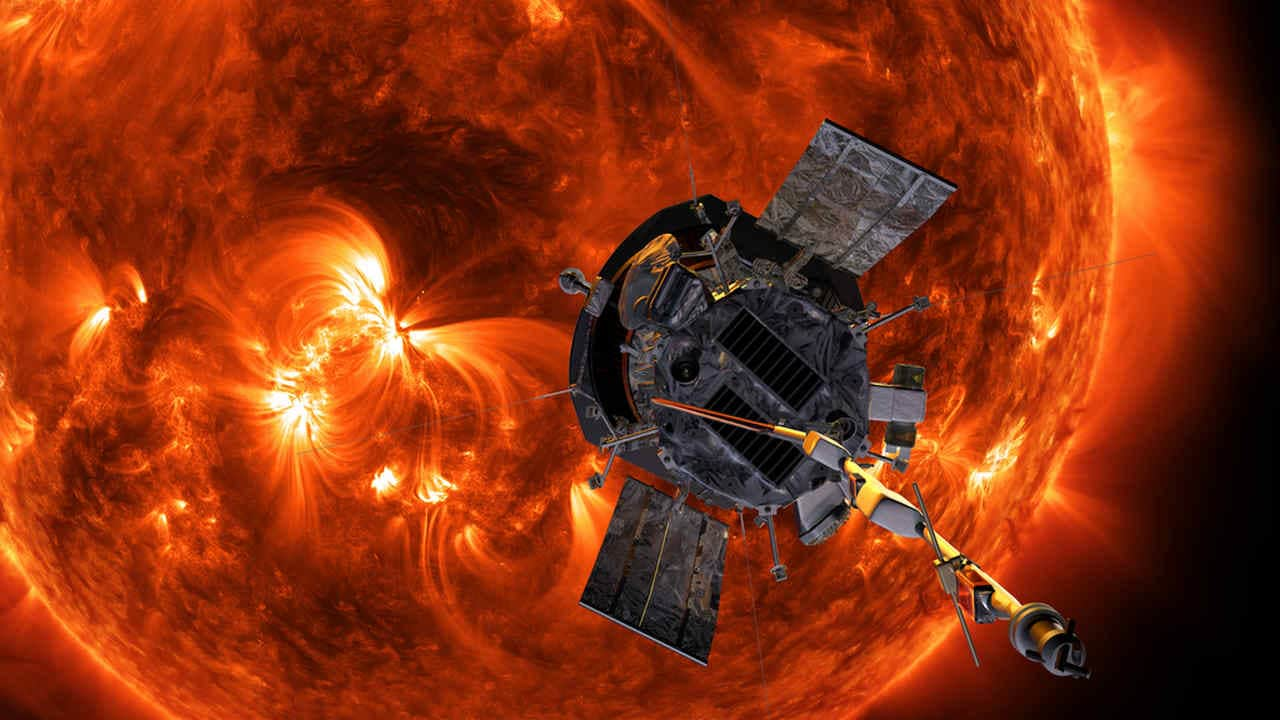
Illustration of NASA’s Parker Solar Probe approaching the Sun. Image: NASA[/caption]"These gravity assists will help the spacecraft tighten its orbit closer and closer to the Sun over the course of the mission," it added.Launched on 12 August, Parker Solar Probe, NASA's historic small car-sized probe will journey steadily closer to the Sun, until it makes its closest approach at 3.8 million miles.Throughout its mission, the probe will make six more Venus gravity assist and 24 total passes by the Sun.This manoeuvre will change Parker Solar Probe's trajectory to take the spacecraft closer to the Sun.The probe expected to surpass a heliocentric speed of 153,454 miles per hour. This is the record for fastest spacecraft measured relative to the Sun, set by Helios 2 in 1976.These speed and distance estimates could change after Parker Solar Probe performs its Venus gravity assist on 3 October.It is also expected to come within 27 million miles of the Sun. This is the record currently held by Helios 2, set in 1976.The probe is named after Eugene Parker, a solar physicist, who in 1958 first predicted the existence of the solar wind, a stream of charged particles and magnetic fields that flow continuously from the Sun.

Careless Whispers: Scientists discover that plants can 'talk' to each other using smells
Life on Mars? European Space Agency’s Orbiter discovers ice water deposits at equator
Microsoft briefly overtakes Apple as the most valuable company, Apple back on top again
Even NASA is facing a tough time, starts layoffs following major budget cuts
ISRO, NASA's NISAR satellite to get ready by Jan-end, will monitor Earth's snow-covered regions