
Advertisement


Sections
NASA's Parker Solar Probe blasts off on epic journey to unveil secrets of the Sun
The probe is designed to plunge into the Sun's atmosphere during a seven-year mission.

NASA on Sunday blasted off a $1.5 billion spacecraft toward the Sun on a historic mission to protect the Earth by unveiling the mysteries of dangerous solar storms."Three, two, one, and liftoff!" said a NASA commentator as the Parker Solar Probe lit up the dark night sky aboard a Delta IV-Heavy rocket from Cape Canaveral, Florida at 3:31 am (0731 GMT).The unmanned spacecraft aims to get closer than any human-made object in history to the center of our solar system. The probe is designed to plunge into the Sun's atmosphere, known as the corona, during a seven-year mission.It is protected by an ultra-powerful heat shield that can endure unprecedented levels of heat, and radiation 500 times that experienced on Earth.Strange veilNASA has billed the mission as the first spacecraft to "touch the Sun."In reality, it should come within 6.16 million kilometers of the Sun's surface, close enough to study the curious phenomenon of the solar wind and the Sun's atmosphere, known as the corona, which is 300 times hotter than its surface.The car-sized probe is designed to give scientists a better understanding of solar wind and geomagnetic storms that risk wreaking chaos on Earth by knocking out the power grid.![Parker solar probe illustration 1280]() If all works as planned, the inside of the spacecraft should stay at just 85 degrees Fahrenheit.The goal for the Parker Solar Probe is to make 24 passes through the corona during its seven-year mission."The sun is full of mysteries," said Nicky Fox, project scientist at the Johns Hopkins University Applied Physics Lab."We are ready. We have the perfect payload. We know the questions we want to answer."91-year-old namesakeThe spacecraft is the only NASA probe in history to be named after a living person — in this case, 91-year-old solar physicist Eugene Parker, who first described the solar wind in 1958.Parker said last week that he was "impressed" by the Parker Solar Probe, calling it "a very complex machine."NASA chief of the science mission directorate, Thomas Zurbuchen, said Saturday that Parker is an "incredible hero of our scientific community," and called the probe one of NASA most "strategically important" missions.Scientists have wanted to build a spacecraft like this for more than 60 years, but only in recent years did the heat shield technology advance enough to be capable of protecting sensitive instruments.[caption id="attachment_4949011" align="alignnone" width="1049"]
If all works as planned, the inside of the spacecraft should stay at just 85 degrees Fahrenheit.The goal for the Parker Solar Probe is to make 24 passes through the corona during its seven-year mission."The sun is full of mysteries," said Nicky Fox, project scientist at the Johns Hopkins University Applied Physics Lab."We are ready. We have the perfect payload. We know the questions we want to answer."91-year-old namesakeThe spacecraft is the only NASA probe in history to be named after a living person — in this case, 91-year-old solar physicist Eugene Parker, who first described the solar wind in 1958.Parker said last week that he was "impressed" by the Parker Solar Probe, calling it "a very complex machine."NASA chief of the science mission directorate, Thomas Zurbuchen, said Saturday that Parker is an "incredible hero of our scientific community," and called the probe one of NASA most "strategically important" missions.Scientists have wanted to build a spacecraft like this for more than 60 years, but only in recent years did the heat shield technology advance enough to be capable of protecting sensitive instruments.[caption id="attachment_4949011" align="alignnone" width="1049"]![Launch of the Parker Solar Probe on Sunday. Image courtesy: NASA]() Launch of the Parker Solar Probe on Sunday. Image courtesy: NASA[/caption]Tools on board will measure high-energy particles associated with flares and coronal mass ejections, as well as the changing magnetic field around the Sun.A white light imager will take images of the atmosphere right in front of the Sun.When it nears the Sun, the probe will travel rapidly enough to go from New York to Tokyo in one minute — some 430,000 miles per hour, making it the fastest human-made object.
Launch of the Parker Solar Probe on Sunday. Image courtesy: NASA[/caption]Tools on board will measure high-energy particles associated with flares and coronal mass ejections, as well as the changing magnetic field around the Sun.A white light imager will take images of the atmosphere right in front of the Sun.When it nears the Sun, the probe will travel rapidly enough to go from New York to Tokyo in one minute — some 430,000 miles per hour, making it the fastest human-made object.
These solar outbursts are poorly understood, but pack the potential to wipe out power to millions of people.A worst-case scenario could cost up to two trillion dollars in the first year alone and take a decade to fully recover from, experts have warned."The Parker Solar Probe will help us do a much better job of predicting when a disturbance in the solar wind could hit Earth," said Justin Kasper, a project scientist and professor at the University of Michigan.Knowing more about the solar wind and space storms will also help protect future deep space explorers as they journey toward the Moon or Mars.Heat shieldThe probe is guarded by an ultra-powerful heat shield that is just 4.5 inches (11.43 centimeters) thick, enabling the spacecraft to survive its close shave with the fiery star.Even in a region where temperatures can reach more than a million degrees Fahrenheit, the sunlight is expected to heat the shield to just around 1,371 degrees Celsius.
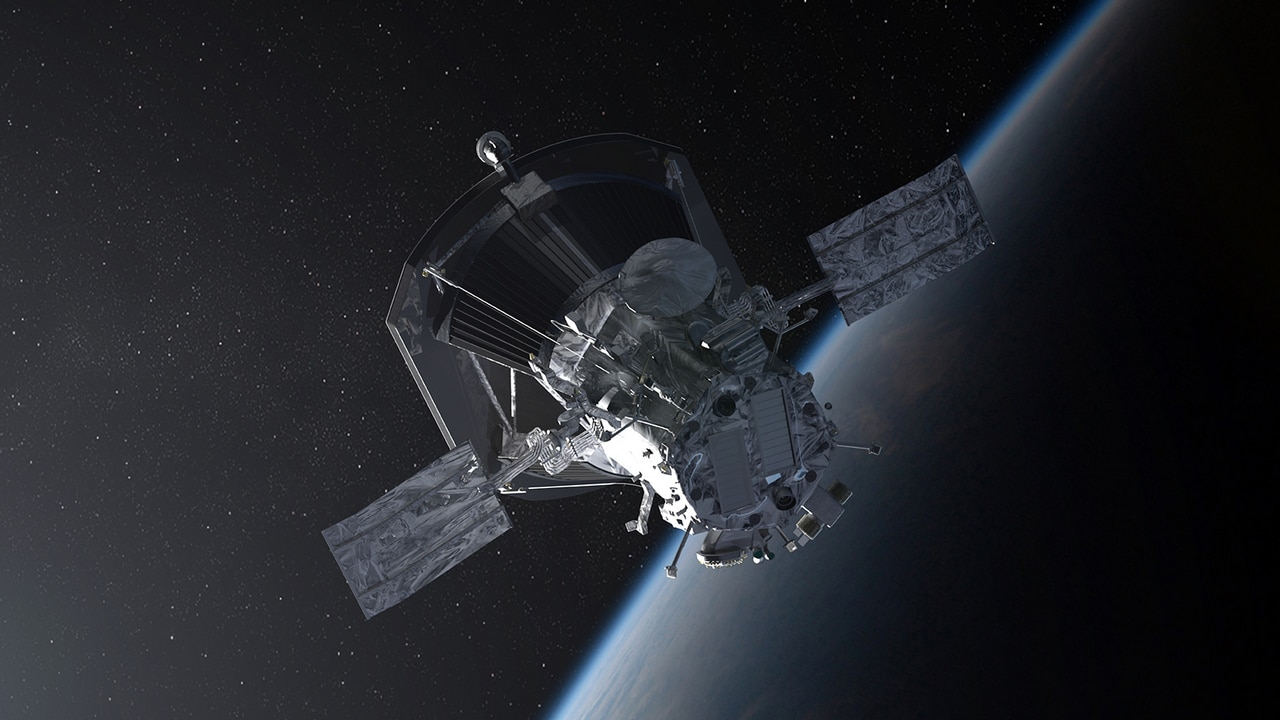 If all works as planned, the inside of the spacecraft should stay at just 85 degrees Fahrenheit.The goal for the Parker Solar Probe is to make 24 passes through the corona during its seven-year mission."The sun is full of mysteries," said Nicky Fox, project scientist at the Johns Hopkins University Applied Physics Lab."We are ready. We have the perfect payload. We know the questions we want to answer."91-year-old namesakeThe spacecraft is the only NASA probe in history to be named after a living person — in this case, 91-year-old solar physicist Eugene Parker, who first described the solar wind in 1958.Parker said last week that he was "impressed" by the Parker Solar Probe, calling it "a very complex machine."NASA chief of the science mission directorate, Thomas Zurbuchen, said Saturday that Parker is an "incredible hero of our scientific community," and called the probe one of NASA most "strategically important" missions.Scientists have wanted to build a spacecraft like this for more than 60 years, but only in recent years did the heat shield technology advance enough to be capable of protecting sensitive instruments.[caption id="attachment_4949011" align="alignnone" width="1049"]
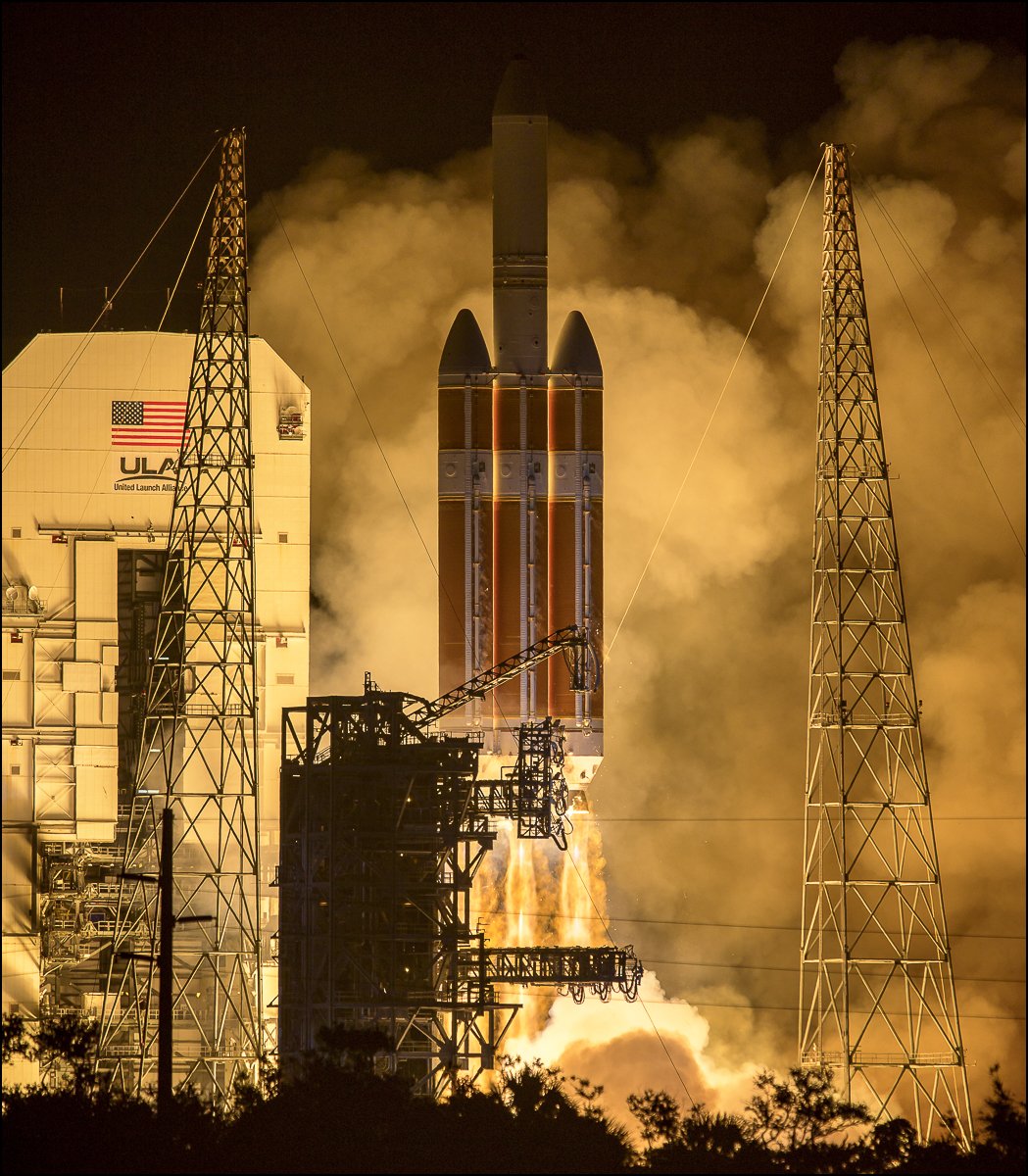 Launch of the Parker Solar Probe on Sunday. Image courtesy: NASA[/caption]Tools on board will measure high-energy particles associated with flares and coronal mass ejections, as well as the changing magnetic field around the Sun.A white light imager will take images of the atmosphere right in front of the Sun.When it nears the Sun, the probe will travel rapidly enough to go from New York to Tokyo in one minute — some 430,000 miles per hour, making it the fastest human-made object.
First Published:Aug 12, 2018, 14:51:38 IST
Advertisement
Advertisement

Careless Whispers: Scientists discover that plants can 'talk' to each other using smells
Japanese scientists have recorded a video that shows plants, in certain conditions, communicate with each other using mists that carry smells. The discovery, reveals that plants release a fine mist of airborne compounds, to warn nearby plants of potential dangers
Life on Mars? European Space Agency’s Orbiter discovers ice water deposits at equator
European Space Agency's Mars Express Orbiter has identified massive ice and ice water deposits beneath the surface of Mars. The Mars Express orbiter was also the first to confirmed the presence of ice on Mars in 2004
Microsoft briefly overtakes Apple as the most valuable company, Apple back on top again
At its peak during the session, Microsoft's value reached $2.903 trillion, with a 2% surge. As of writing this article, Apple closed at $2.89 trillion, whereas Microsoft closed at $2.86 trillion
Even NASA is facing a tough time, starts layoffs following major budget cuts
NASA is facing some massive budget cuts, because of which, it has been forced to postpone some upcoming missions. NASA's Jet Propulsion Laboratory has been hit hard by recent federal budget cuts, resulting in the layoff of 100 contractors last week
ISRO, NASA's NISAR satellite to get ready by Jan-end, will monitor Earth's snow-covered regions
The NISAR satellite which has been developed jointly ISRO and NASA, should be ready for launch by the end of January 2024. The collaboration between NASA and ISRO on NISAR is the first time the two agencies have cooperated on hardware development for an Earth-observing mission
Advertisement
Advertisement