


NASA's Parker probe sends view of Earth from its journey towards Venus, the Sun
Parker completed the first of six Venus gravity assists to gather momentum earlier this month.

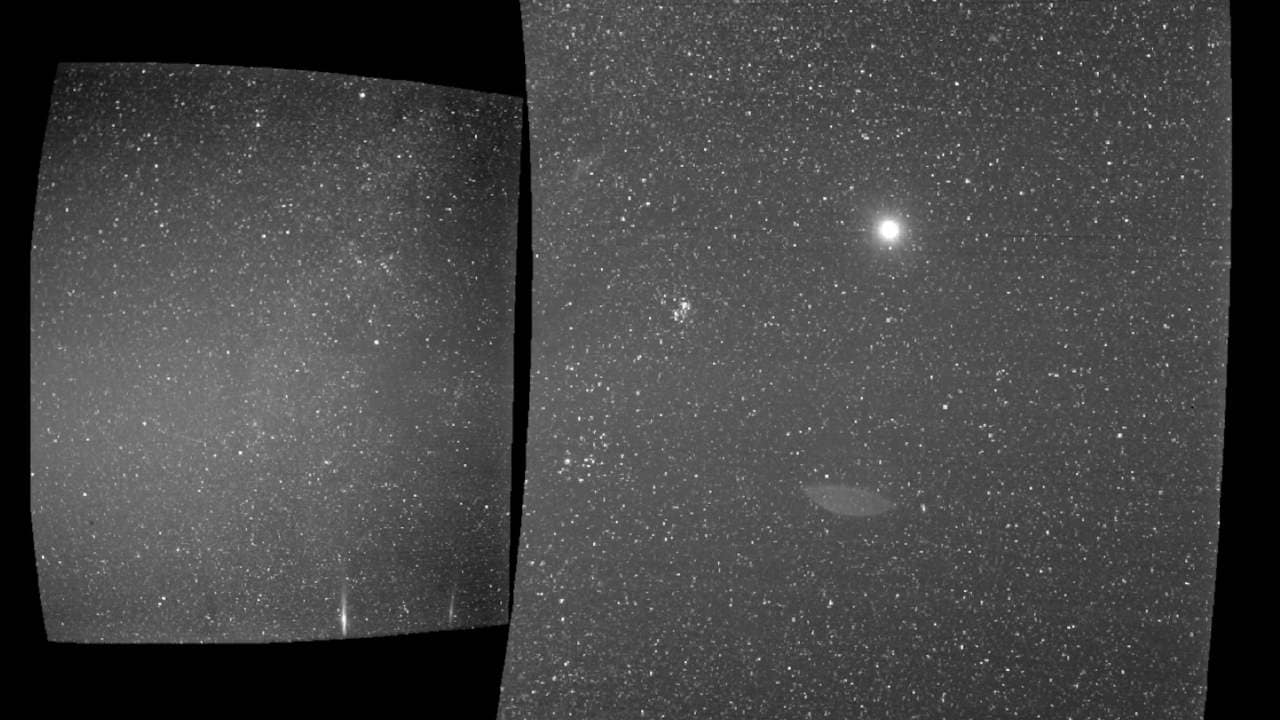
Parker's view of Earth. Image courtesy: NASA[/caption]The hemispherical shaped feature in the middle of the right-hand image is a lens flare, a common feature when imaging bright sources, which is caused by reflections within the lens system.In this case, the flare is due to the very bright Earthshine, NASA noted.The image also showed some objects like Pleiades, to the low-left of Earth in the right-hand image and the two bright objects.Betelgeuse and Bellatrix, near the bottom of the left-hand image appeared elongated because of reflections on the edge of the detector.Launched on 12 August, Parker Solar Probe, NASA's historic small car-sized probe will journey steadily closer to the Sun, until it makes its closest approach at 3.8 million miles.Earlier this month, the probe successfully completed its first flyby of Venus at a distance of about 1,500 miles.Throughout its mission, the probe will make six more Venus gravity assist and 24 total passes by the Sun.During science phases, WISPR sees structures within the Sun's atmosphere, the corona, before they pass over the spacecraft.Close passes by Venus and Mercury may occasionally create similar patterns in the future, but these are limited cases and do not affect the science operations of the instrument, NASA said.

Careless Whispers: Scientists discover that plants can 'talk' to each other using smells
Life on Mars? European Space Agency’s Orbiter discovers ice water deposits at equator
Microsoft briefly overtakes Apple as the most valuable company, Apple back on top again
Even NASA is facing a tough time, starts layoffs following major budget cuts
ISRO, NASA's NISAR satellite to get ready by Jan-end, will monitor Earth's snow-covered regions