


NASA's Hubble captures a pair of galaxies merging, distorting in spectacular detail
A popular theory claims that the Milky Way will collide with the neighbouring Andromeda in 4 bn years.

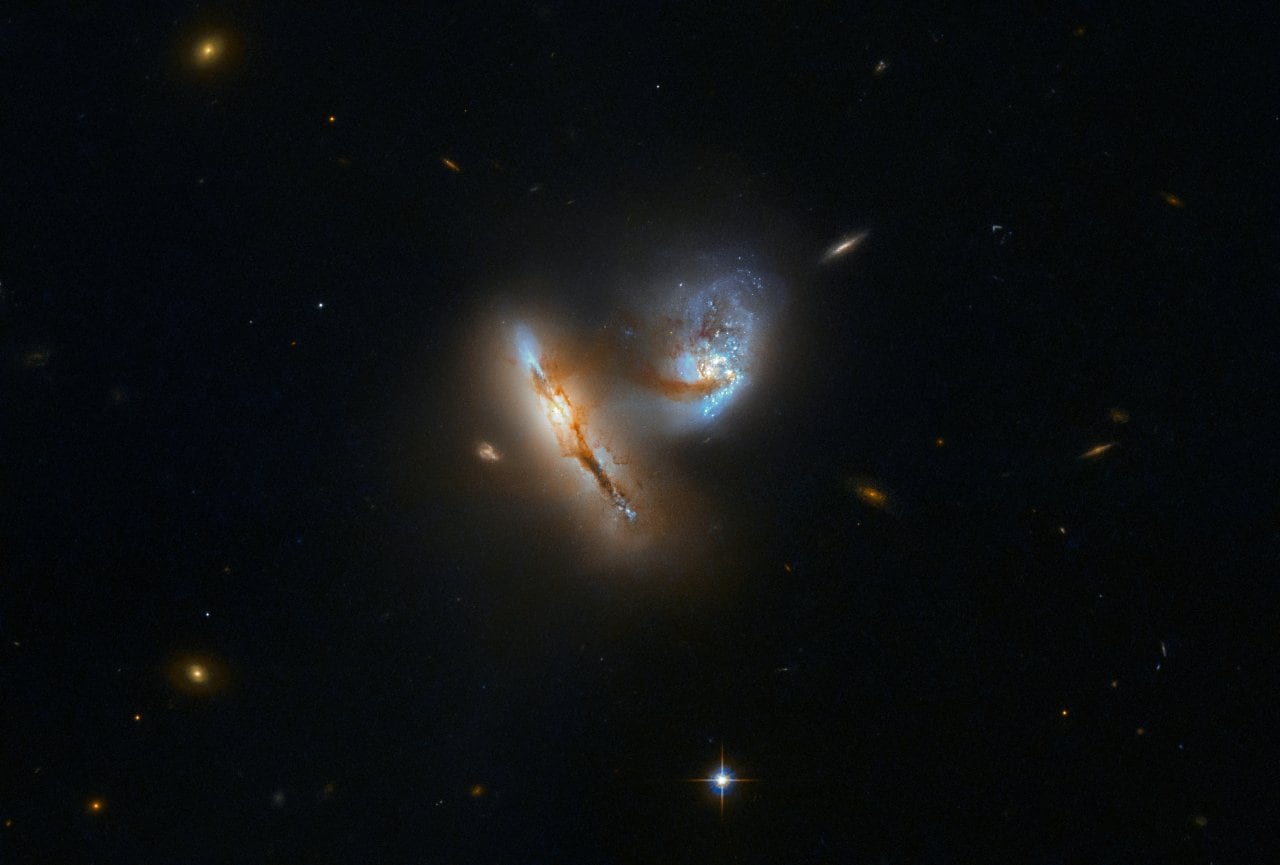
The pair of strange, luminescent creatures at play in this image are actually galaxies with millions upon millions of stars. The galactic duo is known as UGC 2369, a pair of galaxies interacting, meaning that their mutual gravitational attraction is pulling them closer and closer together and distorting their shapes in the process. Image: ESA/Hubble/NASA[/caption]"A tenuous bridge of gas, dust, and stars can be seen connecting the two galaxies, created when they pulled out into space across the diminishing divide between them," the ESA noted. These interactions among galaxies are a very common event, according to NASA. For fairly large galaxies like the Milky Way, most such incidents involve encounters between dwarf galaxies."Interaction with others is a common event in the history of most galaxies. For larger galaxies like the Milky Way, the majority of these interactions involve significantly smaller so-called dwarf galaxies. But every few billion years, a more momentous event can occur," NASA said in a statement.A popular theory claims that the Milky Way will collide with its nearest galactic neighbour Andromeda in the distant future. Andromeda is considerably larger than the Milky Way. This is the next big event for our home galaxy, expected to take place four billion years from now. Researchers think the two galaxies will merge into one over time, forming a new galaxy which has already been nicknamed "Milkomeda."In the case of this study and the image, the Hubble telescope was operated by the European Space Agency (ESA), and not NASA.(Also read: Two neighbouring galaxies are coming at our Milky Way in 4.5 billion years)

Careless Whispers: Scientists discover that plants can 'talk' to each other using smells
Life on Mars? European Space Agency’s Orbiter discovers ice water deposits at equator
Microsoft briefly overtakes Apple as the most valuable company, Apple back on top again
Even NASA is facing a tough time, starts layoffs following major budget cuts
ISRO, NASA's NISAR satellite to get ready by Jan-end, will monitor Earth's snow-covered regions