
Advertisement


Sections
NASA's Cassini captures eerie audio of interaction between Saturn and Enceladus
This recording was captured by the Radio Plasma Wave Science (RPWS) instrument on 2 September 2017

Late last month, new findings from the Cassini spacecraft suggested that complex organic molecules have been discovered originating from one of Saturn's moons, Enceladus, adding to its potential to support life.Now, almost as if those complex organic molecules suddenly jumped to life, a video released by NASA's Jet Propulsion Laboratory shows a spooky sound captured by the Cassini spacecraft during its flight around Saturn last year. The (literally) otherworldly sound is the interaction of plasma waves between Saturn and Enceladus, and was published in a research led by physicist Bill Kurth at the University of Iowa.But since we cannot "hear" the interaction of plasma waves, researchers converted the original recording into a “whooshing” audio file that we can hear — in the same way that a radio translates electromagnetic waves into music. Here's what was heard:This recording was captured by the Radio Plasma Wave Science (RPWS) instrument on 2 September 2017, two weeks before Cassini was deliberately plunged into the atmosphere of Saturn, an official statement said.But sound doesn't travel in a vacuum, so how did Cassini record this celestial-Hans-Zimmer kind of musical?"Much like air or water, plasma (the fourth state of matter) generates waves to carry energy," NASA explained."Enceladus is this little generator going around Saturn, and we know it is a continuous source of energy. Now we find that Saturn responds by launching signals in the form of plasma waves, through the circuit of magnetic field lines connecting it to Enceladus hundreds of thousands of miles away," AH Sulaiman, lead author of the paper, said.[caption id="attachment_4723911" align="alignnone" width="1280"]![NASA, in this recent video, released an unusual sound that was captured by the Cassini spacecraft last year. YouTube screengrab]() NASA, in this recent video, released an unusual sound that was captured by the Cassini spacecraft last year. YouTube screengrab[/caption]The Cassini spacecraft first flew close to the ice-covered moon in 2005 as part of a mission to gather data on Saturn that will be analysed for years to come.Last week's discovery of the organic molecules also created ripples in the scientific community, apart from steering the focus for the search for extraterrestrial life. Their findings were published in the Nature journal."It is the first-ever detection of complex organics coming from an extraterrestrial water world," a team led by Frank Postberg and Nozair Khawaja of the University of Heidelberg in Germany said, explaining that they had identified fragments of large organic molecules in ice grains that were ejected from geysers through cracks in the moon's icy exterior.Cassini has previously detected lightweight organic molecules at Enceladus but the newly found fragments are much larger. Such large molecules can only be created by complex chemical processes including those related to life, the European Space Agency said.[caption id="attachment_4630621" align="alignnone" width="1280"]
NASA, in this recent video, released an unusual sound that was captured by the Cassini spacecraft last year. YouTube screengrab[/caption]The Cassini spacecraft first flew close to the ice-covered moon in 2005 as part of a mission to gather data on Saturn that will be analysed for years to come.Last week's discovery of the organic molecules also created ripples in the scientific community, apart from steering the focus for the search for extraterrestrial life. Their findings were published in the Nature journal."It is the first-ever detection of complex organics coming from an extraterrestrial water world," a team led by Frank Postberg and Nozair Khawaja of the University of Heidelberg in Germany said, explaining that they had identified fragments of large organic molecules in ice grains that were ejected from geysers through cracks in the moon's icy exterior.Cassini has previously detected lightweight organic molecules at Enceladus but the newly found fragments are much larger. Such large molecules can only be created by complex chemical processes including those related to life, the European Space Agency said.[caption id="attachment_4630621" align="alignnone" width="1280"]![An image of Saturn's moon Enceladus captured by the Cassini spacecraft. AFP]() An image of Saturn's moon Enceladus captured by the Cassini spacecraft. AFP[/caption]However, while this indicates that Enceladus may have conditions that could allow for life, organic compounds can also arise from other sources, such as from meteorites.Postberg said the fragments could come from hydrothermal activity deep within the moon."In my opinion the fragments we found are of hydrothermal origin, having been processed inside the hydrothermally active core of Enceladus: in the high pressures and warm temperatures we expect there, it is possible that complex organic molecules can arise," he said.The Cassini joint mission between NASA, ESA and the Italian space agency came to an end in 2017.With inputs from Reuters
An image of Saturn's moon Enceladus captured by the Cassini spacecraft. AFP[/caption]However, while this indicates that Enceladus may have conditions that could allow for life, organic compounds can also arise from other sources, such as from meteorites.Postberg said the fragments could come from hydrothermal activity deep within the moon."In my opinion the fragments we found are of hydrothermal origin, having been processed inside the hydrothermally active core of Enceladus: in the high pressures and warm temperatures we expect there, it is possible that complex organic molecules can arise," he said.The Cassini joint mission between NASA, ESA and the Italian space agency came to an end in 2017.With inputs from Reuters
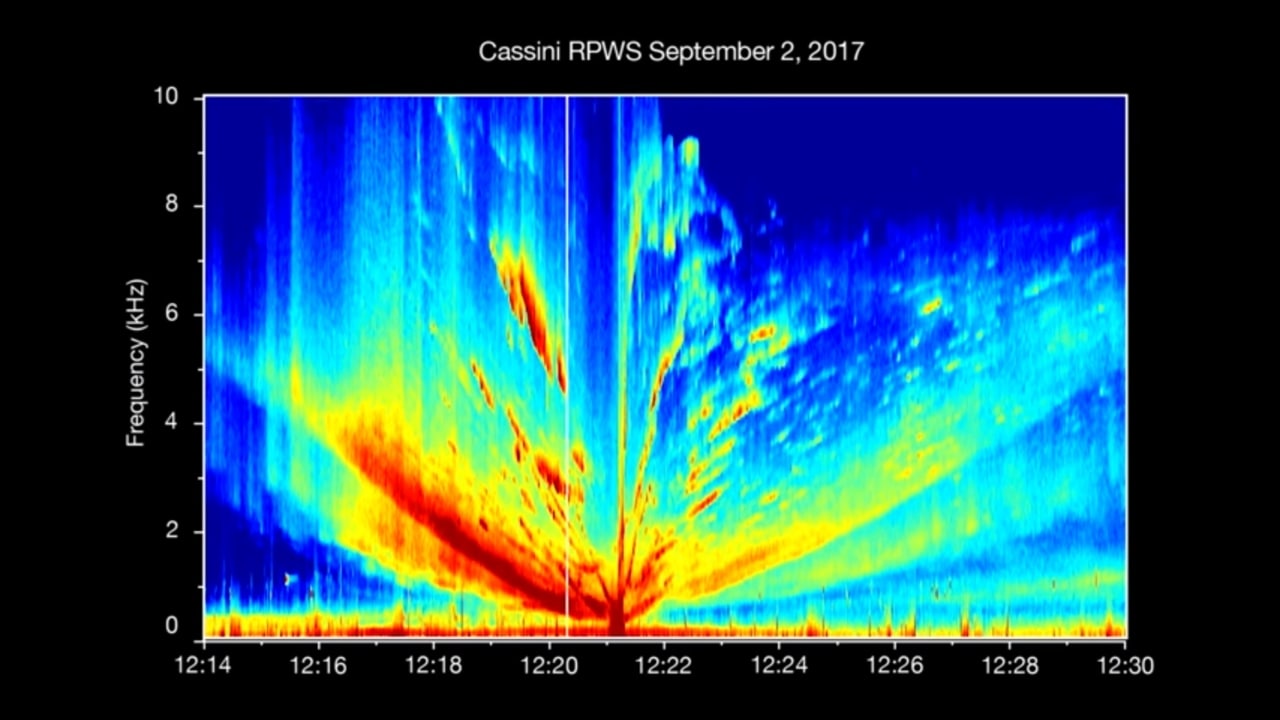 NASA, in this recent video, released an unusual sound that was captured by the Cassini spacecraft last year. YouTube screengrab[/caption]The Cassini spacecraft first flew close to the ice-covered moon in 2005 as part of a mission to gather data on Saturn that will be analysed for years to come.Last week's discovery of the organic molecules also created ripples in the scientific community, apart from steering the focus for the search for extraterrestrial life. Their findings were published in the Nature journal."It is the first-ever detection of complex organics coming from an extraterrestrial water world," a team led by Frank Postberg and Nozair Khawaja of the University of Heidelberg in Germany said, explaining that they had identified fragments of large organic molecules in ice grains that were ejected from geysers through cracks in the moon's icy exterior.Cassini has previously detected lightweight organic molecules at Enceladus but the newly found fragments are much larger. Such large molecules can only be created by complex chemical processes including those related to life, the European Space Agency said.[caption id="attachment_4630621" align="alignnone" width="1280"]
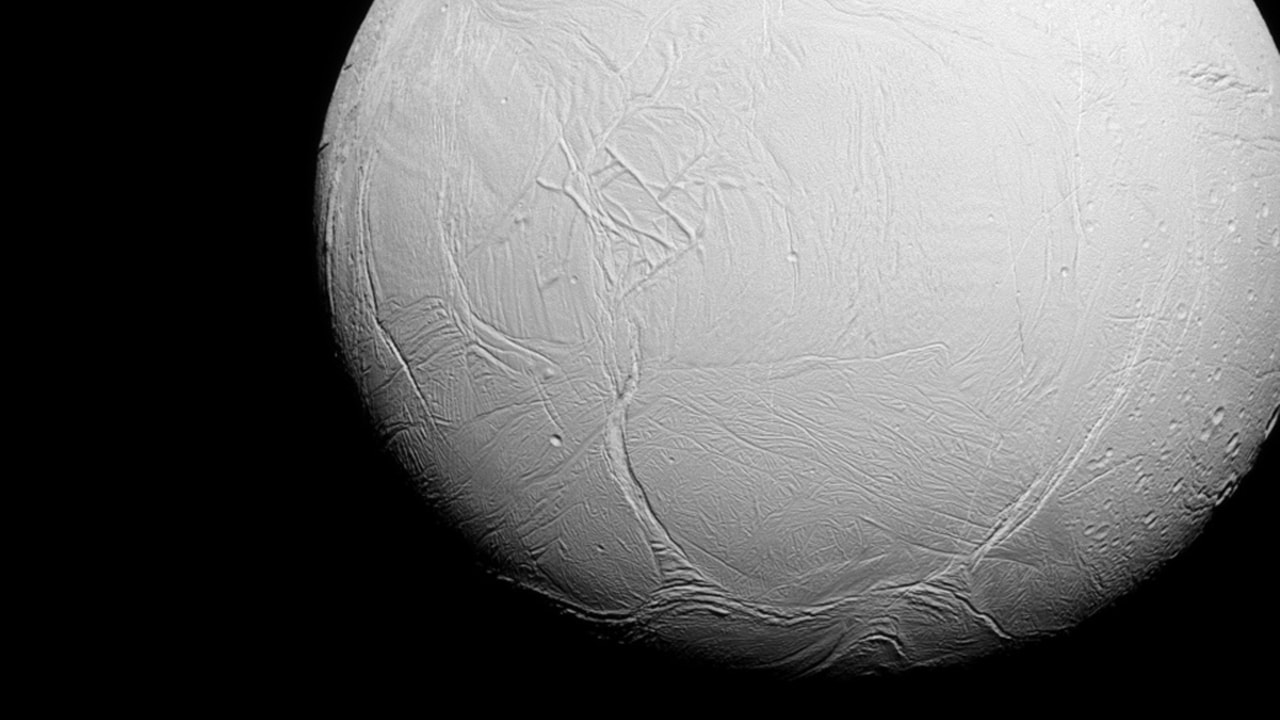 An image of Saturn's moon Enceladus captured by the Cassini spacecraft. AFP[/caption]However, while this indicates that Enceladus may have conditions that could allow for life, organic compounds can also arise from other sources, such as from meteorites.Postberg said the fragments could come from hydrothermal activity deep within the moon."In my opinion the fragments we found are of hydrothermal origin, having been processed inside the hydrothermally active core of Enceladus: in the high pressures and warm temperatures we expect there, it is possible that complex organic molecules can arise," he said.The Cassini joint mission between NASA, ESA and the Italian space agency came to an end in 2017.With inputs from Reuters
First Published:Jul 12, 2018, 13:39:43 IST
Advertisement
Advertisement

Careless Whispers: Scientists discover that plants can 'talk' to each other using smells
Japanese scientists have recorded a video that shows plants, in certain conditions, communicate with each other using mists that carry smells. The discovery, reveals that plants release a fine mist of airborne compounds, to warn nearby plants of potential dangers
Life on Mars? European Space Agency’s Orbiter discovers ice water deposits at equator
European Space Agency's Mars Express Orbiter has identified massive ice and ice water deposits beneath the surface of Mars. The Mars Express orbiter was also the first to confirmed the presence of ice on Mars in 2004
Microsoft briefly overtakes Apple as the most valuable company, Apple back on top again
At its peak during the session, Microsoft's value reached $2.903 trillion, with a 2% surge. As of writing this article, Apple closed at $2.89 trillion, whereas Microsoft closed at $2.86 trillion
Even NASA is facing a tough time, starts layoffs following major budget cuts
NASA is facing some massive budget cuts, because of which, it has been forced to postpone some upcoming missions. NASA's Jet Propulsion Laboratory has been hit hard by recent federal budget cuts, resulting in the layoff of 100 contractors last week
ISRO, NASA's NISAR satellite to get ready by Jan-end, will monitor Earth's snow-covered regions
The NISAR satellite which has been developed jointly ISRO and NASA, should be ready for launch by the end of January 2024. The collaboration between NASA and ISRO on NISAR is the first time the two agencies have cooperated on hardware development for an Earth-observing mission
Advertisement
Advertisement