


NASA succeeds in receiving laser beam signal from its Lunar Reconnaissance Orbiter after 10 years
One of the theories is that dust might have settled on the lunar reflectors that are blocking the surface of the reflectors

Laser beam technology has helped scientists adjudge distances in between planetary objects and have been used as precision tools. The laser beams are light waves that can travel very long distances and have been used to even study the chemical composition of certain rocks in Mars.
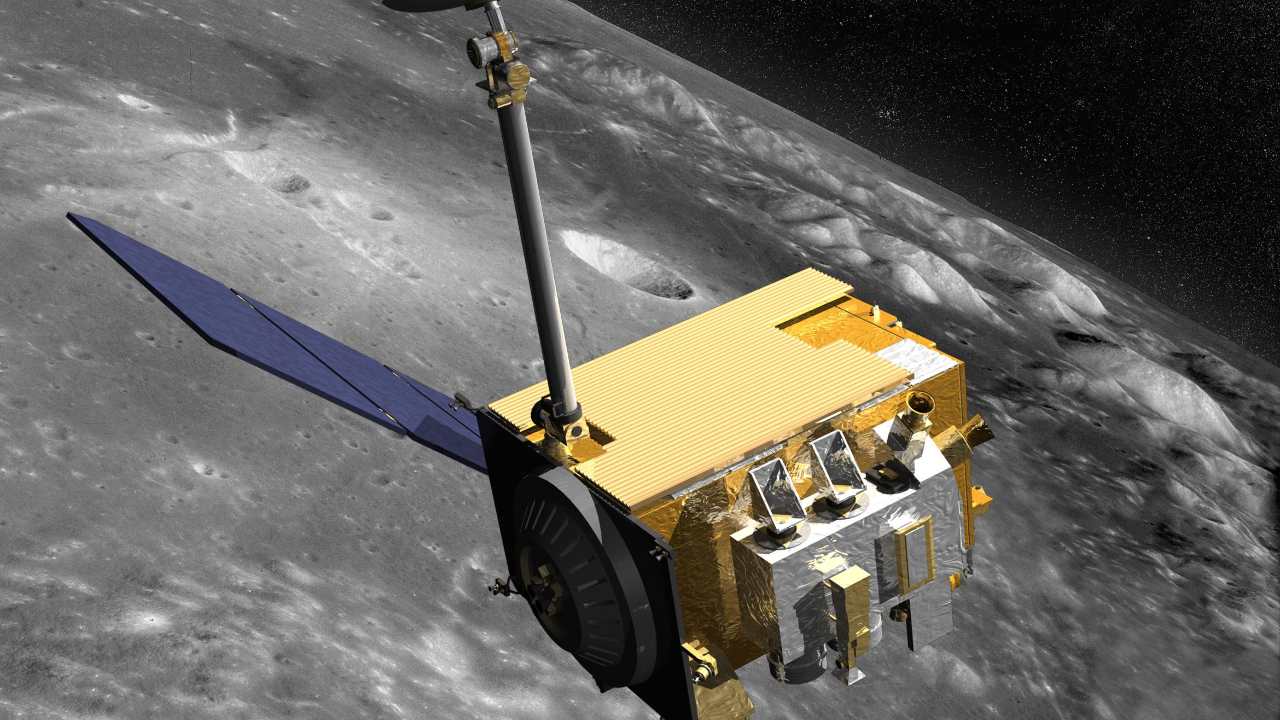
The Lunar Reconnaissance Orbiter (LRO) is a robotic mission that set out to map the moon's surface and, after a year of exploration, was extended with a unique set of science objectives. Image credit: NASA[/caption]In a statement on 10 August, NASA, along with their French collaborators at the Universite Cote D’Azur, announced the news and the significance of the success.
Researchers are of the view that successful signal retrieval will help in enhancing laser experiments and thereby help in studying the physics of the universe. One of the reasons why scientists aimed the LRO reflector was to test the condition of the reflectors sitting on the Lunar surface. The reflectors on the moon have been sitting there for the past 50 years and have been sending back gradually weakened signals.
 More from Science
Although the signals have helped scientists figure out several interesting details about the outer space, the lunar reflectors are currently sending back only a 10th of the expected signal. The reason is unknown and also why scientists are trying to adjudge the level of signal from LRO.
One of the guesses is that dust might have settled on the lunar reflectors (there are five in total) that is blocking the surface of the reflectors. But even after the LRO signal coming back, scientists have not been able to clear the doubt just as of now.
"Scientists have been using reflectors on the Moon since the Apollo era to learn more about our nearest neighbour. It’s a fairly straightforward experiment: Aim a beam of light at the reflector and clock the amount of time it takes for the light to come back", read the statement.
It went on to point that the laser beams had given the crucial information that the moon was drifting away from the earth at the rate of 1.5 inches every year.

Careless Whispers: Scientists discover that plants can 'talk' to each other using smells
Life on Mars? European Space Agency’s Orbiter discovers ice water deposits at equator
Microsoft briefly overtakes Apple as the most valuable company, Apple back on top again
Even NASA is facing a tough time, starts layoffs following major budget cuts
ISRO, NASA's NISAR satellite to get ready by Jan-end, will monitor Earth's snow-covered regions