


How NASA and SpaceX are preparing for the launch of their astronauts in the commerical human spaceflight mission?
American astronauts Doug Hurley and Bob Behnken will be launched from Launch Complex 39A at the Kennedy Space Center in Florida.

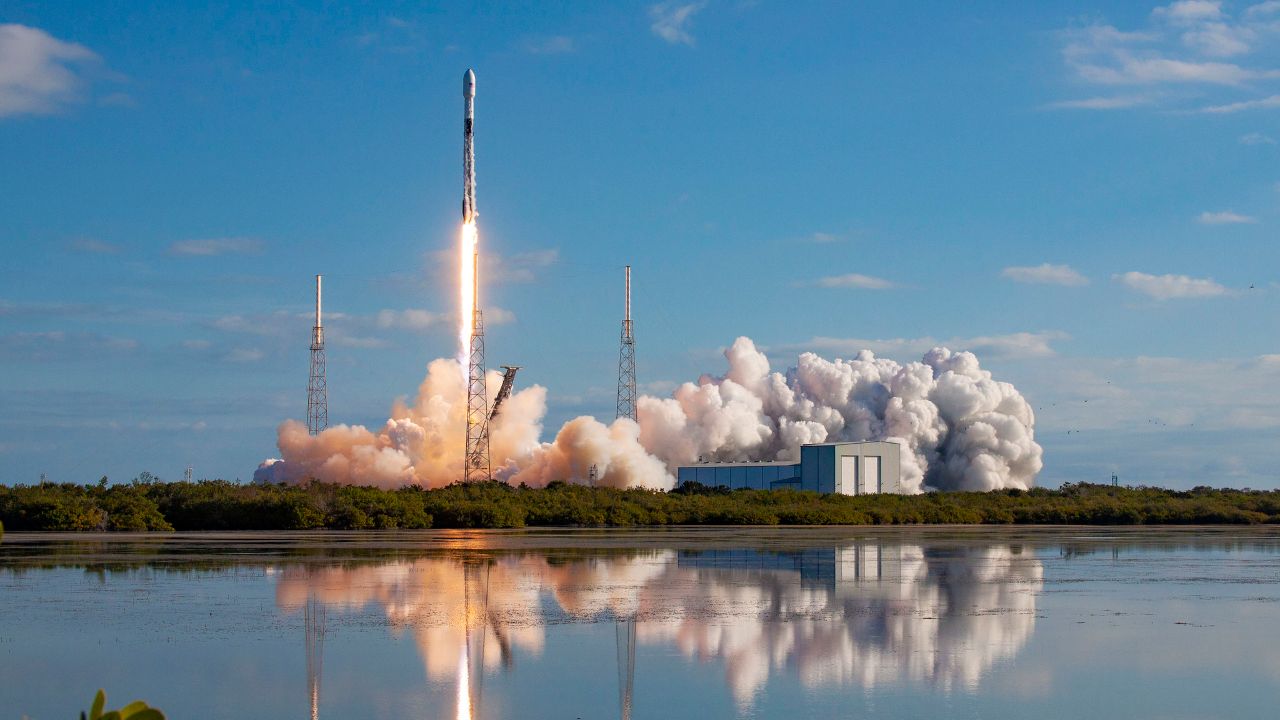
The Falcon 9 rocket getting ready for lift-off. image credit: SpaceX/Flickr[/caption]But it is not going to be easy, and there will be risks.Whether it is the Coronavirus pandemic or the skeleton crew that will be working on the ground on the day of the launch; or the fact that it is the maiden voyage of the Dragon crew capsule.Human spaceflight is returning to America! 🇺🇸🚀
“My heart is sitting right here (motioning to the throat), and I think it’s going to stay there until we get Bob and Doug safely back from the International Space Station,” said Gwynne Shotwell, SpaceX’s president and Chief Operating Officer, in a press conference, reported Spaceflight. “But between now and then, there’s still work to do.”The storied US Space Shuttle
A commercial space program
Demo 1
Demo 2
After a successful first trial mission, the upcoming mission to the ISS has been termed Demo-2. The spacecraft is supposed to be able to carry around seven passengers, but for its first test run, only two astronauts will be in the capsule.If all goes well with this mission, NASA will approve SpaceX to carry other astronauts to the ISS, along with the commercial re-supply runs it has been making since 2008. This will reduce NASA's dependence on the Soyuz program and will be more cost-effective in the long run as well. It will also take them another step further to completing the Artemis mission, and the next step is humans on Mars.
The US-built Falcon 9 rocket
Quarantining
As standard procedure dictates, before the actual launch, the astronauts will go into quarantine two weeks prior. This will be made more stringent due to the ongoing Coronavirus pandemic that has swept the world. Employees at NASA and SpaceX have, on occasion, had to quarantine themselves as there were positive cases found.Shotwell, reported Spaceflight, has outlined some of the precautions that they were taking during the press conference, "We've had Bob and Doug here for training and we are ensuring that only essential personnel are near them. They're wearing masks and gloves. We're cleaning the training facility twice daily."NASA is also ensuring that the crew, working with the astronauts during their flight simulations, are being taken care of. "We're taking temperatures. We're wearing masks in public areas. We are social distancing as well. We've got at least half of our engineering staff working from home," Shotwell said.[caption id="attachment_8277131" align="alignnone" width="1280"]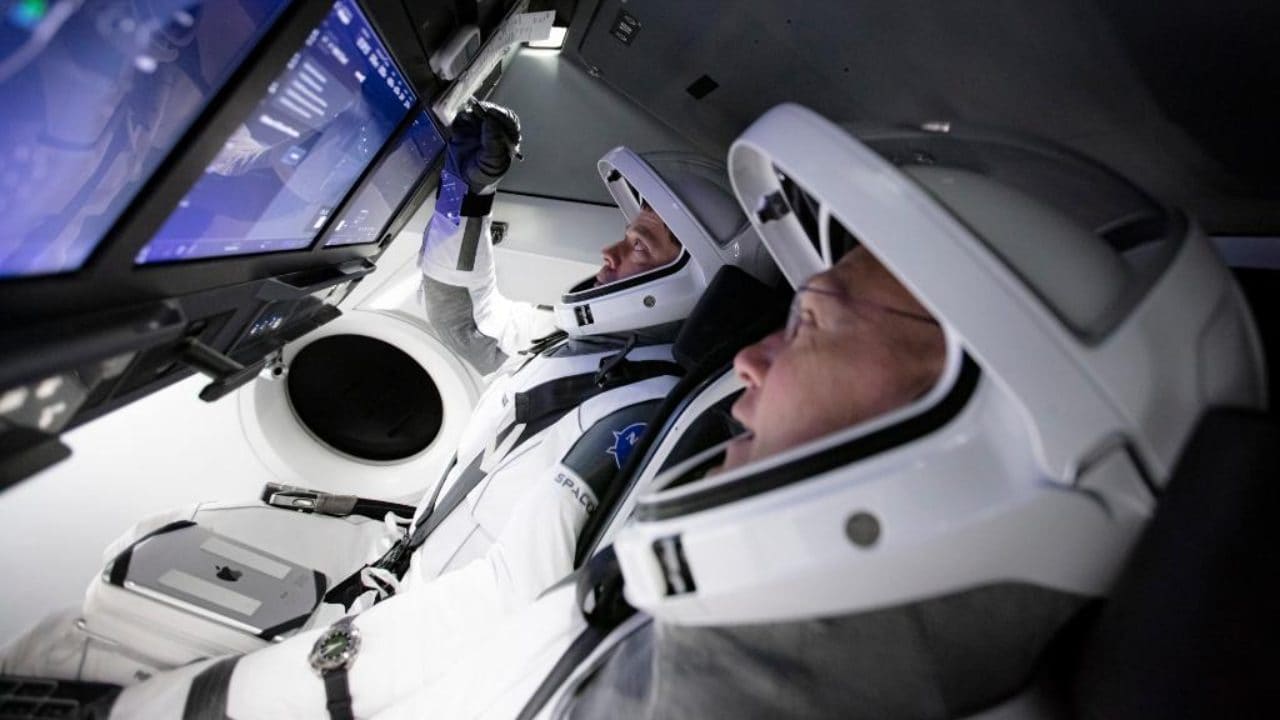
NASA astronauts during a pre-flight test in SpaceX Crew Dragon. Image credit: Twitter[/caption]"Obviously with the COVID-19 pandemic, we are taking extra precautions for all the teams supporting the launch and all the phases of flight," said Steve Stich, deputy manager for NASA's Commercial Crew Program, reported Al Jazeera. "So in the various control rooms, we've laid out those rooms to have at least two metres between anybody on a console looking at displays."Hurley, in an interview with CBS News, spoke about the measures he and his co-passenger are taking (like following the rules set out by NASA and their flight surgeons) as well as those undertaken by NASA.Hurley said, "We're kind of already in a quarantine bubble that includes the two of us and of course, by extension, our immediate families as well. We'll be leading up to launch kind of with similar precautions. It's not a lot different than what we would do for a crew that was going to launch on a Soyuz out of Baikonur (Cosmodrome in Kazakhstan), or what we did back when we launched on space shuttles." When they fly out to Florida, they will use "NASA transportation to try to minimize our exposure".
ISS is short-staffed
The space station is currently being manned by one American astronaut — Chris Cassidy and two Russian cosmonauts — Anatoly Ivanishin and Ivan Vagner. Usually, the orbiting station is staffed with three to six people but it can comfortably accommodate around nine astronauts. However, in 2009, the ISS was able to support 13 crew members at a given time.If all goes well, Hurley and Behnken's ride to the ISS will mean that the occupants will have more help to conduct their research and experiments in zero gravity. Reuters reported that the astronauts' planned mission has been extended from one to now lasting anywhere between one to four-month. It will also mean that they will have more time to conduct a spacewalk — which is exciting — to change the batteries of the ISS.[caption id="attachment_8330981" align="alignnone" width="1000"]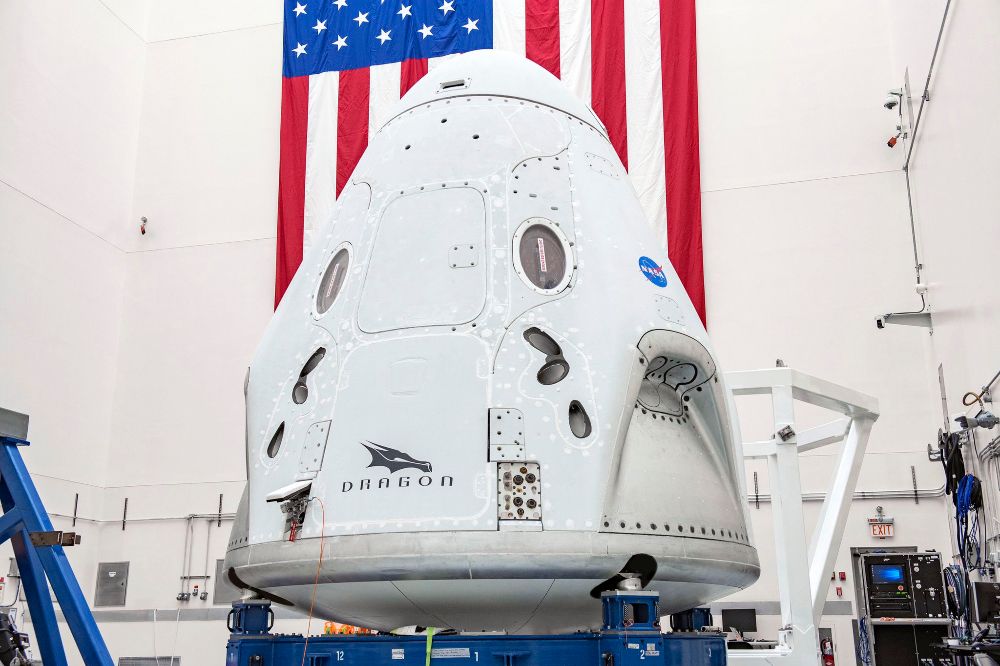
The Dragon capsule being prepped in a NASA site before its launch on 27 May. Image credit: Twitter[/caption]"We currently support the station with the bare minimum," said Bridenstine. "Without the presence of Behnken and Hurley, we otherwise would likely defer such an operation until additional NASA crew members are available."
NASA to its spectators
NASA is launching their own astronauts from American soil after a gap of 11 years, and if this were a normal year, it would've been a big moment for the country. Something akin to the excitement people had shown during the initial Apollo mission phase.But this is not a normal year and these are not normal situations, and NASA has asked all potential spectators to adhere to the lockdown rules set out by the US government.Futurism reported that NASA administrator Jim Bridenstine said, “We are very excited about launching a commercial crew. We are asking people to join us in this launch but to do so from home. We’re asking people not to travel to the Kennedy Space Center.”He also said that people who break this rule and crowd the beach, or the area near the centre will have to deal with the local authorities. Space.com reported that the Space Centre will be closed to the public as well.Also Read: Looking at the journey of how NASA and its astronauts became one of SpaceX’s biggest customers
 More from Science
Careless Whispers: Scientists discover that plants can 'talk' to each other using smells
Life on Mars? European Space Agency’s Orbiter discovers ice water deposits at equator
Microsoft briefly overtakes Apple as the most valuable company, Apple back on top again
Even NASA is facing a tough time, starts layoffs following major budget cuts
ISRO, NASA's NISAR satellite to get ready by Jan-end, will monitor Earth's snow-covered regions