


NASA set to collaborate with China's space agency on lunar landing research
NASA and CNSA have agreed that any major findings will be shared with the global research community.

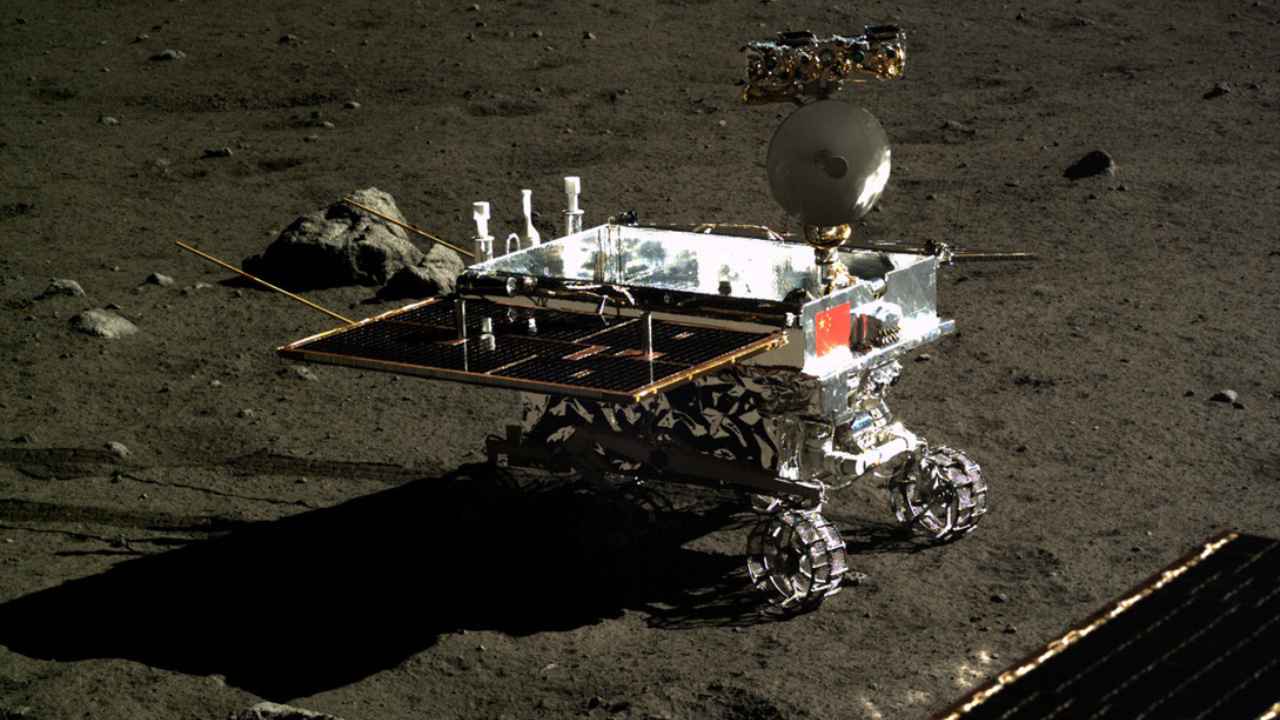
An artistic representation of the Chang'e-4 rover on the moon. Image: CNSA[/caption]This approach will enable human expansion across the solar system and bring back to Earth new knowledge and opportunities, it said.NASA's robotic lunar surface missions, which will begin as early as 2020, will focus on scientific understanding of lunar resources, and prepare the lunar surface for a sustained human presence, to include the use of lunar oxygen and hydrogen for future lunar vehicles.The lunar surface may also serve as a crucial training ground and technology demonstration test site where we will prepare for future human missions to Mars and other destinations, NASA said.Since the beginning of its mission, NASA's Lunar Reconnaissance Orbiter (LRO) has imaged objects impacting the surface of the moon.For a number of reasons, NASA was not able to phase LRO's orbit to be at the optimal location during the landing, however, NASA was still interested in possibly detecting the plume well after the landing.Science gathered about how lunar dust is ejected upwards during a spacecraft's landing could inform future missions and how they arrive on the lunar surface.Since the Chinese landing, LRO instruments have been collecting data that are currently being analysed. LRO is expected to image the Chang'e 4 landing site on January 31 in a manner similar to what was done on Chang'e 3.NASA and CNSA have agreed that any significant findings resulting from this coordination activity will be shared with the global research community at the 56th session of the Scientific and Technology Subcommittee meeting of the UN Committee on the Peaceful Uses of Outer Space meeting in Vienna, Austria, in February this year.All NASA data associated with this activity are publicly available. In accordance with Administration and Congressional guidance, NASA's cooperation with China is transparent, reciprocal and mutually beneficial, the US space agency said.Such observations are of interest scientifically since they allow NASA to test and constrain models used to understand how water and other volatiles may be transported to the permanently shadowed craters near the lunar poles.In the coming months, the first Israeli spacecraft will land on the Moon, and partnership with NASA has helped make this possible.NASA will not only help with observations from LRO and communications support during the mission, but has also developed a laser retroreflector that will fly onboard the Israeli lander.

Careless Whispers: Scientists discover that plants can 'talk' to each other using smells
Life on Mars? European Space Agency’s Orbiter discovers ice water deposits at equator
Microsoft briefly overtakes Apple as the most valuable company, Apple back on top again
Even NASA is facing a tough time, starts layoffs following major budget cuts
ISRO, NASA's NISAR satellite to get ready by Jan-end, will monitor Earth's snow-covered regions