


NASA selects DAVINCI+ and VERITAS missions to explore Venus for its Discovery Program
VERITAS will become the first mission to study Venus' surface after NASA sent the Magellan spacecraft.

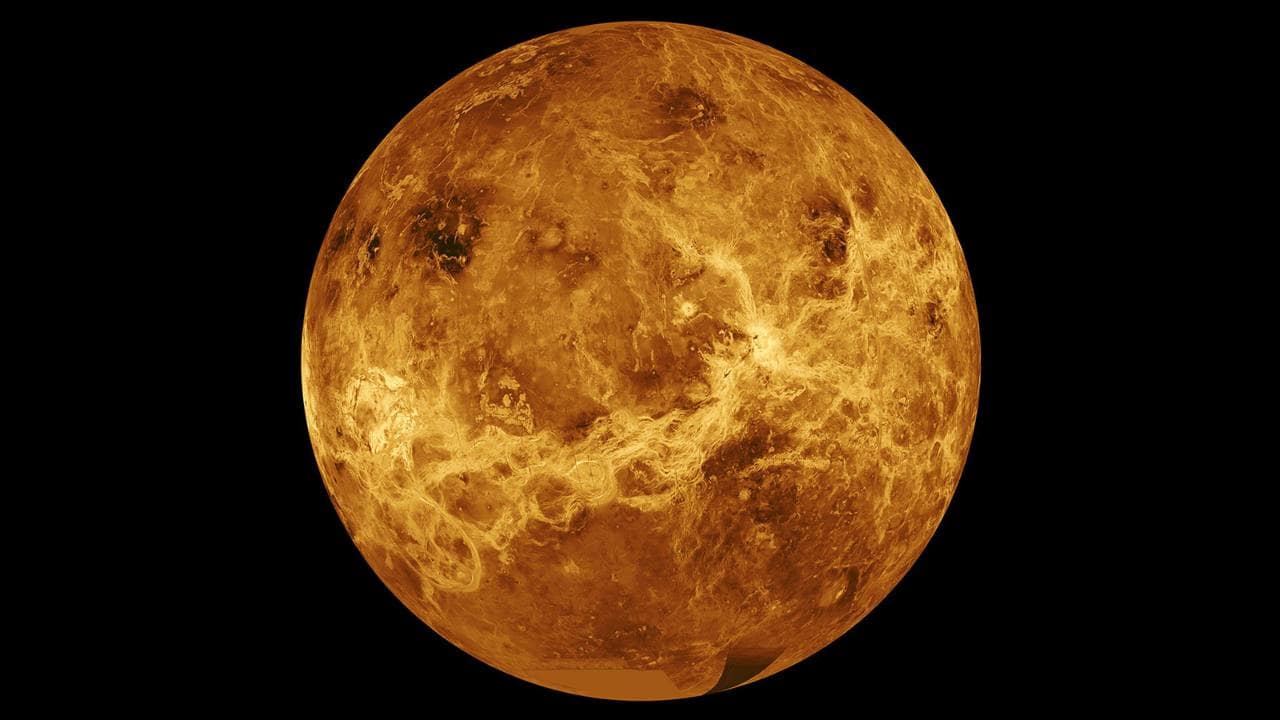
Venus hides a wealth of information that could help us better understand Earth and exoplanets. NASA's JPL is designing mission concepts to survive the planet's extreme temperatures and atmospheric pressure. This image is a composite of data from NASA's Magellan spacecraft and Pioneer Venus Orbiter.
Credits: NASA/JPL-Caltech[/caption]NASA had picked four missions in February 2020 during its Discovery 2019 competition and finalised two missions. The feasibility of their development plans and potential scientific value were the two criteria that NASA used for the selection of the final missions. The agency has now assigned project teams that will finalise the mission’s design, developmental plans, and other requirements.
About the missions
DAVINCI+ stands for Deep Atmosphere Venus Investigation of Noble gases, Chemistry, and Imaging. It will measure the components of Venus’ atmosphere. On the other hand, VERITAS is the acronym for Venus Emissivity, Radio Science, InSAR, Topography, and Spectroscopy. In this mission, NASA scientists will map the surface of the planet to understand its geologic history.Along with these two missions, the space agency will also be sending two technology demonstrations. DAVINCI+ is going to be hosting the Compact Ultraviolet to Visible Imaging Spectrometer (CUVIS) while VERITAS will host Deep Space Atomic Clock-2.The mission VERITAS will become the first to study the surface of Venus after the Magellan spacecraft which was also sent by NASA.
 More from Science
Careless Whispers: Scientists discover that plants can 'talk' to each other using smells
Life on Mars? European Space Agency’s Orbiter discovers ice water deposits at equator
Microsoft briefly overtakes Apple as the most valuable company, Apple back on top again
Even NASA is facing a tough time, starts layoffs following major budget cuts
ISRO, NASA's NISAR satellite to get ready by Jan-end, will monitor Earth's snow-covered regions