


NASA renames its next-generation space telescope — WFIRST — after ‘Mother of Hubble’ Nancy Grace Roman
She is credited for the Hubble Space Telescope and convinced NASA and the US Congress launching the world's most powerful space telescope was a priority

NASA had decided to name the Wide-Field Infrared Survey Telescope (WFIRST) as the Nancy Grace Roman or Roman Space Telescope after the astronomer who is considered as the “Mother” of Hubble Space Telescope programme.
The telescope is currently under development and is expected to be launched by mid-2020s. According to NASA, the telescope will investigate long-distance astronomical mysteries, including the force behind the expansion of the universe, and search for distant planets beyond our solar system.[caption id="attachment_8392691" align="alignnone" width="1280"]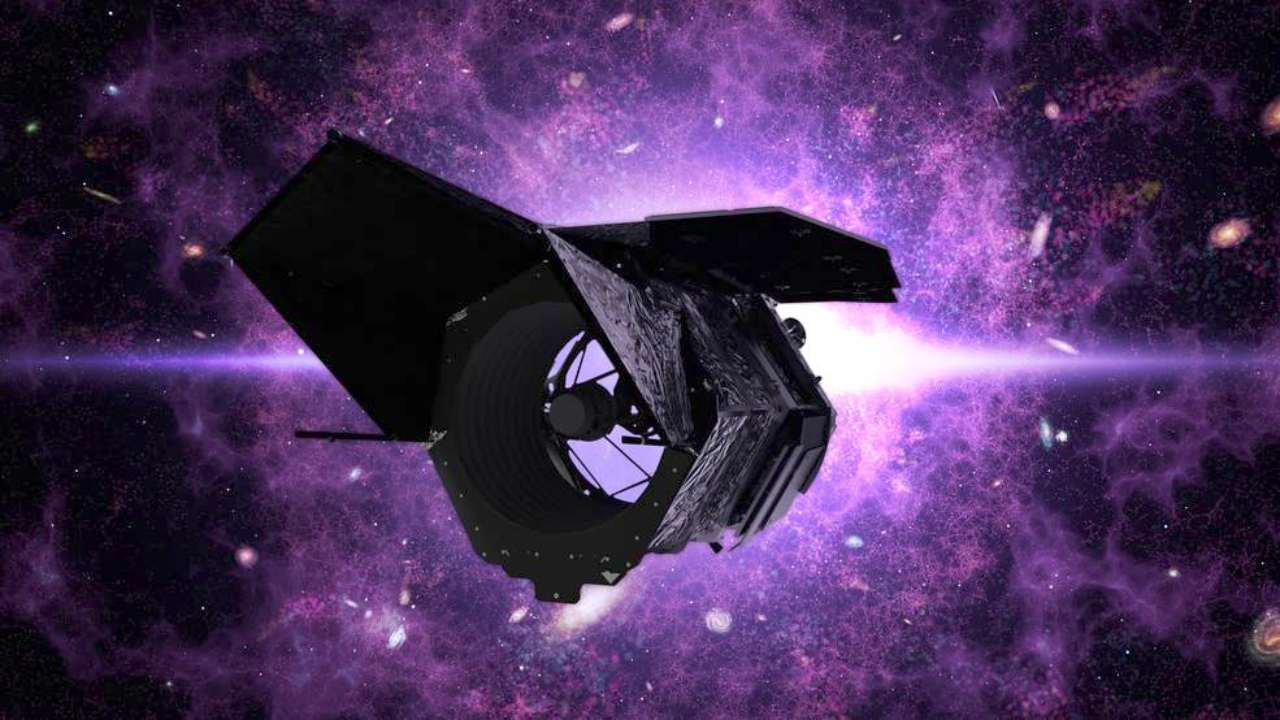
NASA’s Wide-Field Infrared Survey Telescope (WFIRST) is now named the Nancy Grace Roman Space Telescope, after NASA’s first Chief of Astronomy. Image credits: NASA[/caption]The Roman Space Telescope or the Wide-Field Infrared Survey Telescope (WFIRST) is the US space agency’s next-generation space telescope. According to NASA, the Roman Space Telescope will be its observatory designed to settle essential questions in the areas of dark energy, exoplanets and infrared astrophysics.
The primary mirror of the telescope is 2.4 metres in diameter, similar to that of the Hubble Space Telescope. The Roman Space Telescope has two instruments – the wide-field instrument and a technology demonstration coronagraph instrument.
Who is Nancy Grace Roman?
Nancy Grace Roman is NASA’s first chief astronomer and was among the main architects of the Hubble Space Telescope that was launched 30 years ago.
Roman wanted to be an astronomer when she was in her seventh grade. She joined NASA in 1959, six months after the space agency was established.[caption id="attachment_8392701" align="alignnone" width="1000"]
Dr Nancy Grace Roman is shown with a model of the Orbiting Solar Observatory (OSO) in 1962. She was the first Chief of Astronomy in the Office of Space Science at NASA Headquarters. Image credit: NASA[/caption]Roman served as the chief of astronomy. In an interview to NASA, she said, “I knew that taking on this responsibility would mean that I could no longer do research, but the challenge of formulating a program from scratch that I believed would influence astronomy for decades to come was too great to resist.”
Under the leadership of Roman, NASA launched four Orbiting Astronomical Observatories between 1966 and 1972.
She is credited for the Hubble Space Telescope and convinced NASA and the US Congress that it was a priority to launch the most powerful space telescope of the world.
 More from Science
Roman also championed the International Ultraviolet Explorer, which was built in the 1970s and the Cosmic Background Explorer, which measured the leftover radiation from the big bang.

Careless Whispers: Scientists discover that plants can 'talk' to each other using smells
Life on Mars? European Space Agency’s Orbiter discovers ice water deposits at equator
Microsoft briefly overtakes Apple as the most valuable company, Apple back on top again
Even NASA is facing a tough time, starts layoffs following major budget cuts
ISRO, NASA's NISAR satellite to get ready by Jan-end, will monitor Earth's snow-covered regions