


NASA puts its Mars missions on time out for two weeks in October due to solar conjunction
No one attempts to send any instructions for the missions during the solar conjunction as it is impossible to predict how the charged particles of the Sun can interfere with the information being relayed.

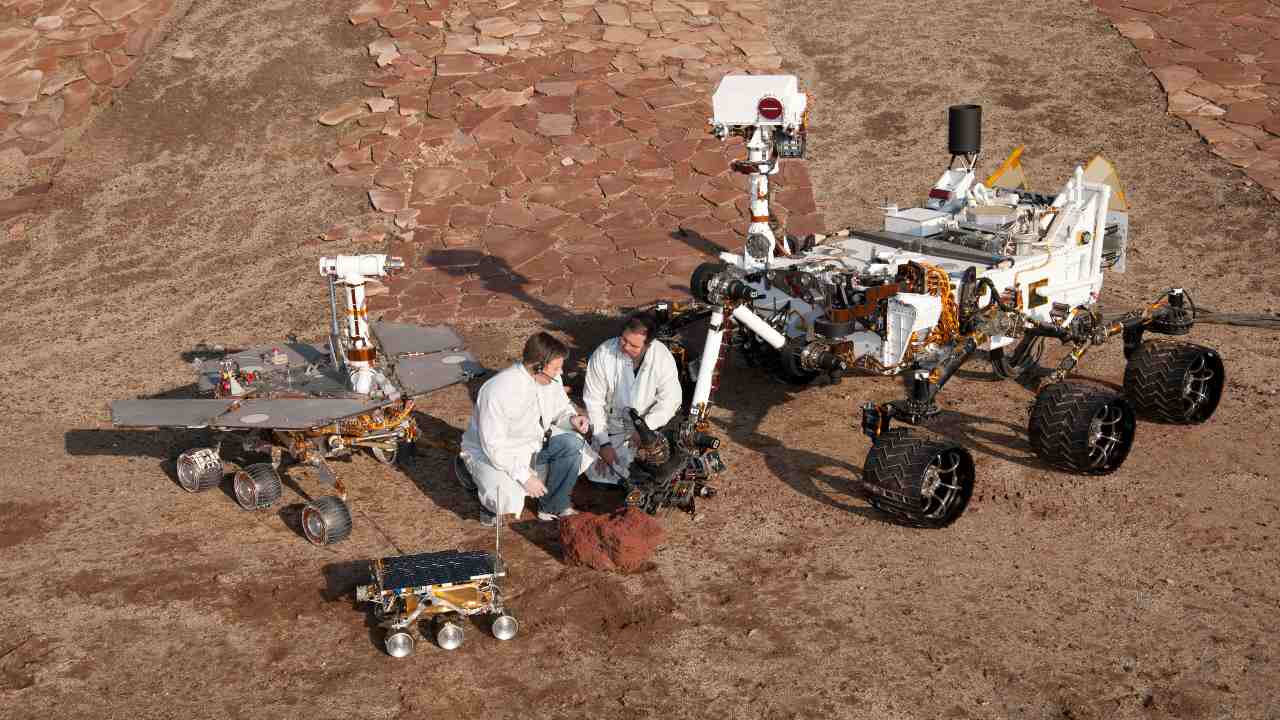
Front and center is the flight spare for the first Mars rover, Sojourner, which landed on Mars in 1997 as part of the Mars Pathfinder Project. On the left is a Mars Exploration Rover Project test rover that is a working sibling to Spirit and Opportunity, which landed on Mars in 2004. On the right is a Mars Science Laboratory test rover the size of that project's Mars rover, Curiosity, which is on course for landing on Mars in August 2012. Missing in frame is Perseverance rover. Image credit: NASA[/caption]This year, the solar conjunction moratorium is between 2 October and 14 October, when Mars is within 2 degrees of the Sun.NASA will task its missions with homework during the “short vacation” as all spacecrafts will go “virtually incommunicado” during the period.The agency’s Perseverance rover will perform weather measurement and radar experiments. The rover, which landed in February, will also look for any dust devils passing by on the planet as well as listen for environmental sounds using its microphone. The official account of the rover tweeted that it has found a parking spot to wait out the blackout period.The Curiosity rover will also perform the same functions. The rover has been working on Mars since 2012 and has not faced any major issues in the previous solar conjunctions.NASA's three long-running orbiters — Mars Atmosphere and Volatiles Evolution Mission (MAVEN), Odyssey, and Mars Reconnaissance Orbiter (MRO) — will send back status updates from the surface missions on the planet. The orbiters, which have also faced solar conjunctions in the past, will perform scientific observations to send back to Earth after the period is over.The InSight lander will run a passive experiment, keeping its seismometer operational to keep track of big marsquakes.The Ingenuity Mars helicopter will wait out the blackout duration, staying parked 175 metres away from the Perseverance rover. The helicopter will continue to send weekly updates to the rover.According to the space agency, no one attempts to send any instructions for the missions during the solar conjunction as it is impossible to predict how the charged particles of the Sun can interfere with the information being relayed.Once the solar conjunction is over, engineers will use NASA’s Deep Space Network to download the data collected during the period. Once this process is complete, normal spacecraft operations will resume.The solar conjunction will also affect other missions at the Red Planet from China, India, and Europe. However, the space agencies have not detailed their plans for the blackout period.

Careless Whispers: Scientists discover that plants can 'talk' to each other using smells
Life on Mars? European Space Agency’s Orbiter discovers ice water deposits at equator
Microsoft briefly overtakes Apple as the most valuable company, Apple back on top again
Even NASA is facing a tough time, starts layoffs following major budget cuts
ISRO, NASA's NISAR satellite to get ready by Jan-end, will monitor Earth's snow-covered regions